CONCEPTUAL FRAMEWORK
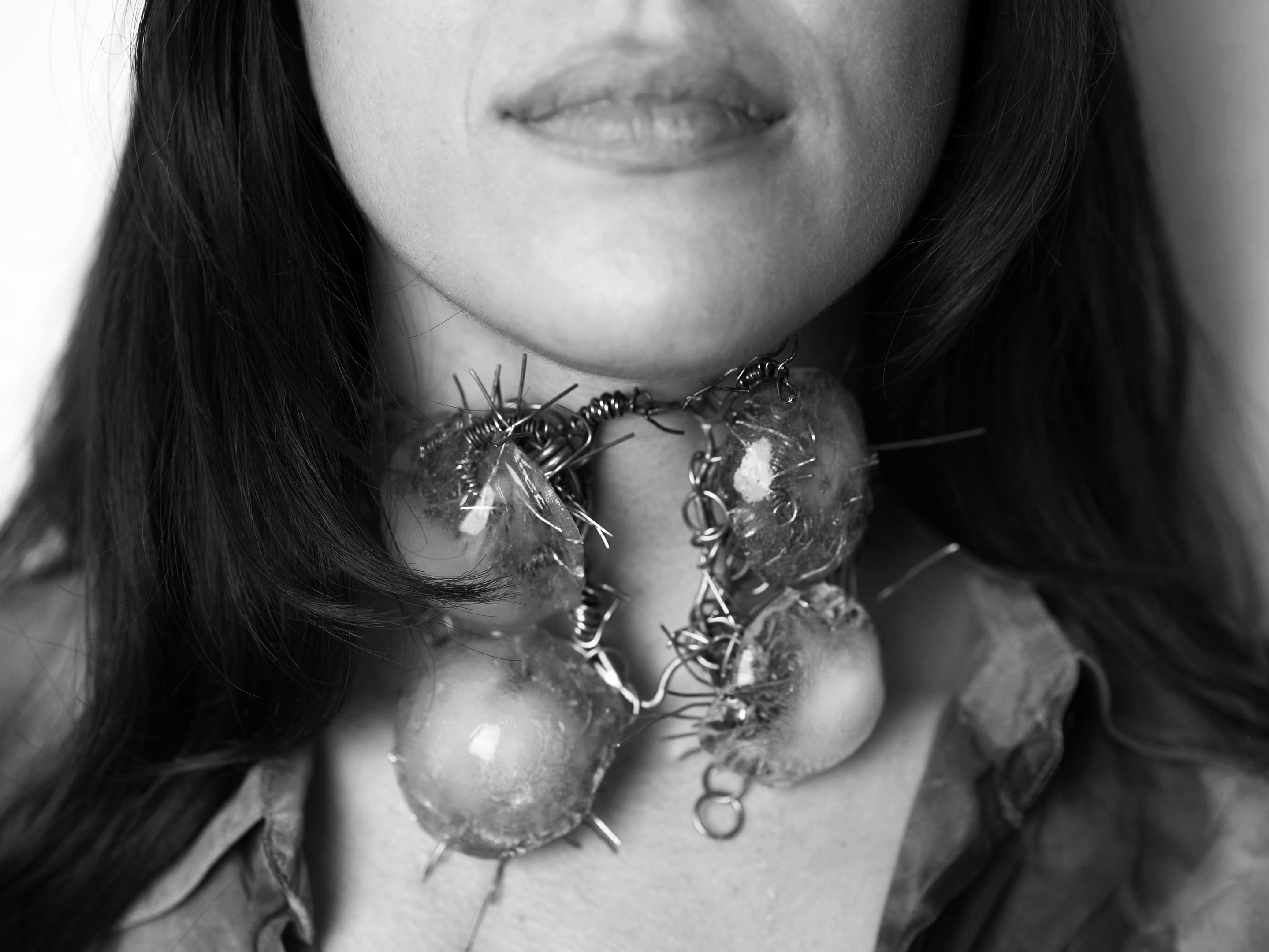
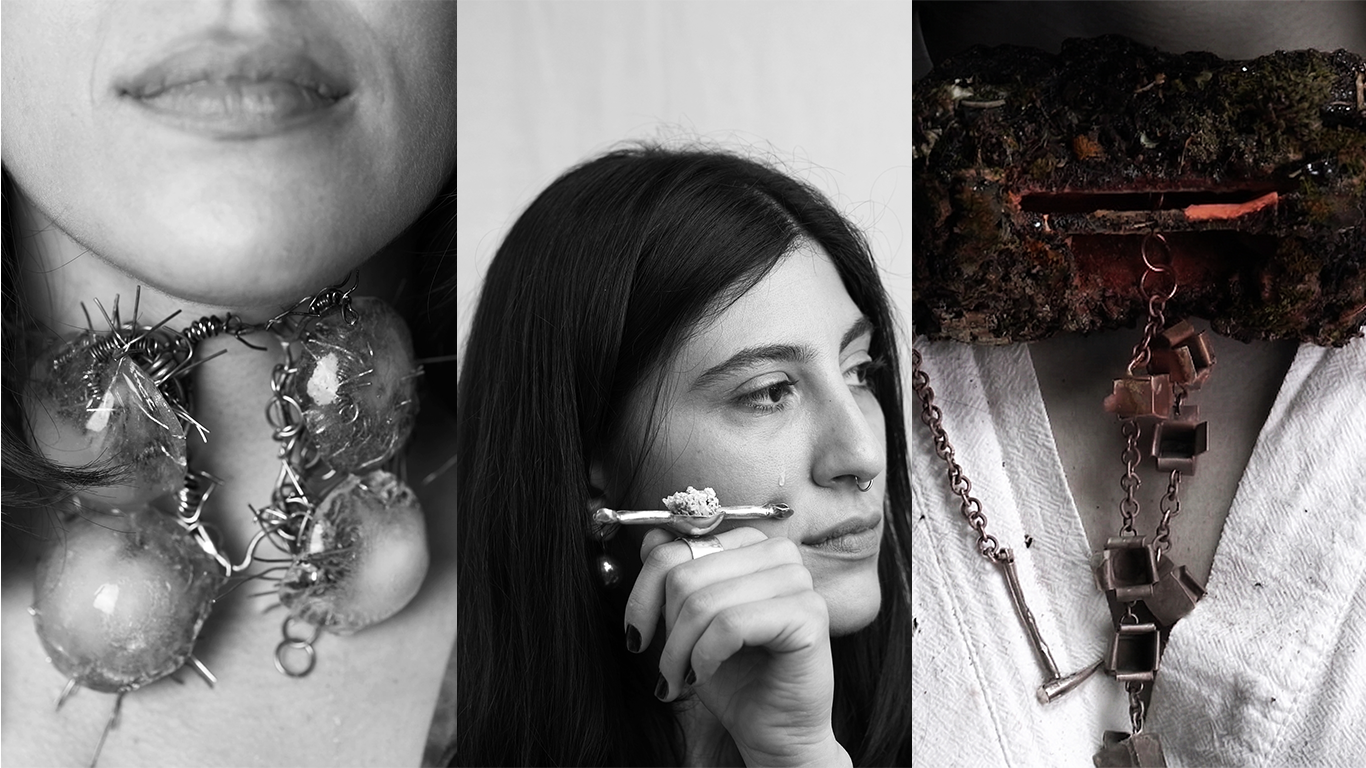
Mercy : Ice, Alpaca, Copper, Silence.
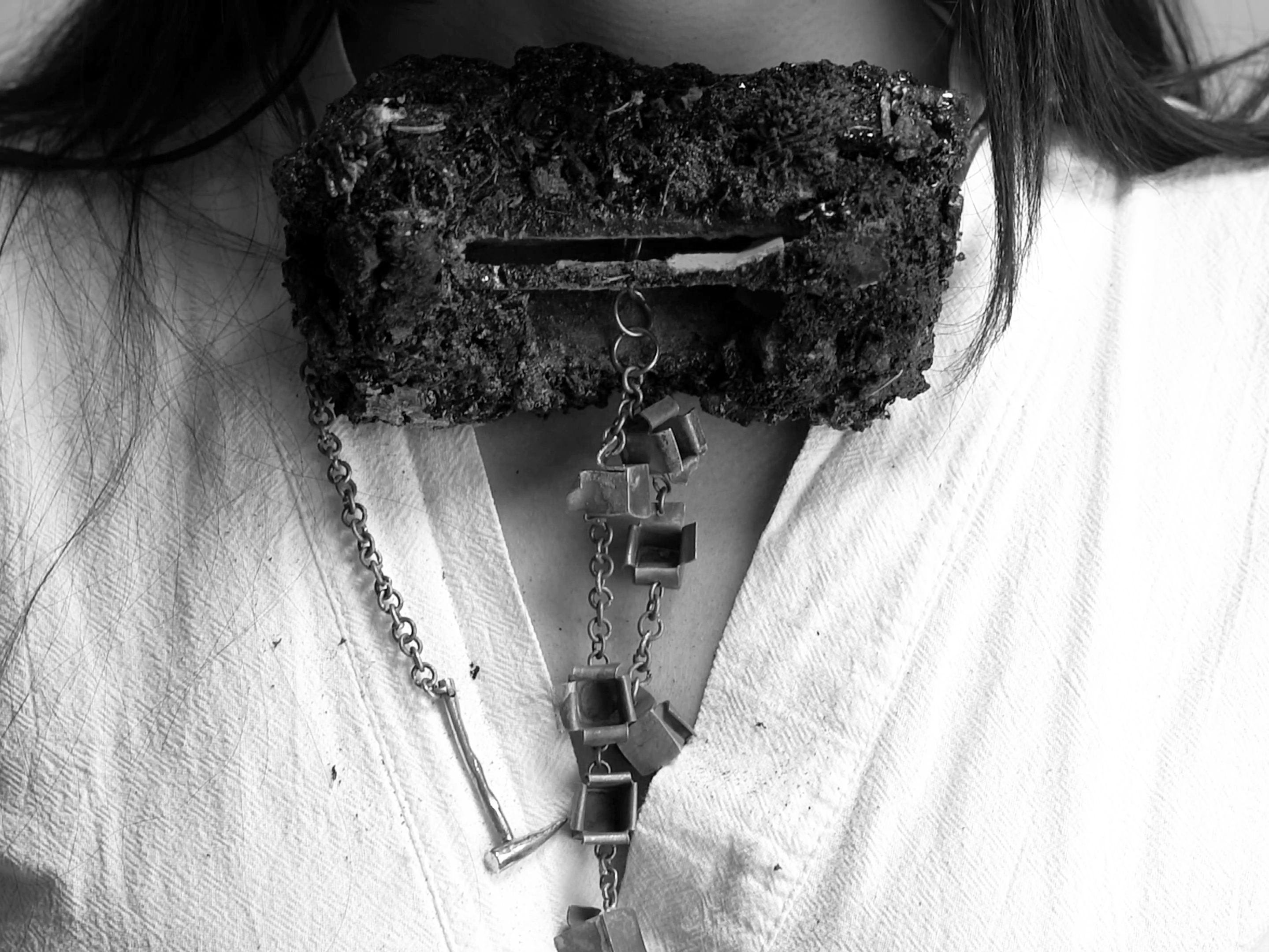
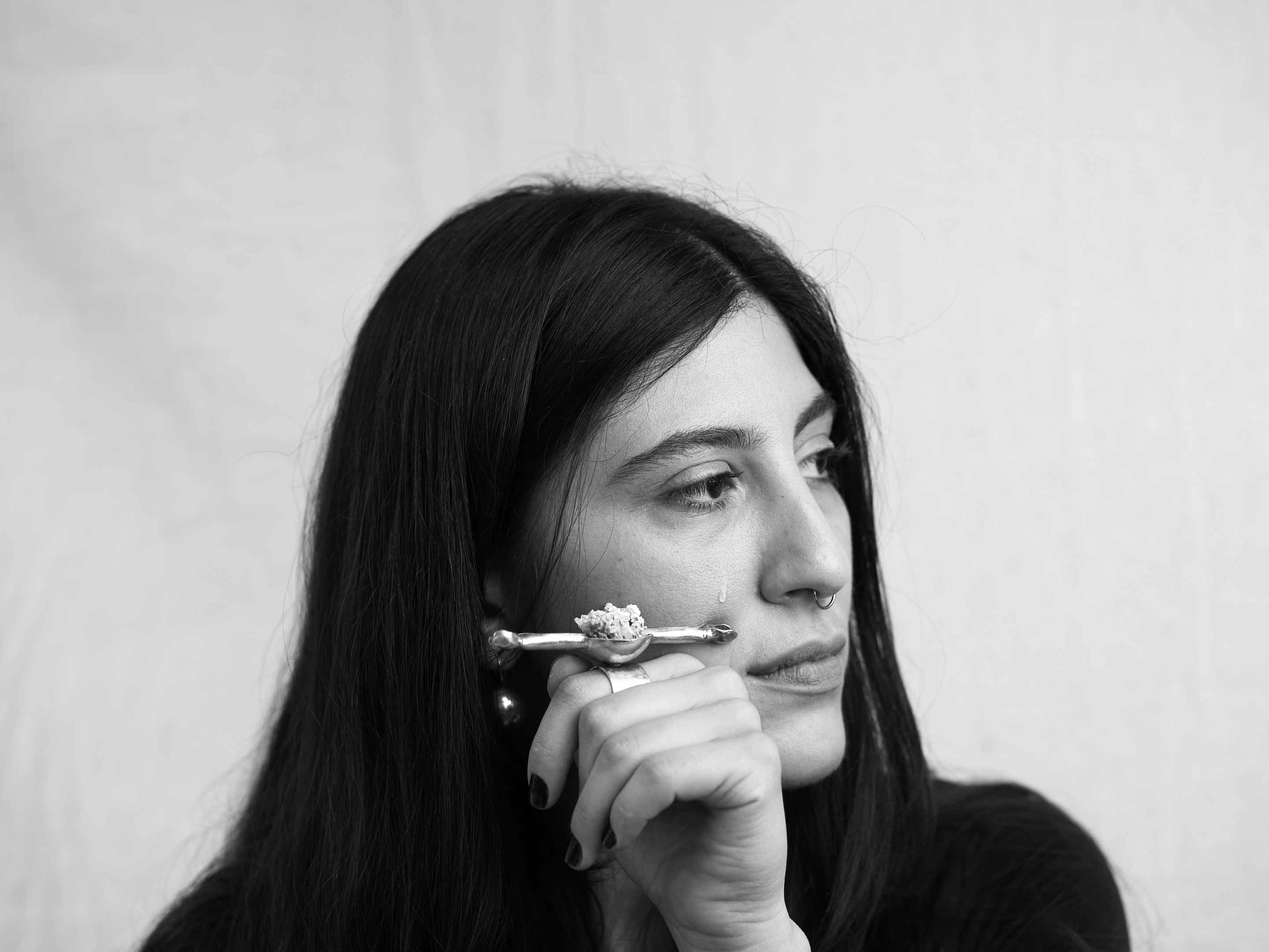
Until I Do : Copper, Brass, Potassium Alum, Sea
Sponge, Tears, Cortisol.
In Case of Emergency Re-center : Pla, Tpu,
Copper, Epoxy, Kiln, Forest Forage,
Disconnection, Reconnection
Research in trauma studies shows that the
body stores implicit memory when experience
can not be metabolized through narrative.
The amygdala activates. The vagus nerve
modulates survival states. The prefrontal
cortex dims when chronic invalidation occurs.
Over time neurobiological consequences
emerge : heightened stress reactivity,
disrupted interoception, fragmentation
between cognition and sensation. Psyhcologist
Jennifer Freyd describes how relational
betrayal can force the nervous system into a
paradox: to preserve attachment perception
must be muted. So the body learns : do not
trust your heartbeat, the constriction in your
throat. The body constantly signals boundary
violations and incoherence, yet mistakes this
danger for intimacy or familiarity. To reclaim
the body is to reclaim its epistemology. To say
my contraction is information, my tears are
regulation. It is not fragility, this is nervous
system responding accurately. When we listen,
the body is our anchor as it does not collapse,
it recalibrates and refuses to rewrite the
same destructive narratives.
Until I Do : Copper, Brass, Potassium Alum, Sea
Sponge, Tears, Cortisol.
In Case of Emergency Re-center : Pla, Tpu,
Copper, Epoxy, Kiln, Forest Forage,
Disconnection, Reconnection
Research in trauma studies shows that the
body stores implicit memory when experience
can not be metabolized through narrative.
The amygdala activates. The vagus nerve
modulates survival states. The prefrontal
cortex dims when chronic invalidation occurs.
Over time neurobiological consequences
emerge : heightened stress reactivity,
disrupted interoception, fragmentation
between cognition and sensation. Psyhcologist
Jennifer Freyd describes how relational
betrayal can force the nervous system into a
paradox: to preserve attachment perception
must be muted. So the body learns : do not
trust your heartbeat, the constriction in your
throat. The body constantly signals boundary
violations and incoherence, yet mistakes this
danger for intimacy or familiarity. To reclaim
the body is to reclaim its epistemology. To say
my contraction is information, my tears are
regulation. It is not fragility, this is nervous
system responding accurately. When we listen,
the body is our anchor as it does not collapse,
it recalibrates and refuses to rewrite the
same destructive narratives.
Under chronic invalidation or threat, the body moves through
a hierarchy of survival states, fight/flight into
freeze/collapse. Vocal tone flattens, throat
muscles constric speeech becomes inhibitied
swallowing tightens, breath shortens.
(Porges, 2011)Silencing yourself is often a
neurophysiological adaptaion, it is not who
you are.Bessel van der Kolk discusses how traumatic
memory often remains pre-verbal. This creates
inability to articulate what happened, body
sensations without story, emotinal reactions
without language. The body learns to block
articualtion when articulation previously led
to danger, dismissal or confusion. When there
is no witness emotional experience becomes
unstable, self trust weakens, dissociation
increases. This work investigates the body
as a site of suppressed knowledge through
three pieces: Mercy, Until, I Do, & In Case of
Emergency, Re-Center.
To reclaim the body means; what I feel is real,
my bodies’ response is a source of knowledge.
This is not only physical healing, it is the act
of reclaiming your own reality.
a hierarchy of survival states, fight/flight into
freeze/collapse. Vocal tone flattens, throat
muscles constric speeech becomes inhibitied
swallowing tightens, breath shortens.
(Porges, 2011)Silencing yourself is often a
neurophysiological adaptaion, it is not who
you are.Bessel van der Kolk discusses how traumatic
memory often remains pre-verbal. This creates
inability to articulate what happened, body
sensations without story, emotinal reactions
without language. The body learns to block
articualtion when articulation previously led
to danger, dismissal or confusion. When there
is no witness emotional experience becomes
unstable, self trust weakens, dissociation
increases. This work investigates the body
as a site of suppressed knowledge through
three pieces: Mercy, Until, I Do, & In Case of
Emergency, Re-Center.
To reclaim the body means; what I feel is real,
my bodies’ response is a source of knowledge.
This is not only physical healing, it is the act
of reclaiming your own reality.