Protocol: In case of emergency, re-center.
Some people learn early that places do not stay. That a house is temporary, that a city is a phase, that the ground beneath you is always negotiable. The Western philosophical tradition treated belonging as singular and fixed: one home of origin, one ground, one identity. However, home is not a place you return to: it is a multiplicity you carry and continually redistribute. Belonging is not singular permission from elsewhere, it is the knowledge that your body holds multitudes. The proposal is to remember that the body is the primary territory. It is where all knowing, being, becoming emerges. It is the ground in which everything seeded and blossomed, a ground through which we
experience life. ‘Aidiyetsizlik’ in Turkish means non-belonging, the state of being suspended. It is central to this work’s concept.
The piece asks: if you cannot be held by a nation, a house, a
relationship, a family then can you anchor yourself in the only constant and
consistent site: the body. The body orients you, centers you, roots you,
it is a territory with its own
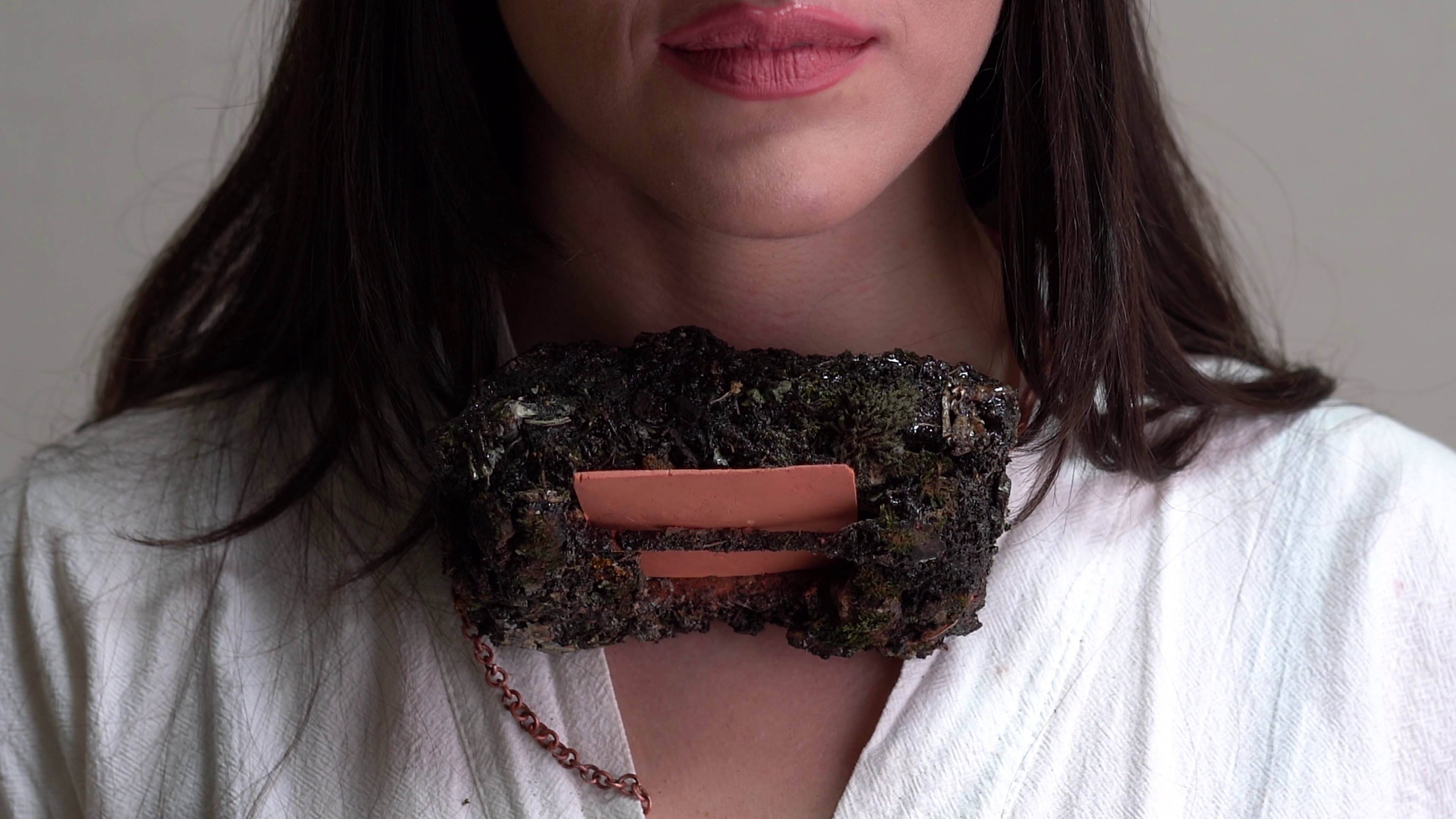
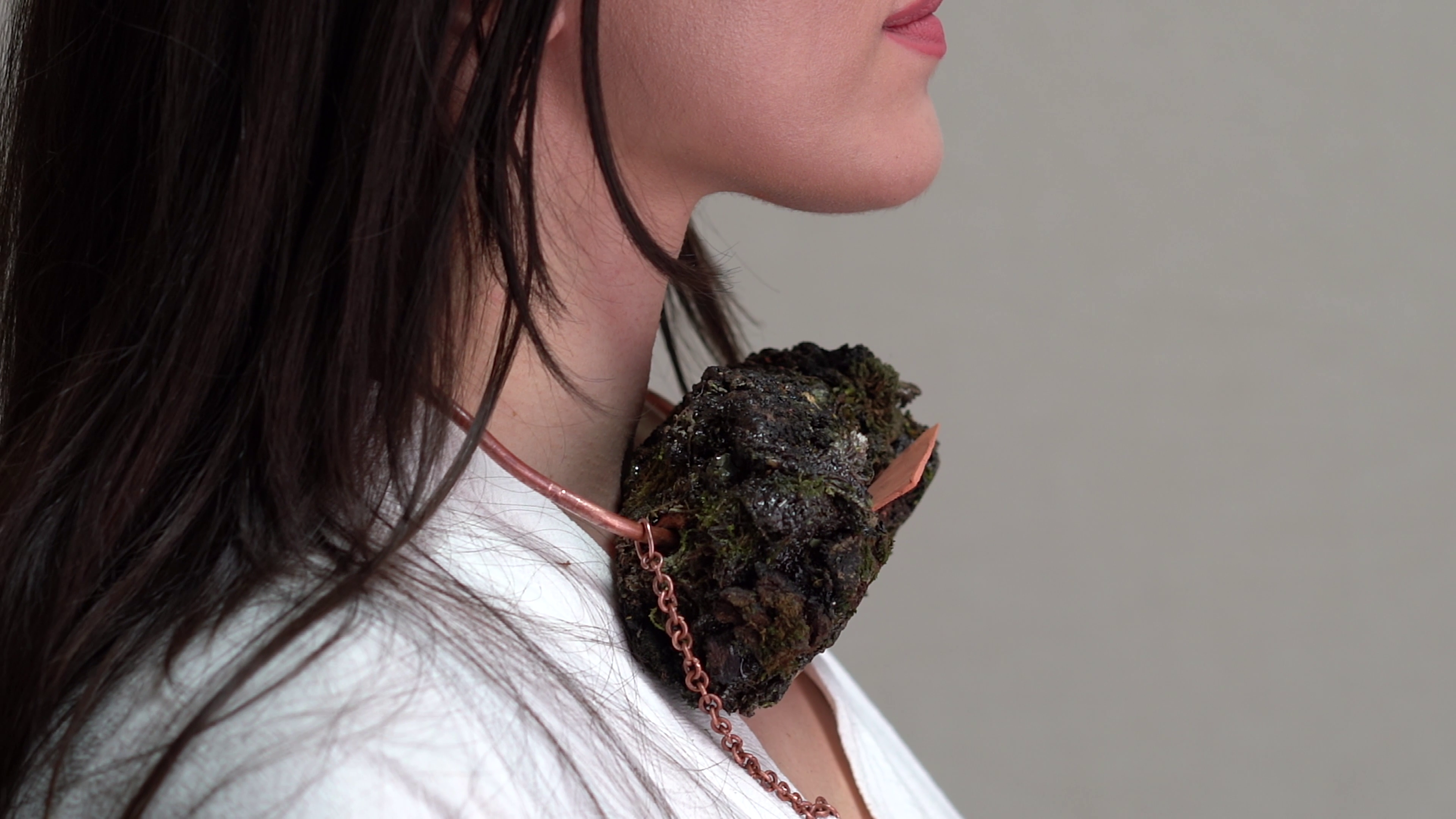
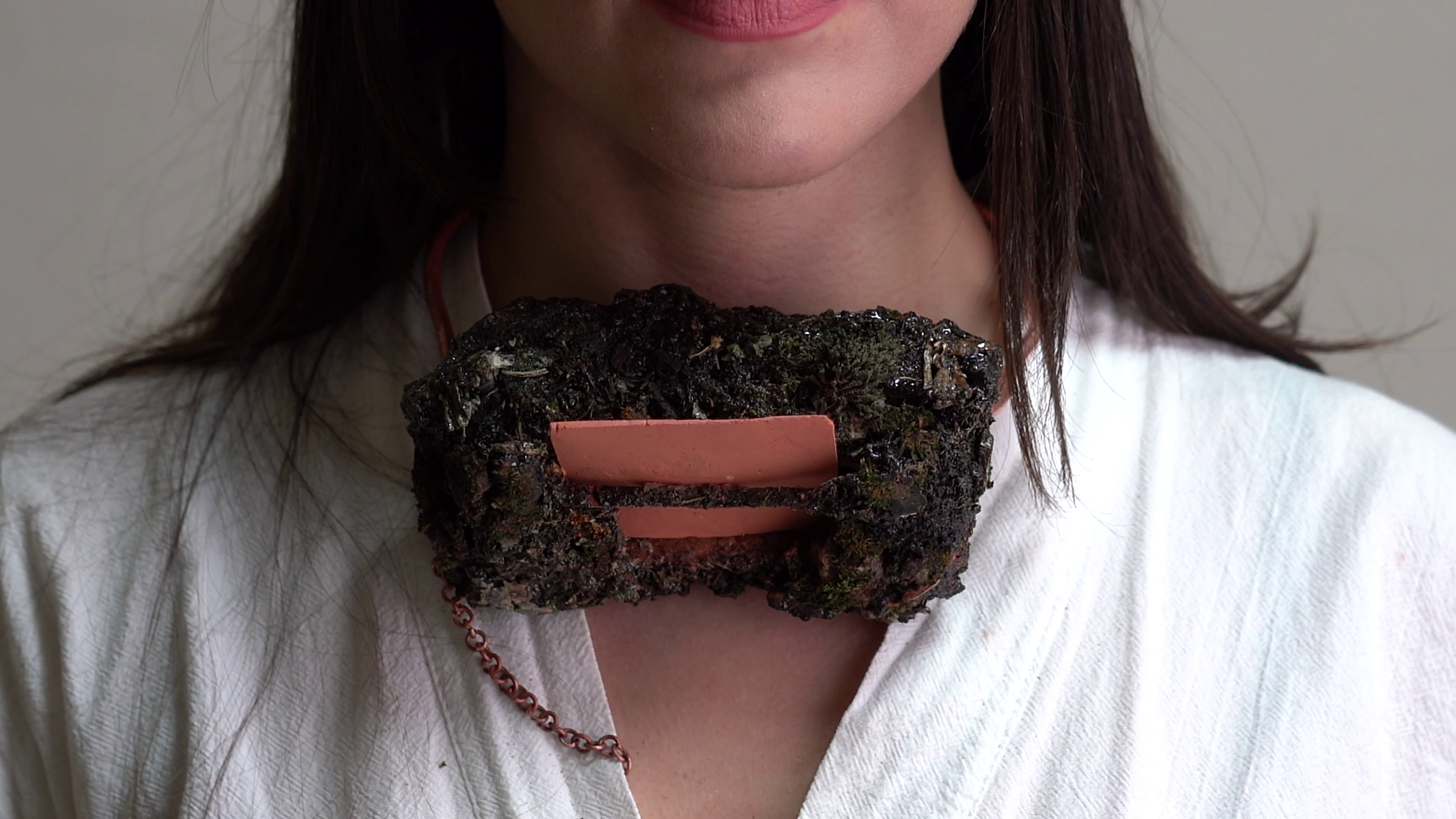
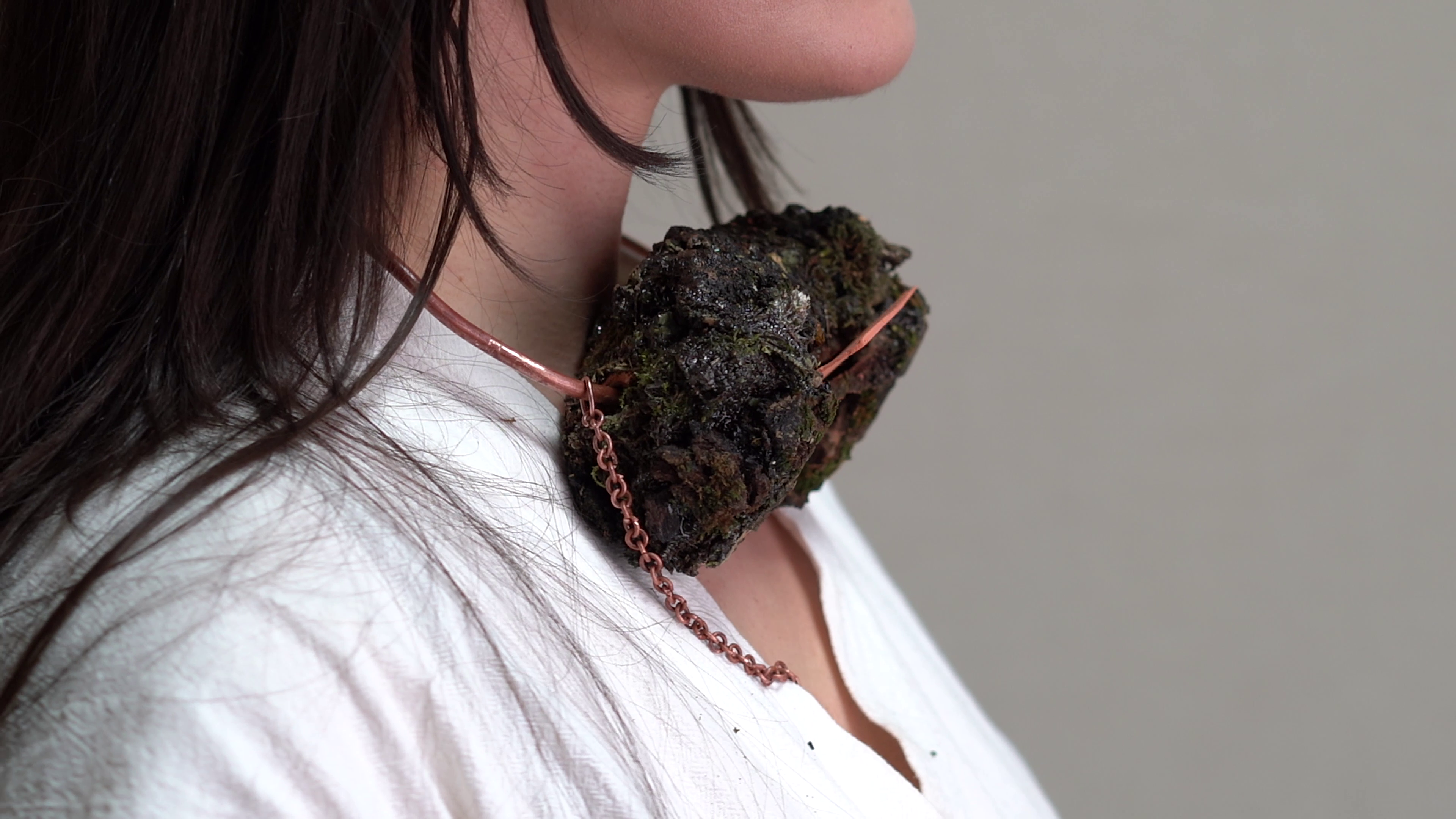
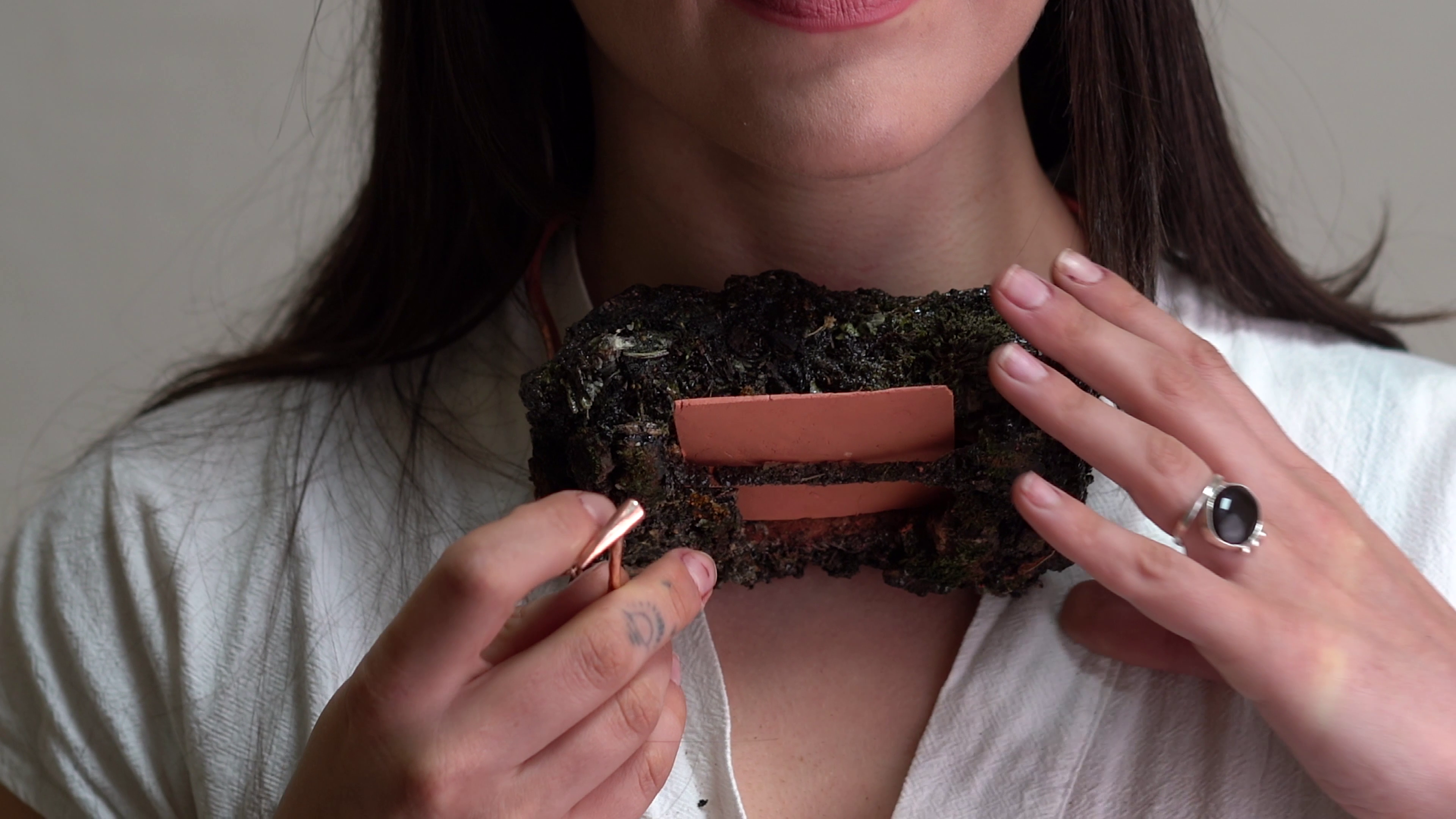
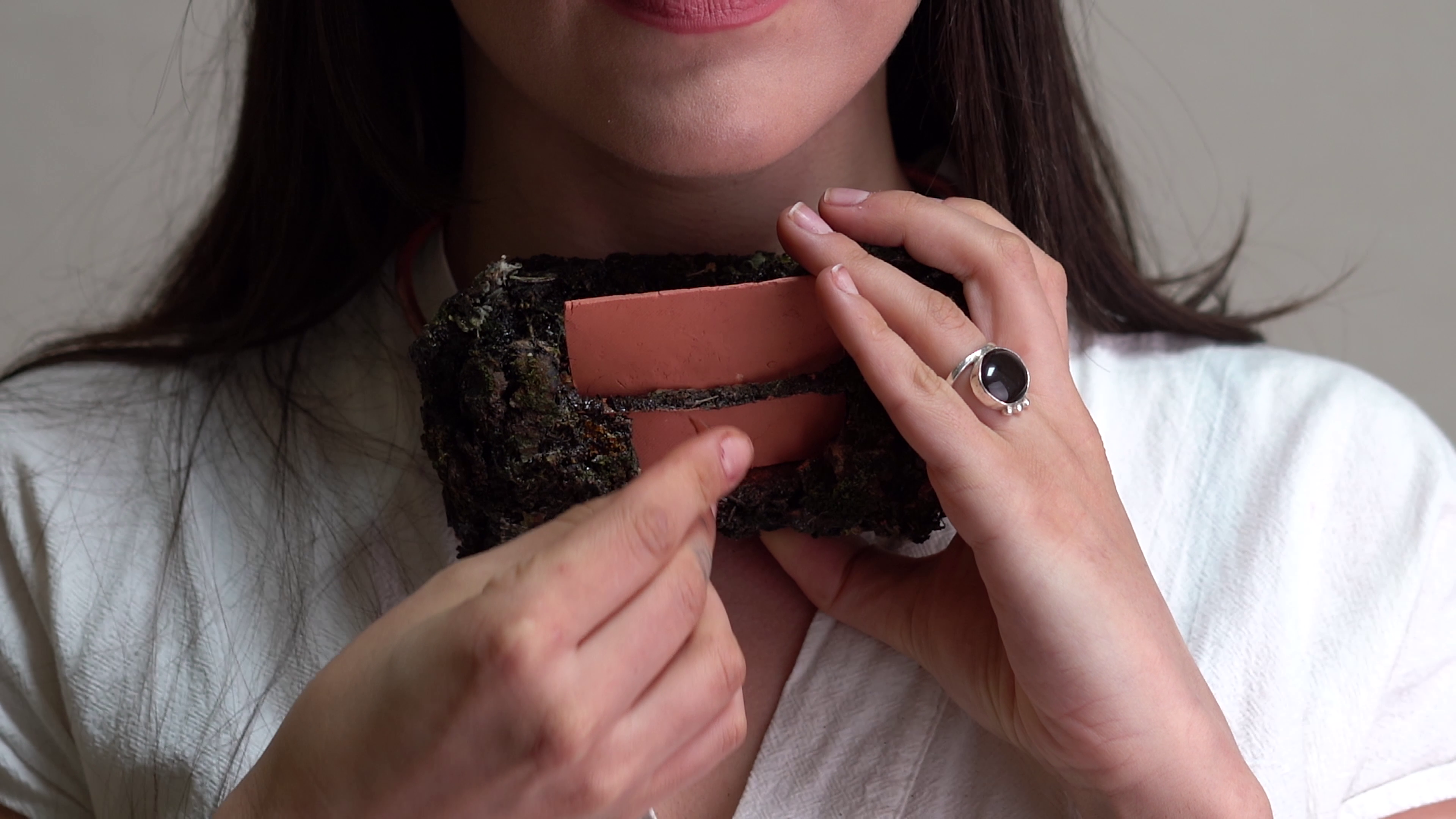
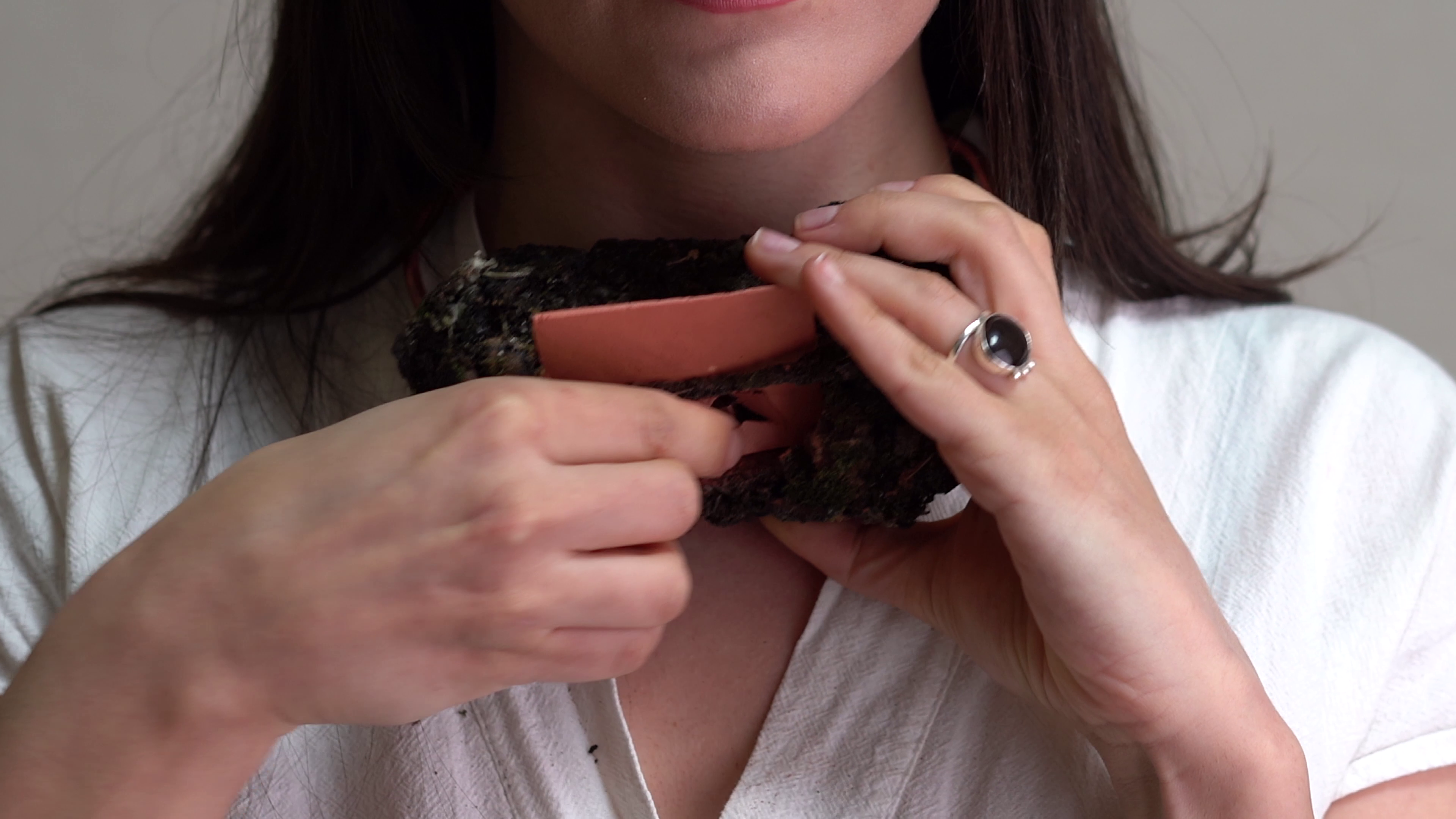
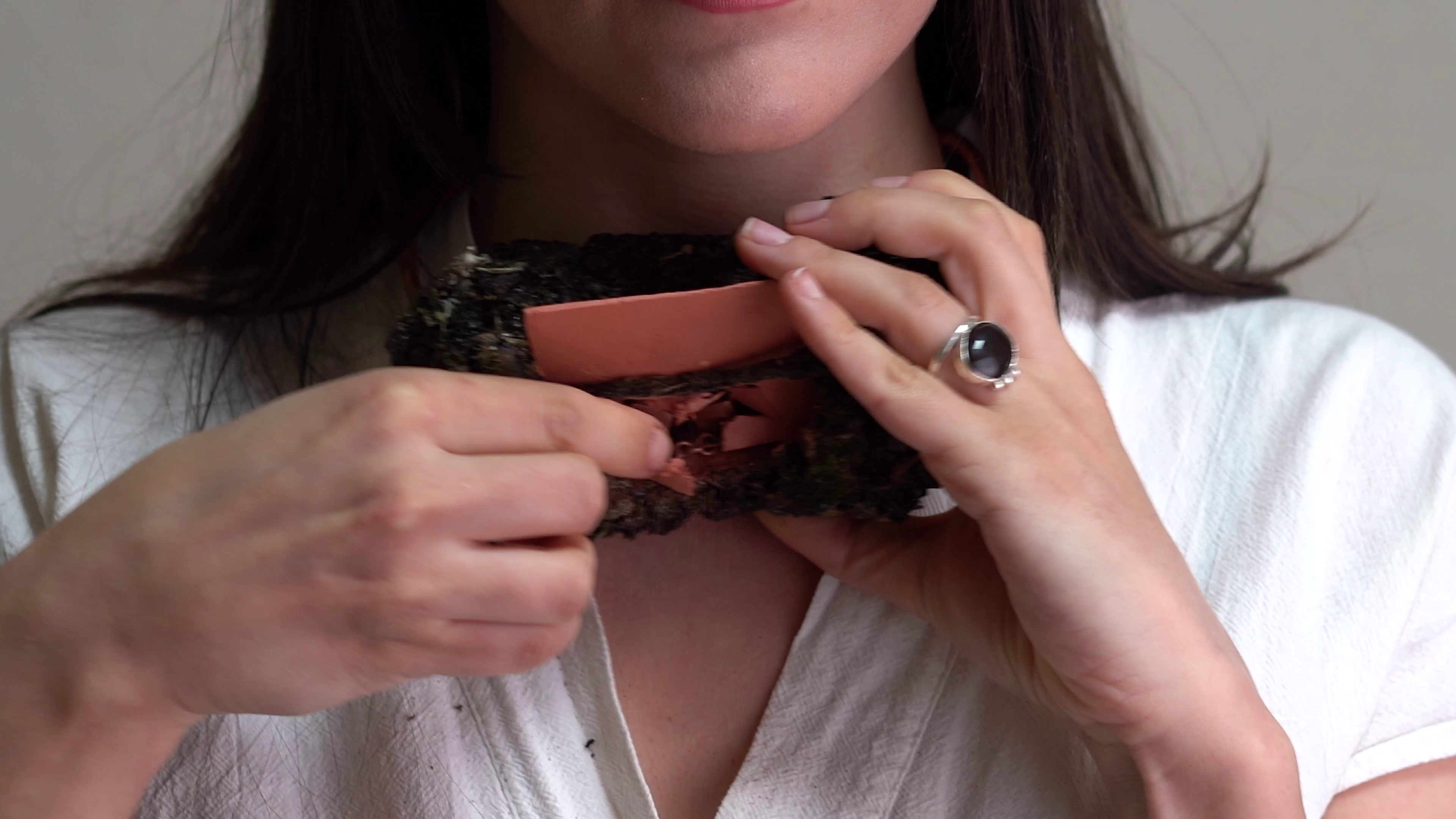
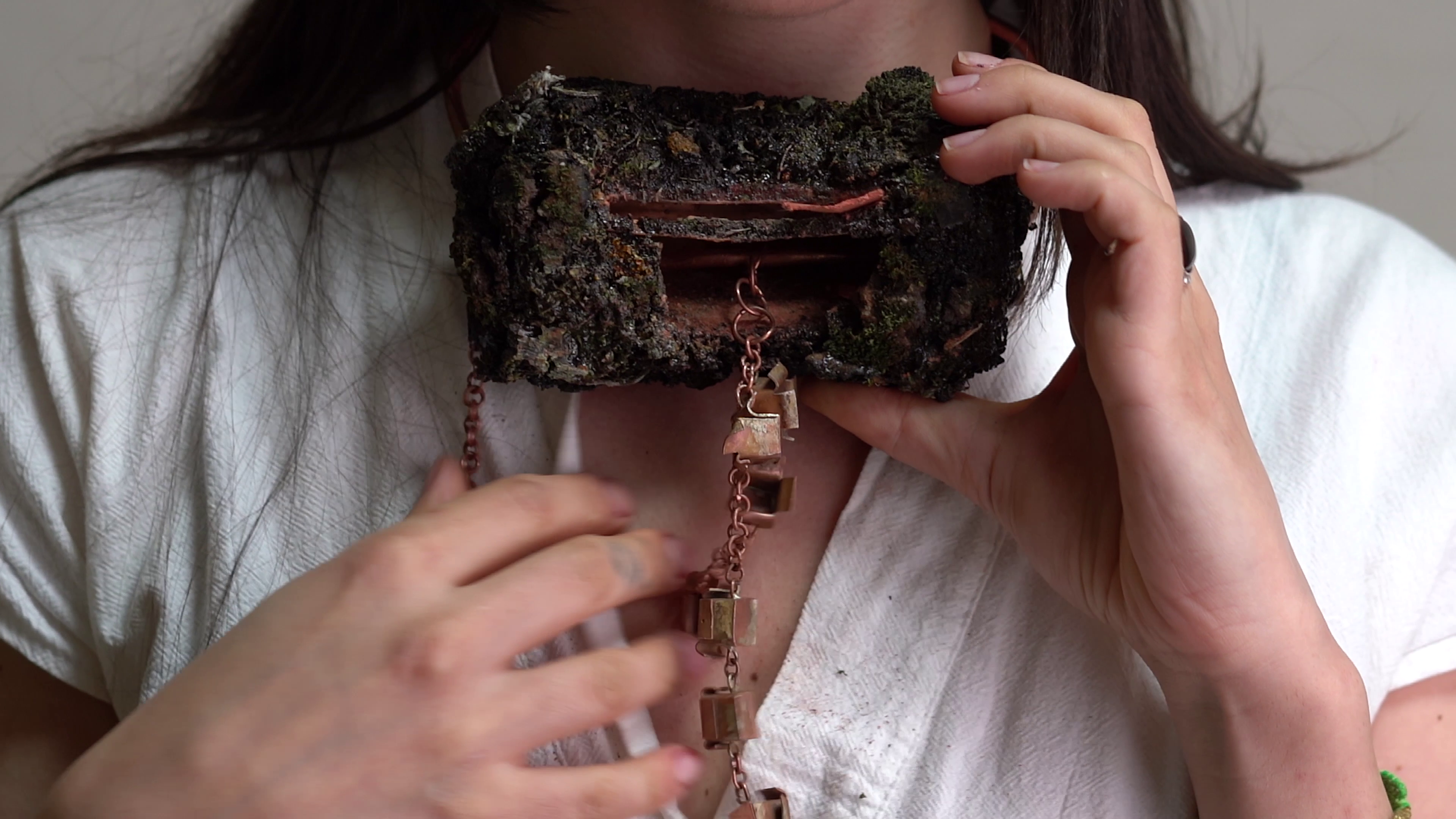
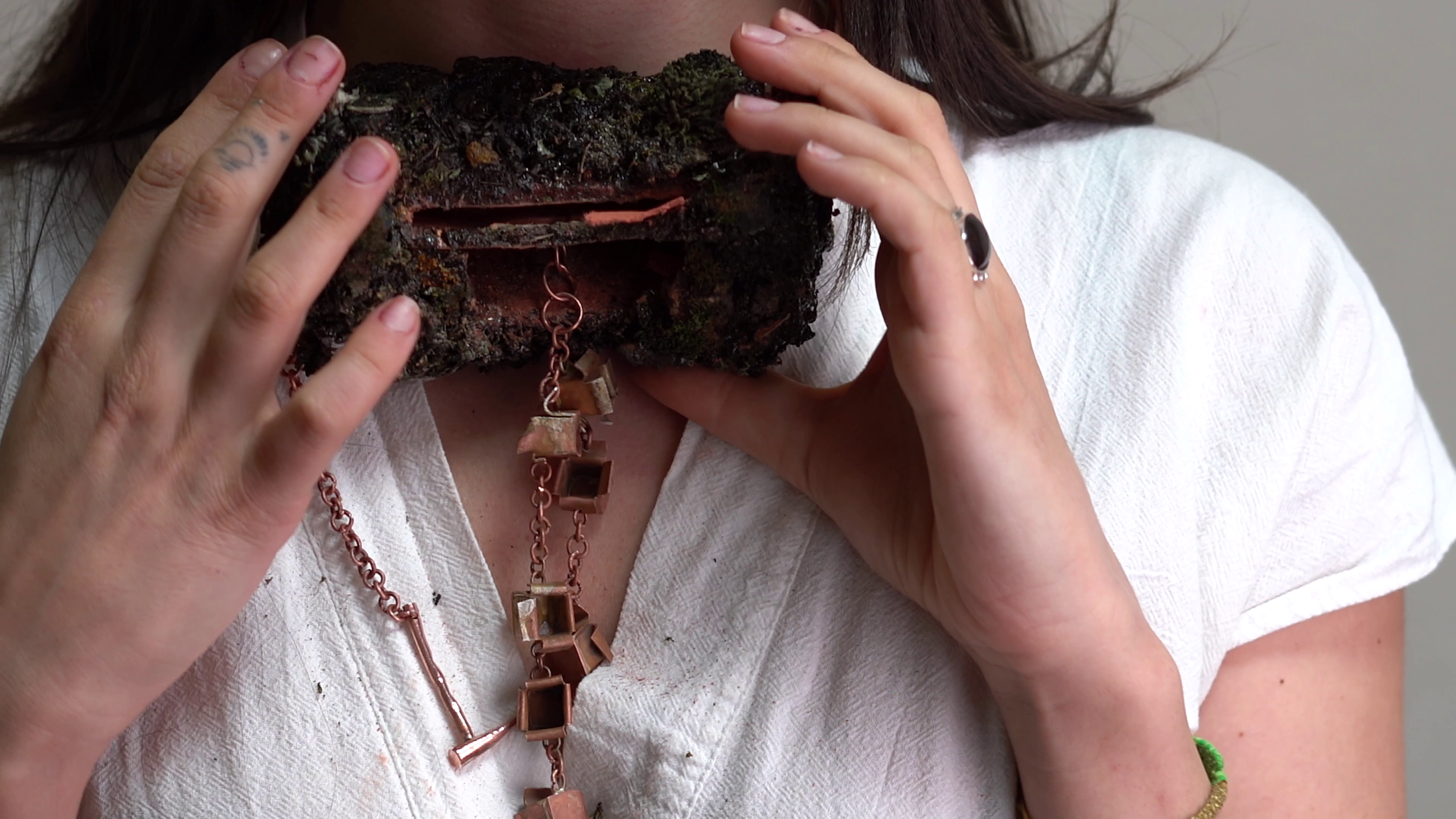
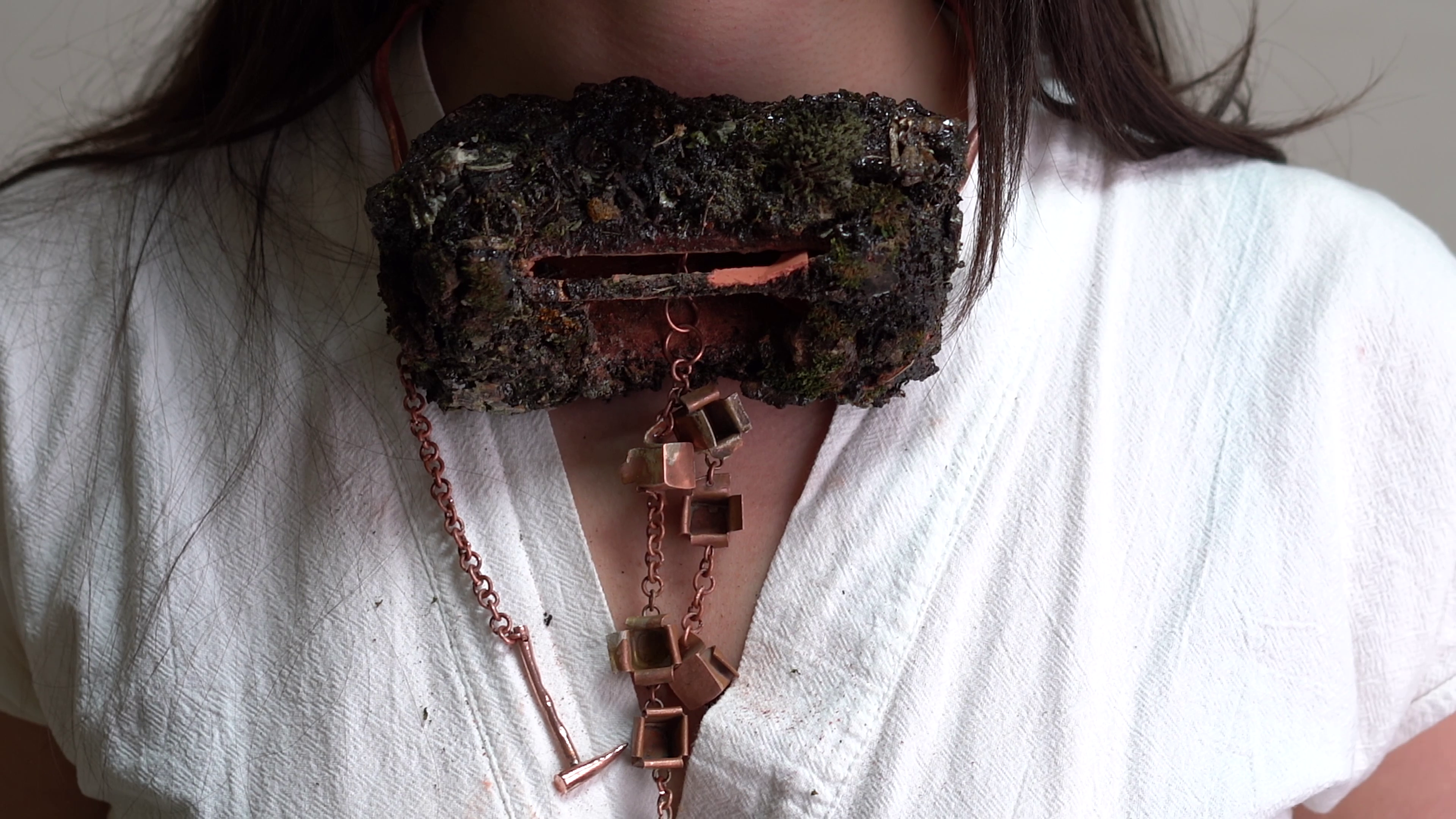
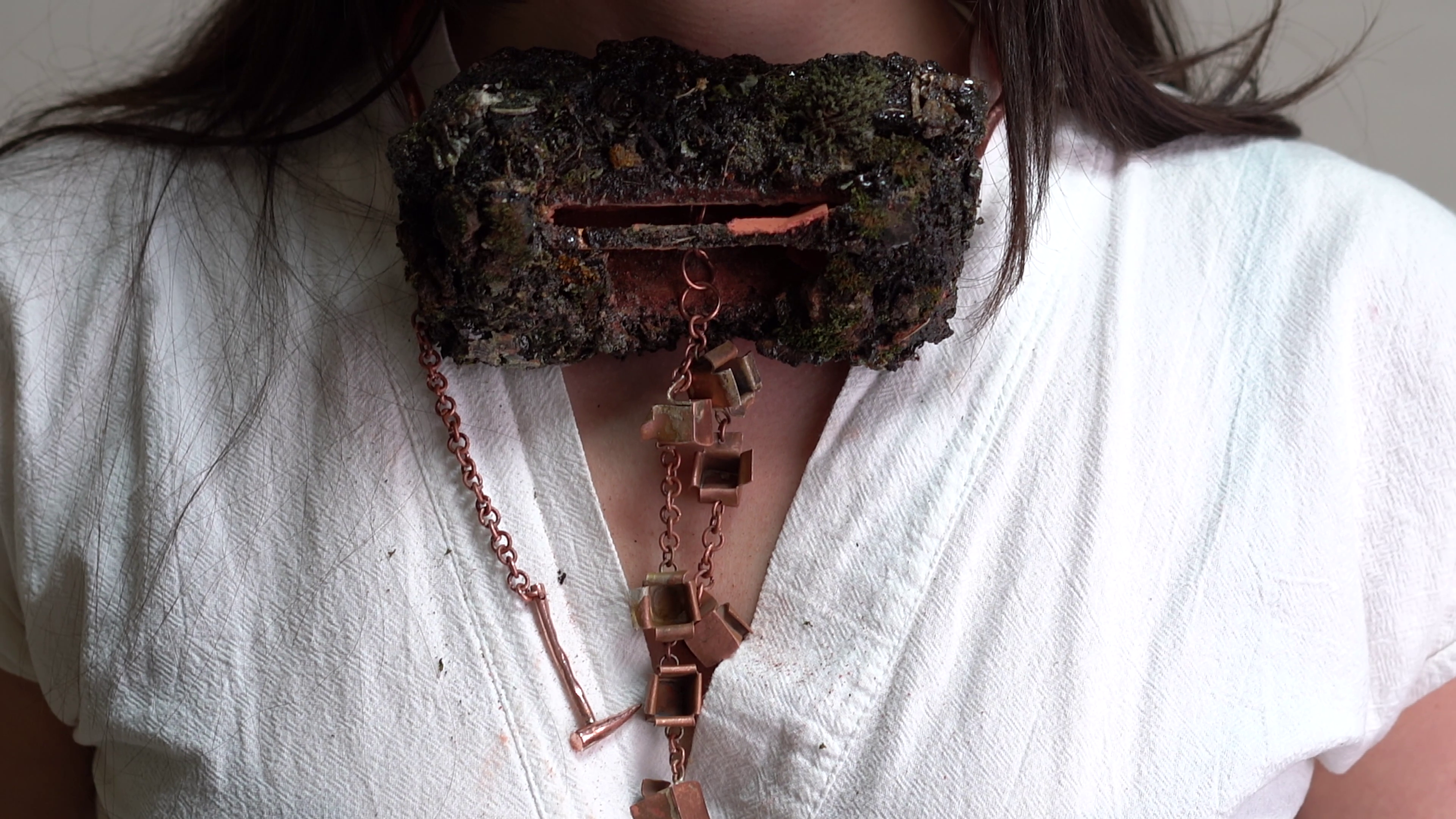
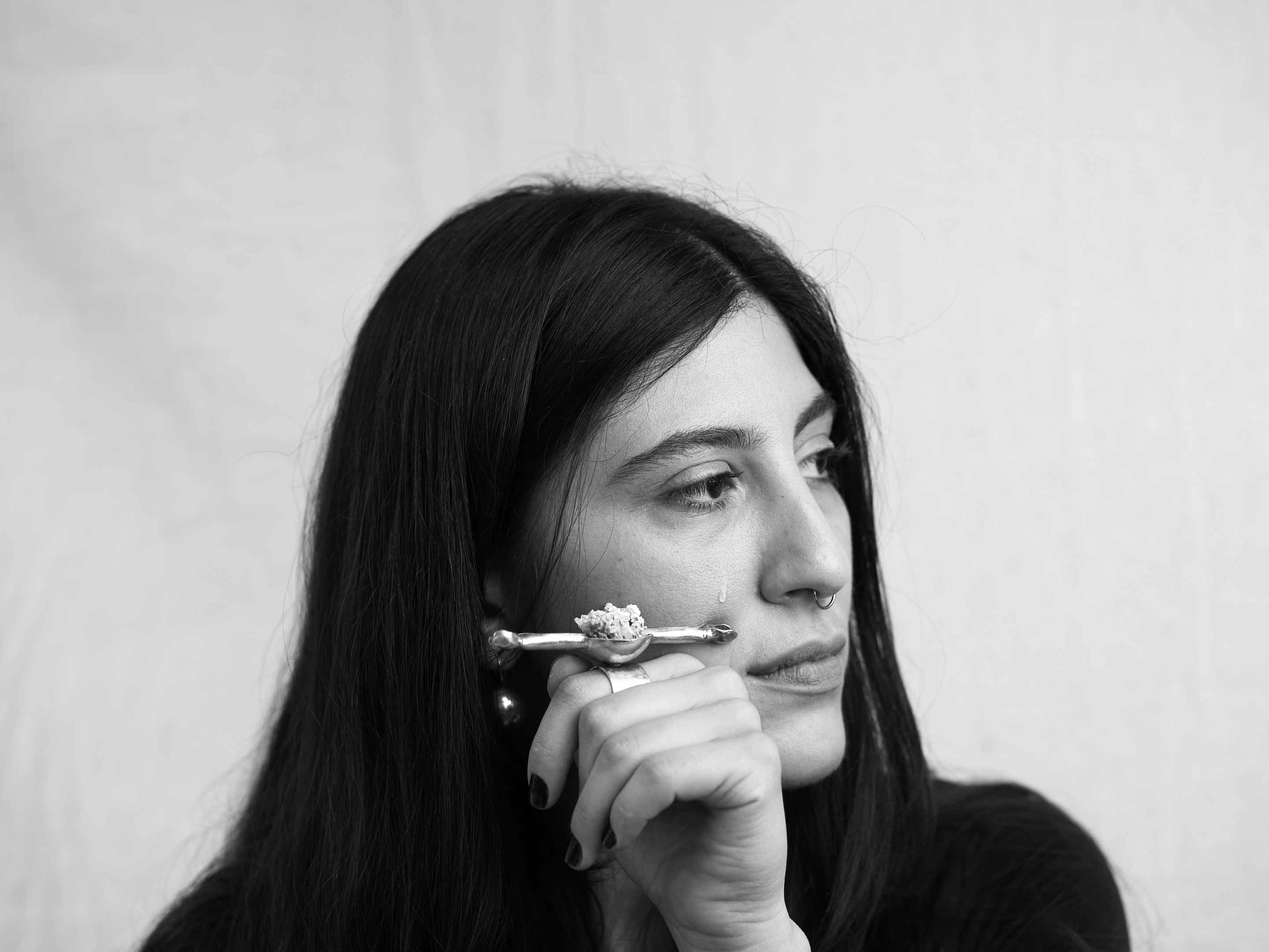
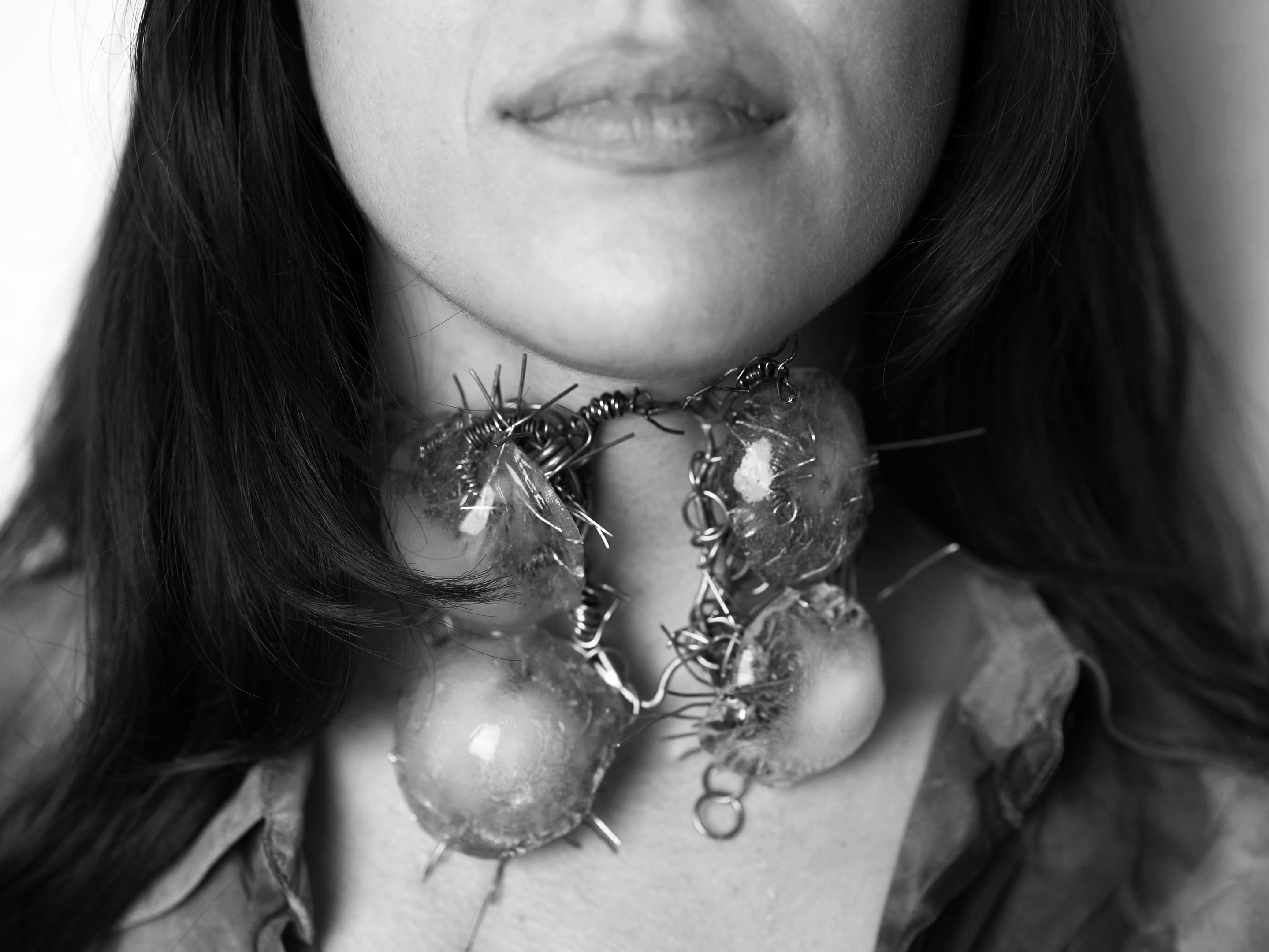
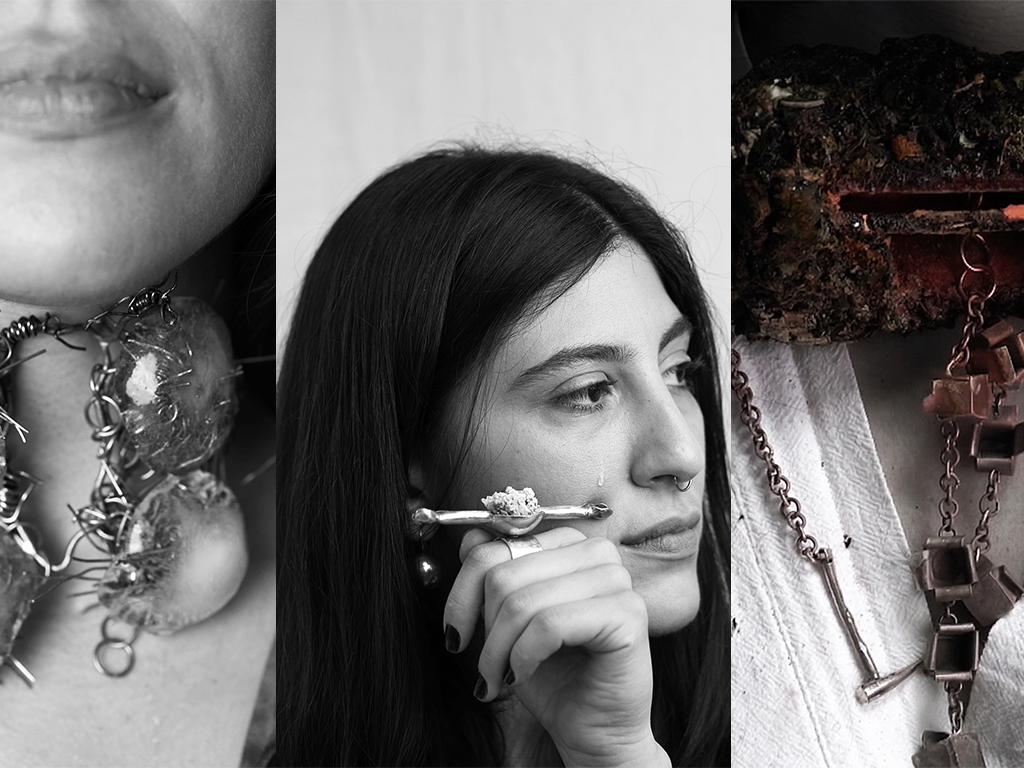
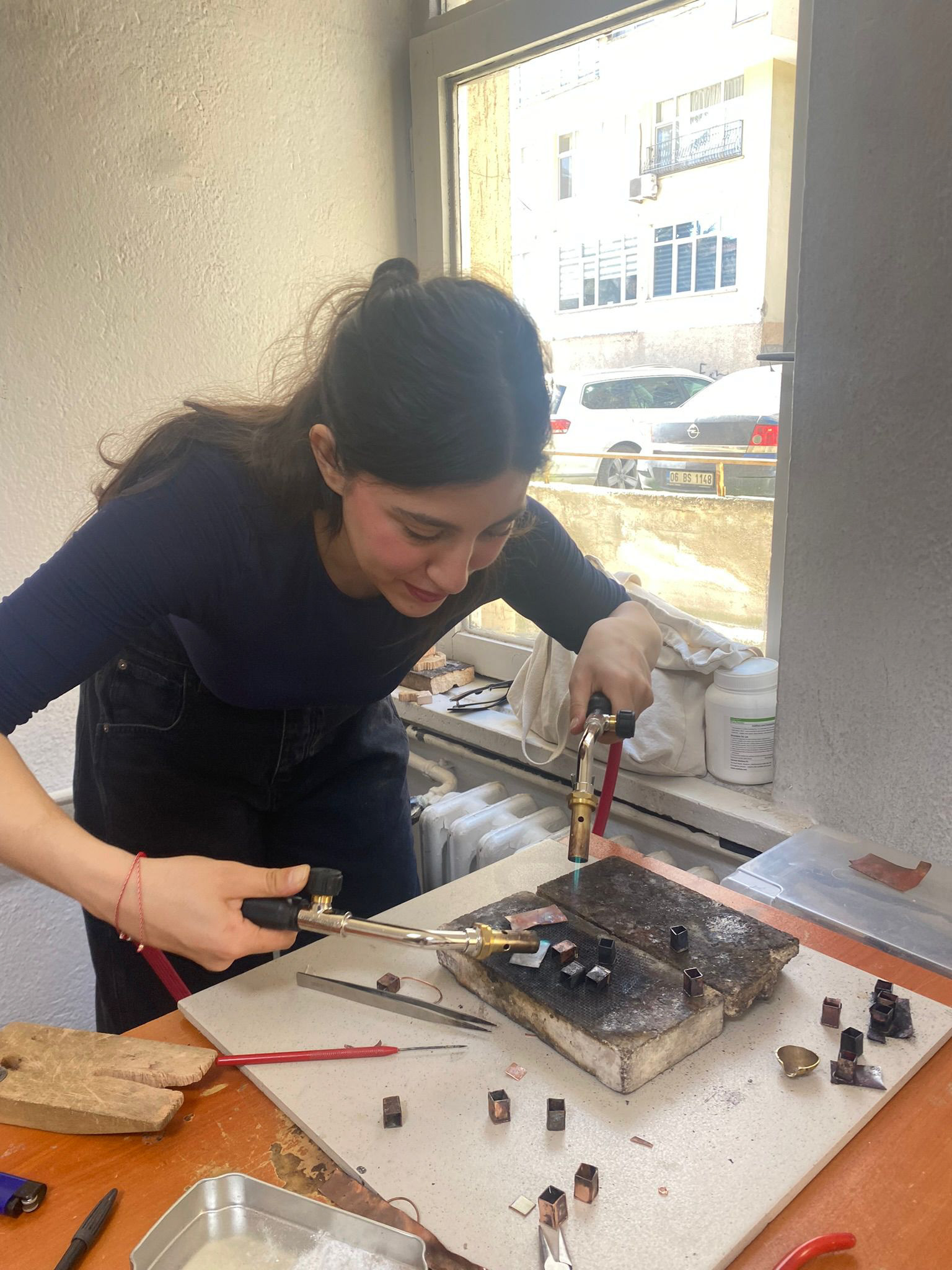
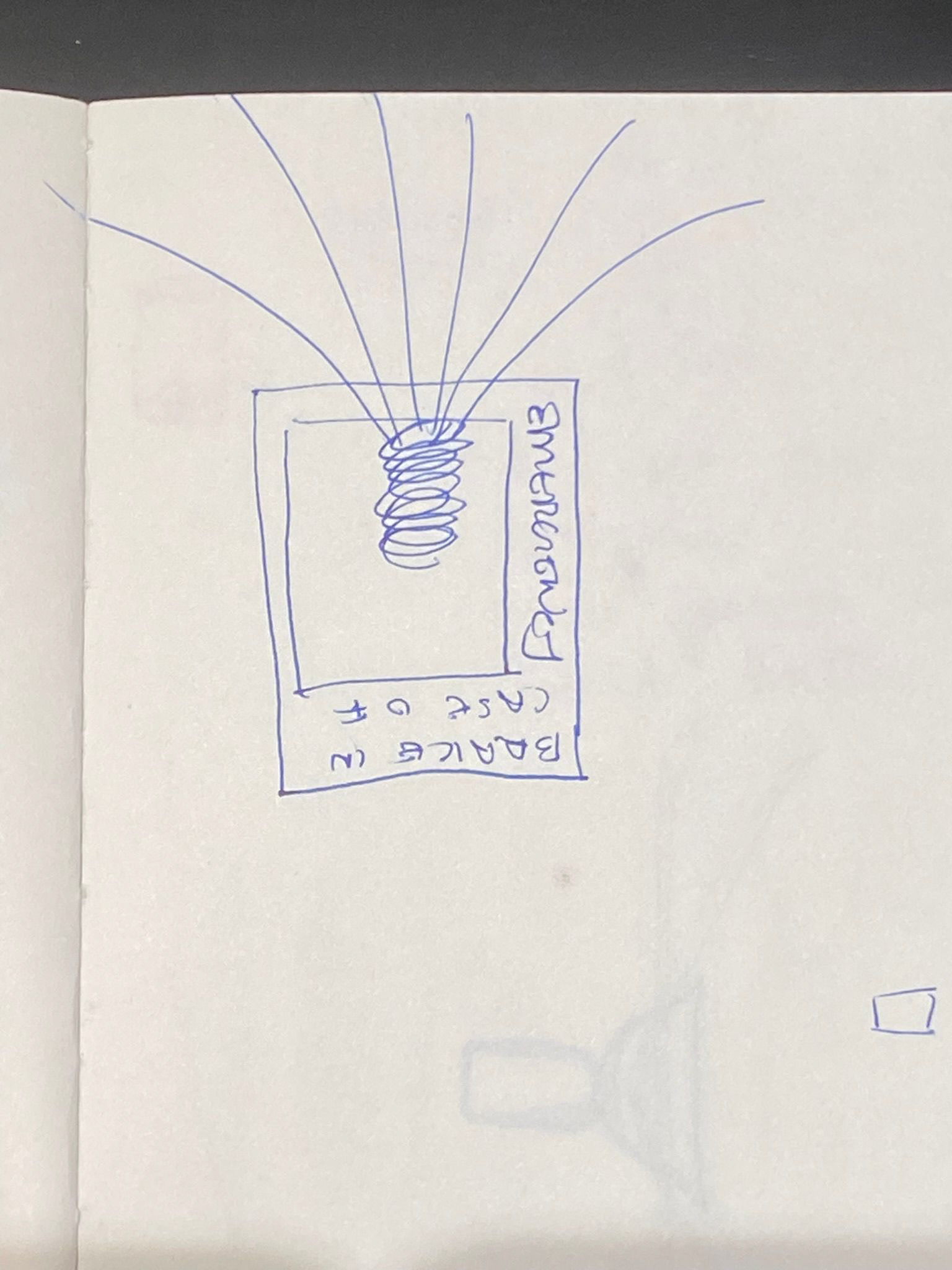
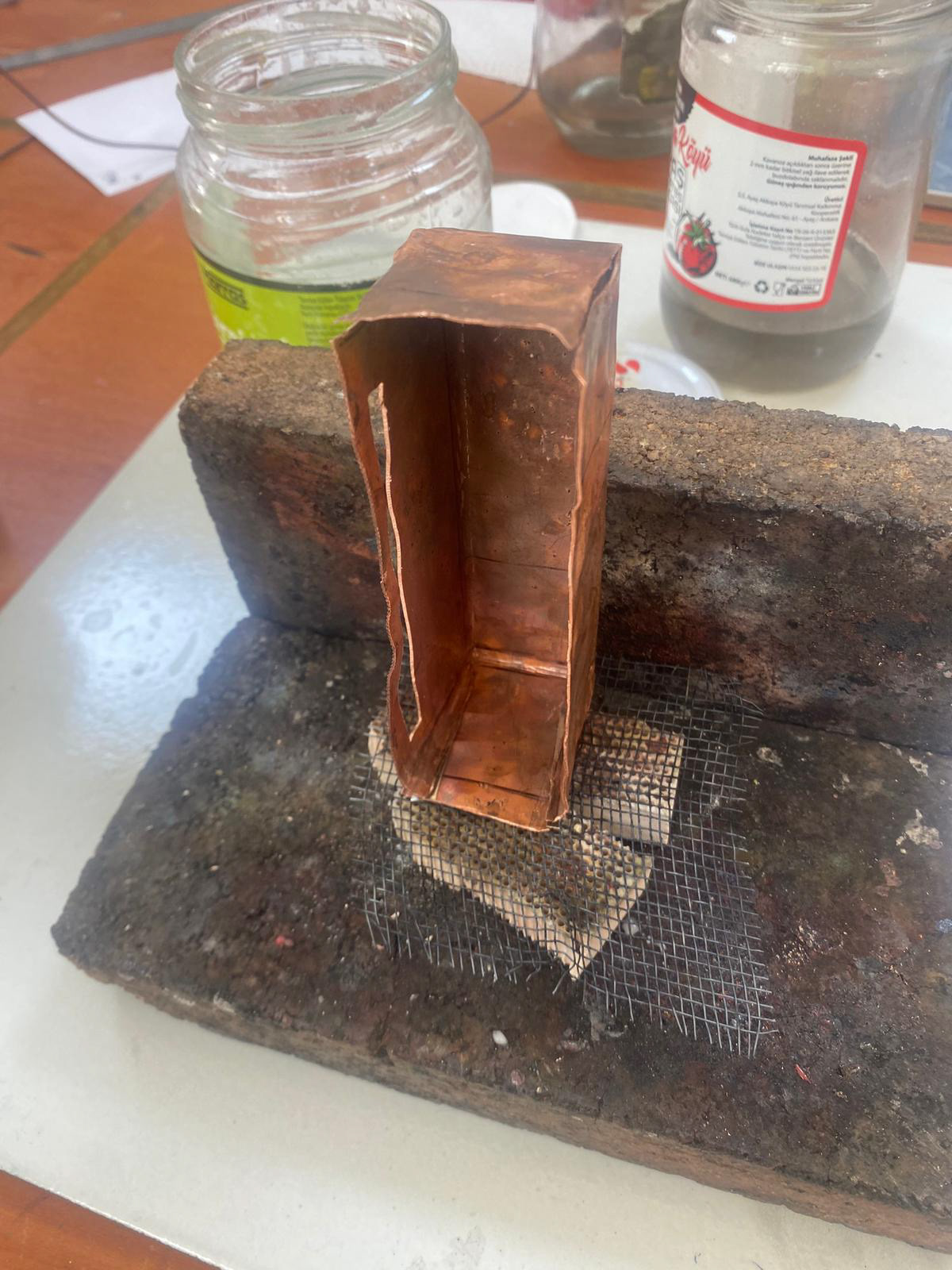
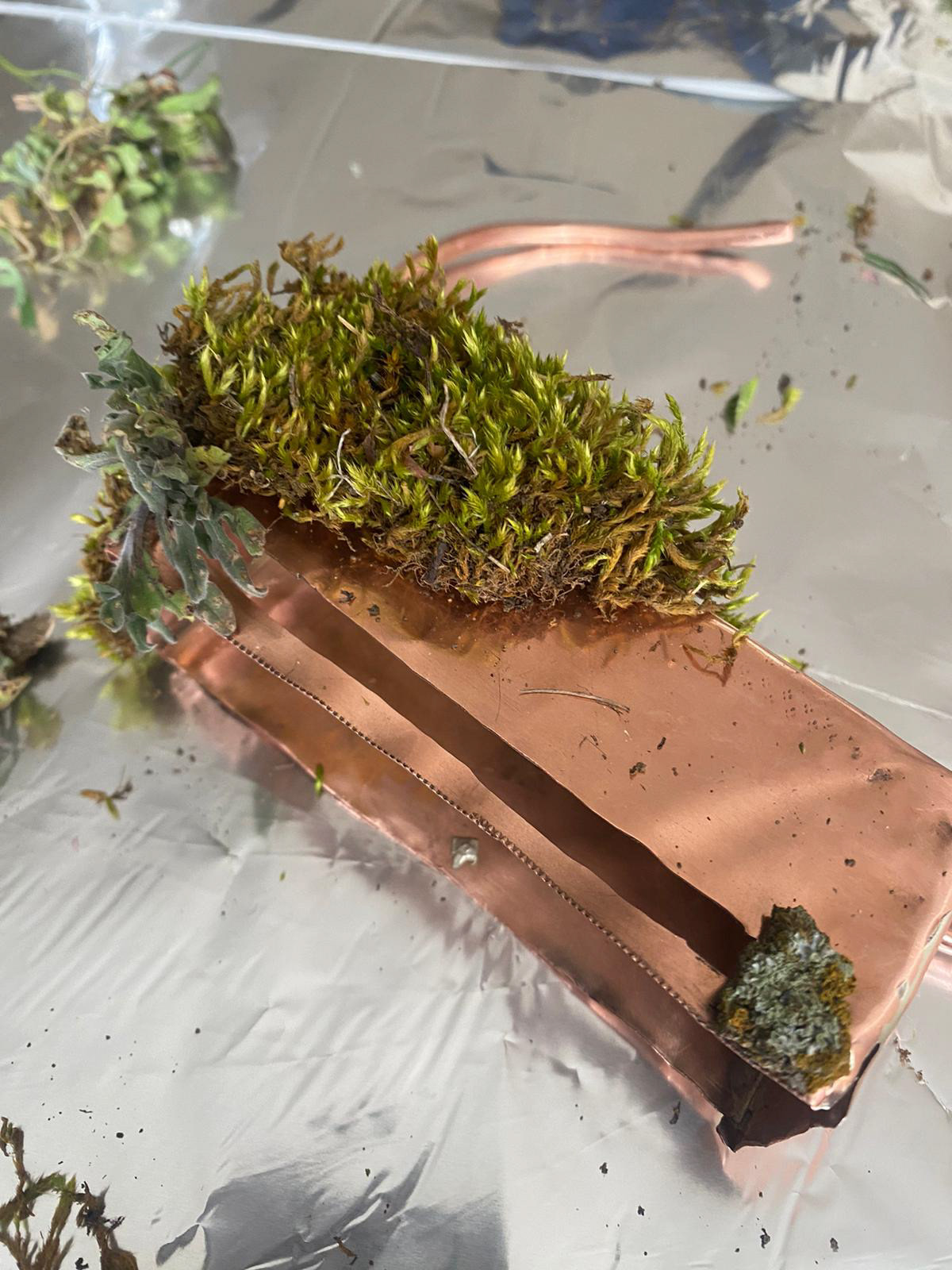
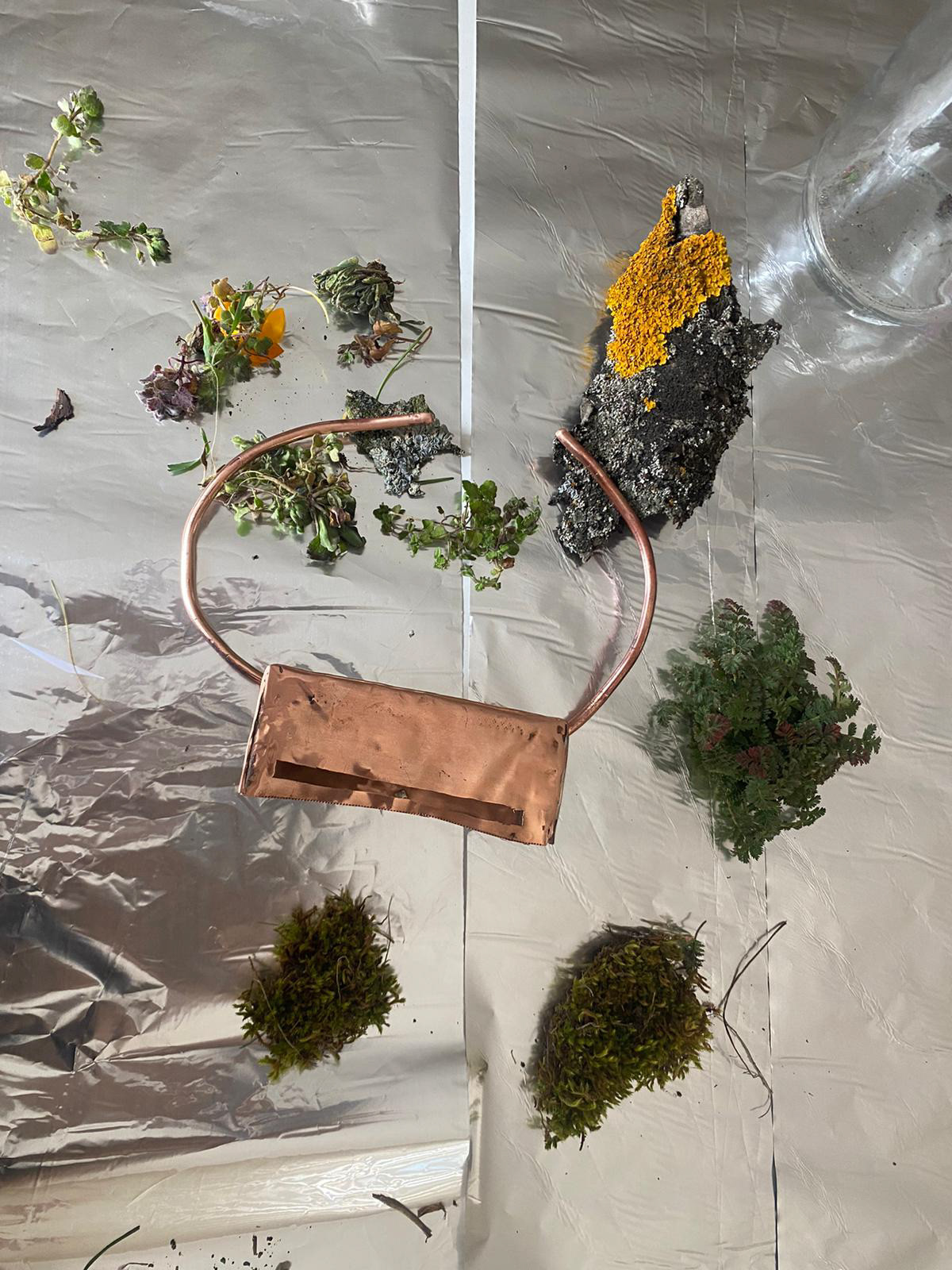
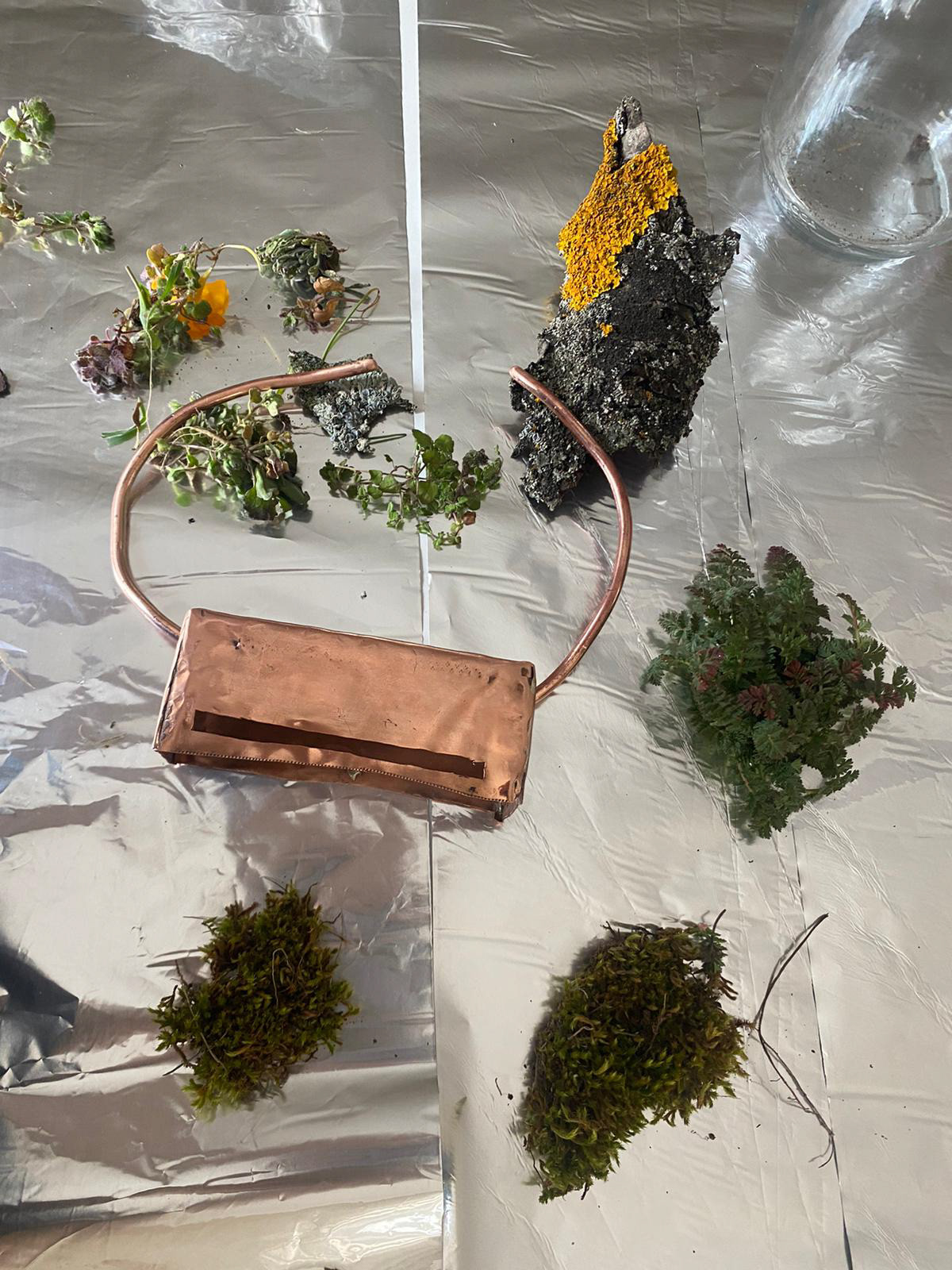
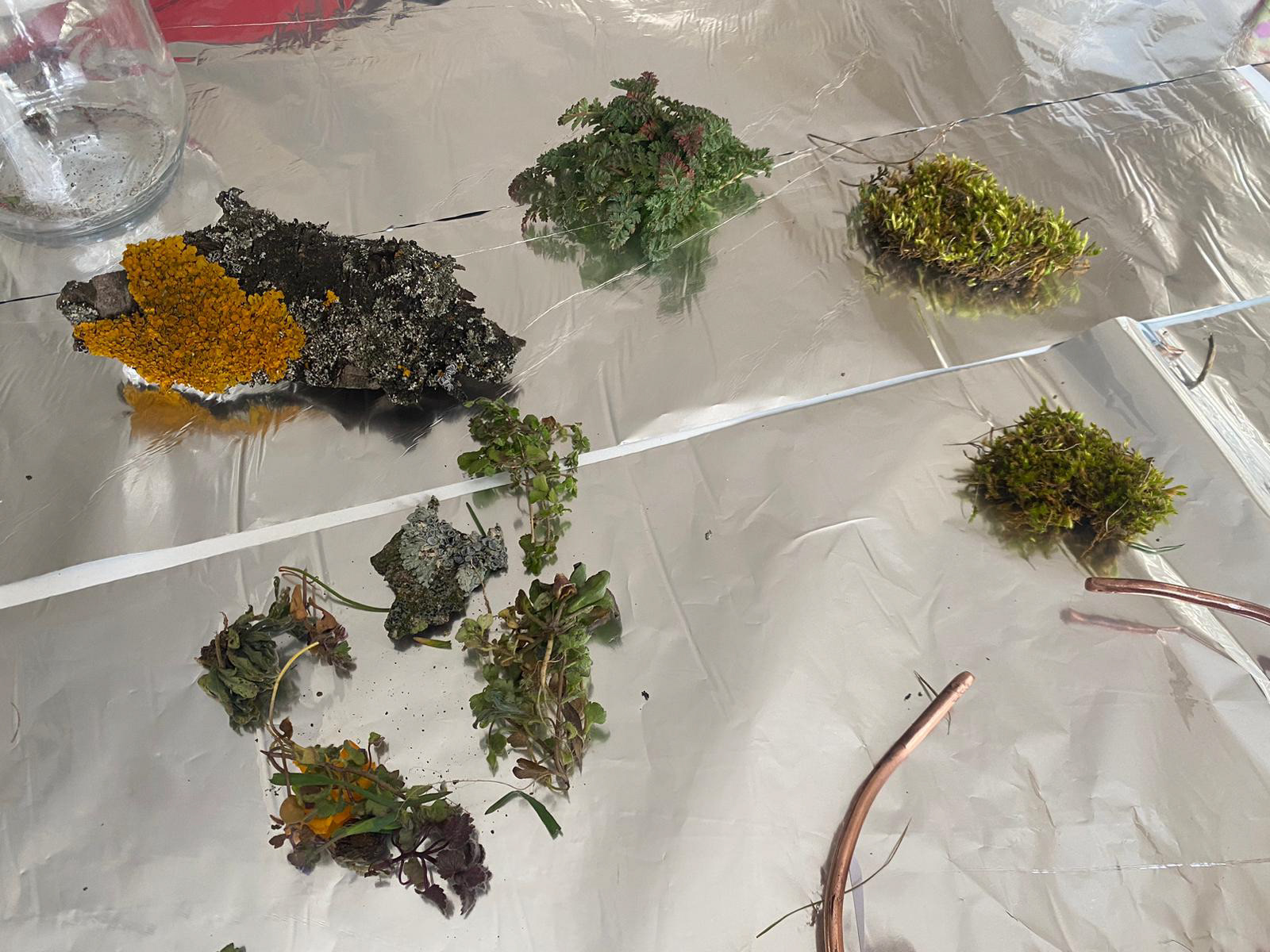
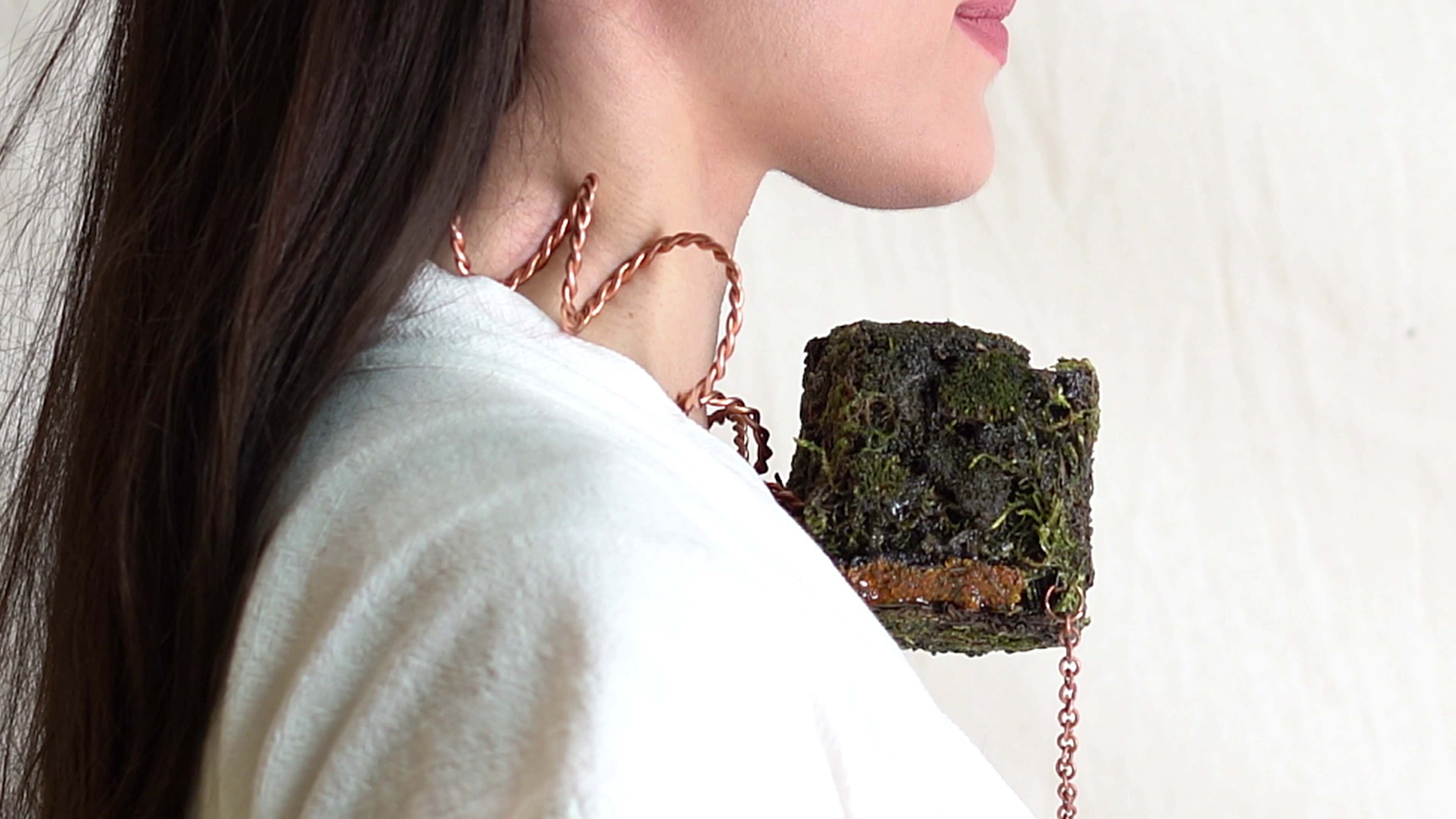
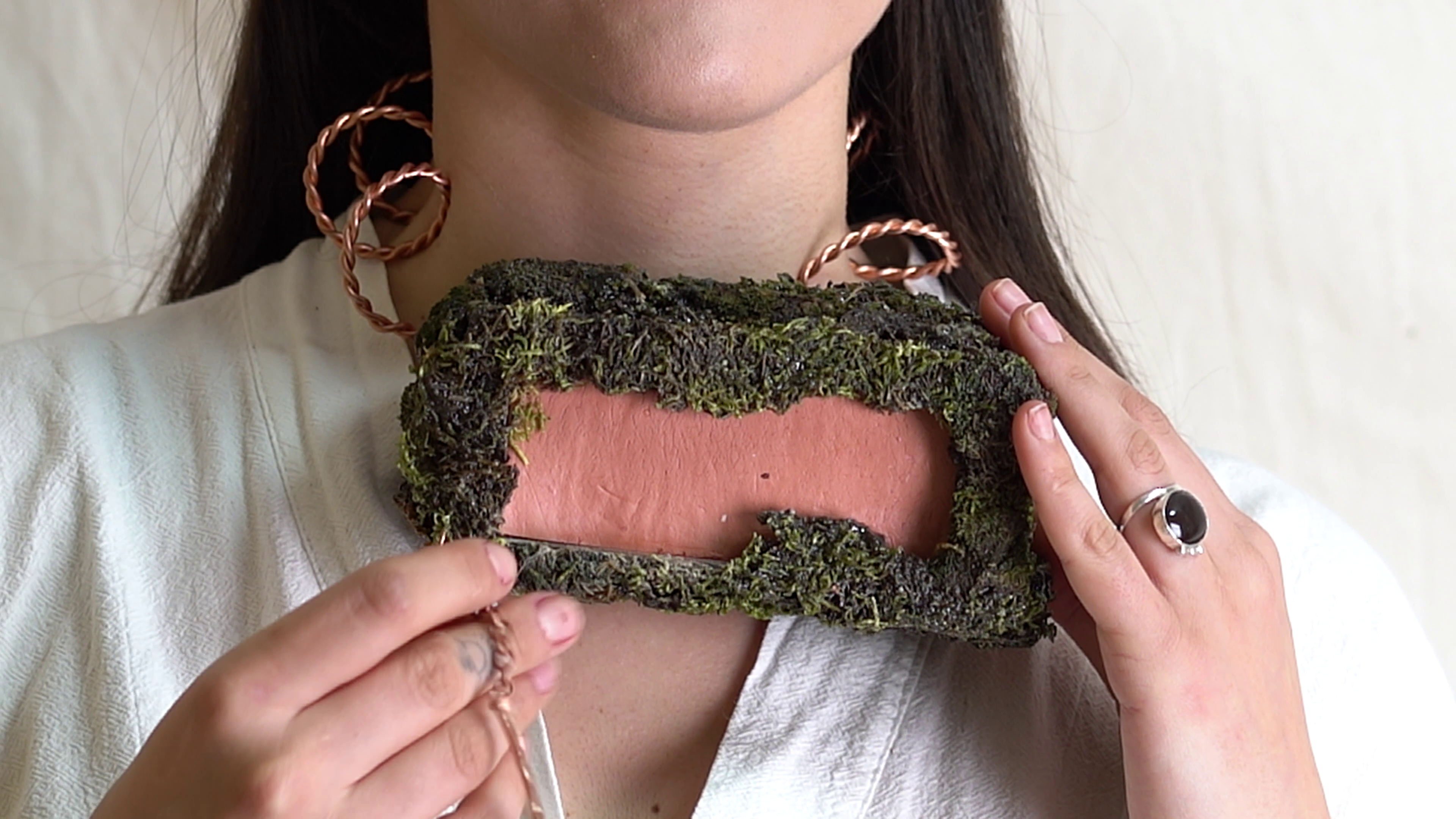
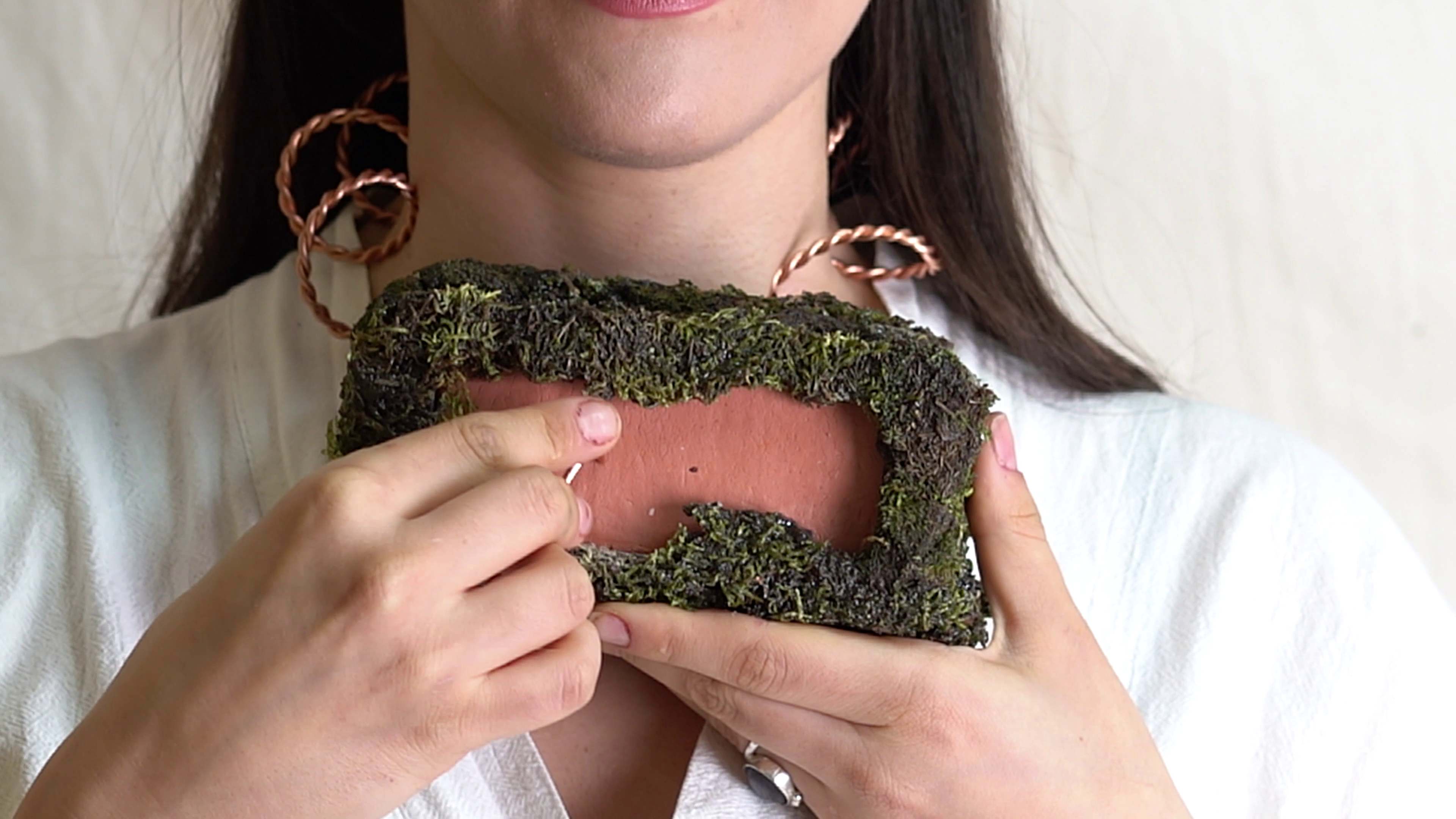
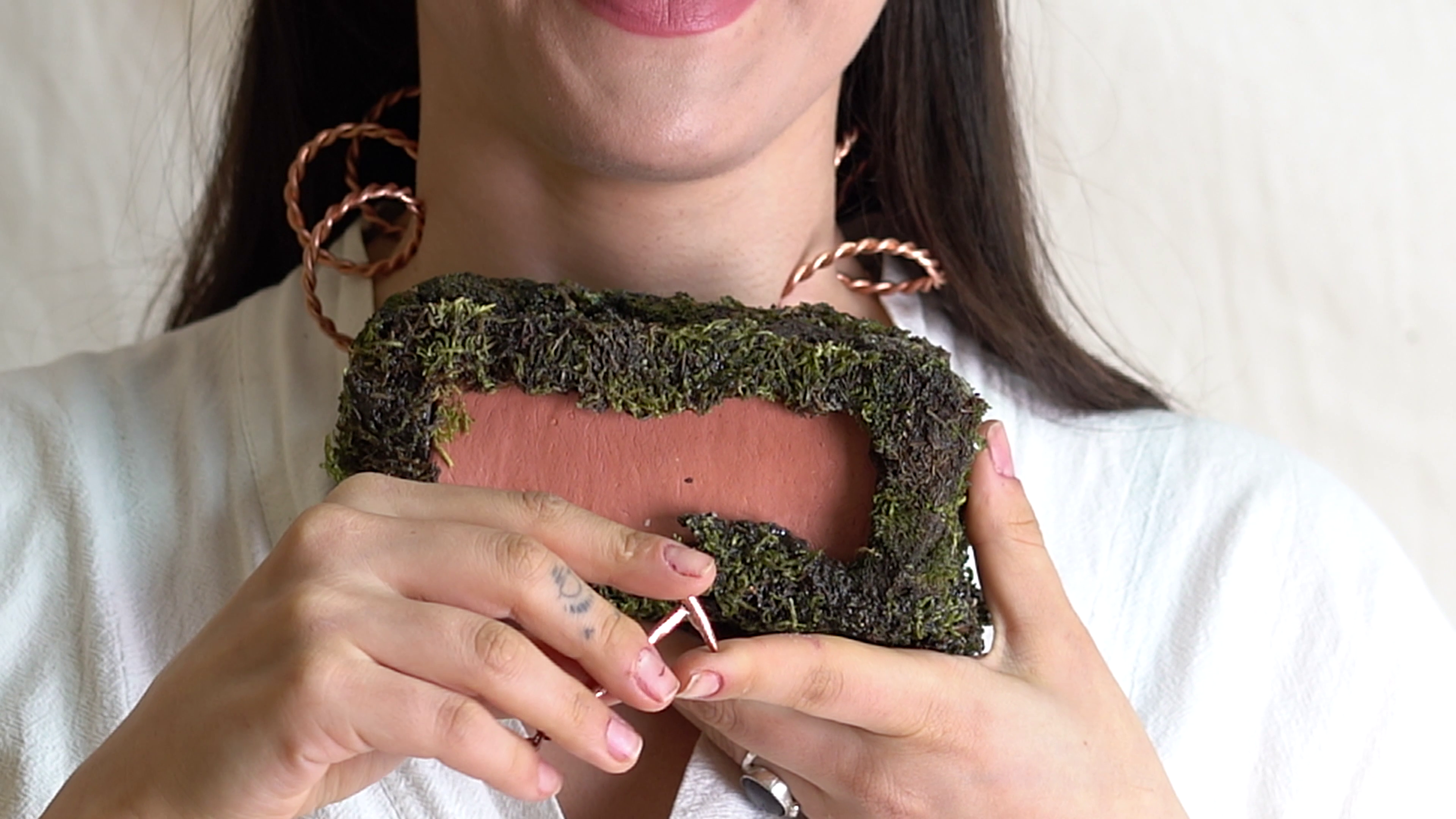
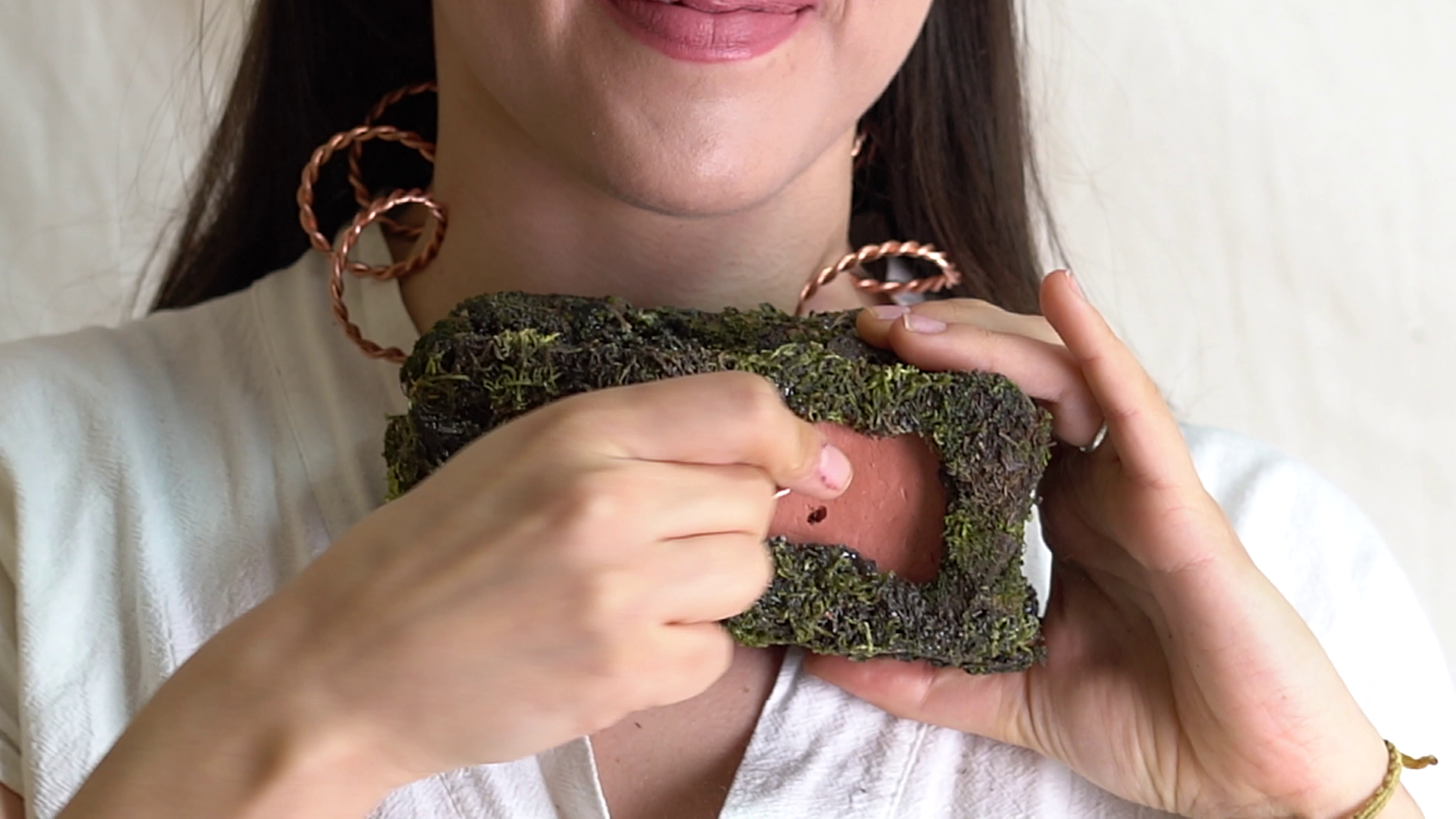
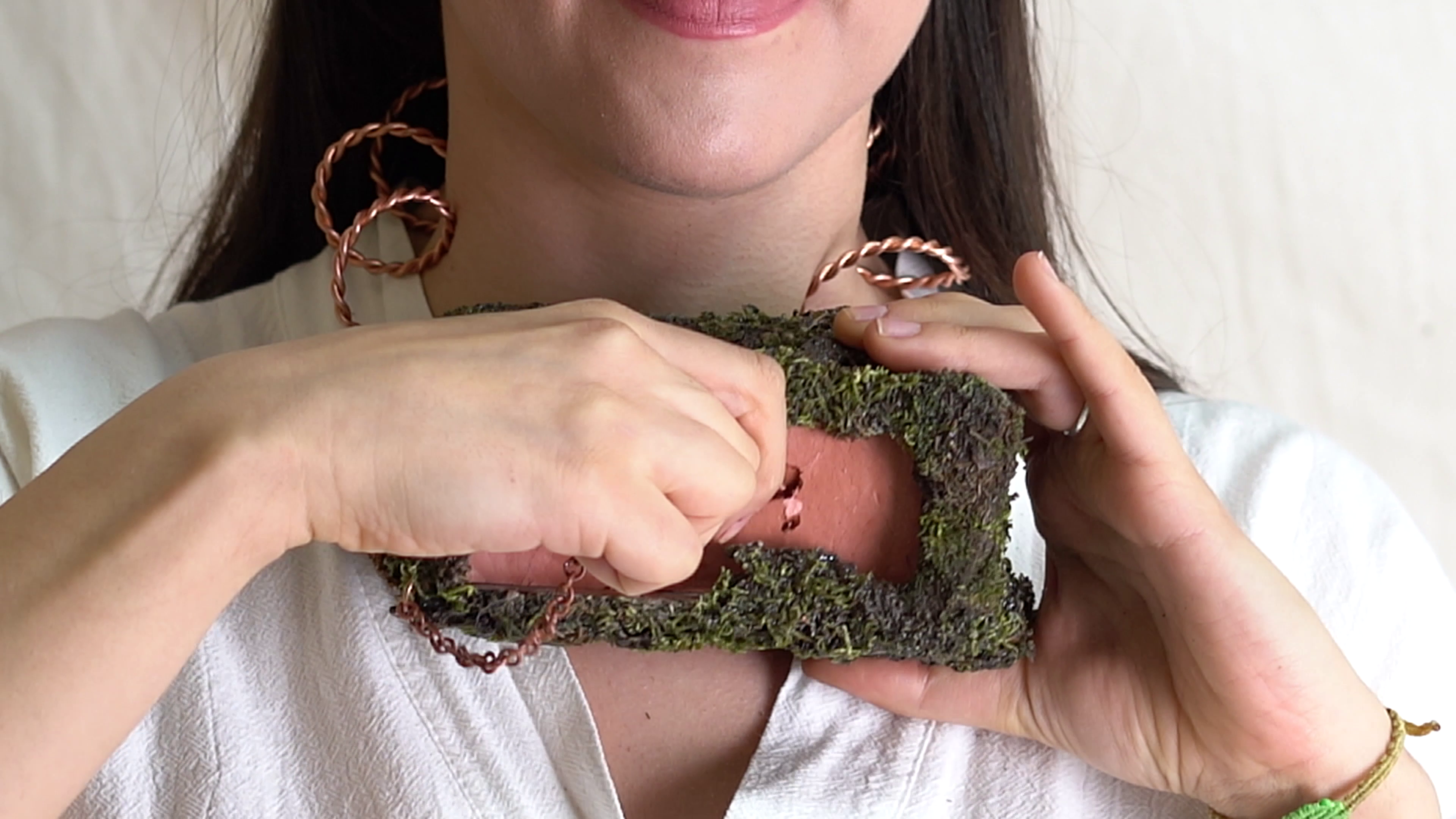
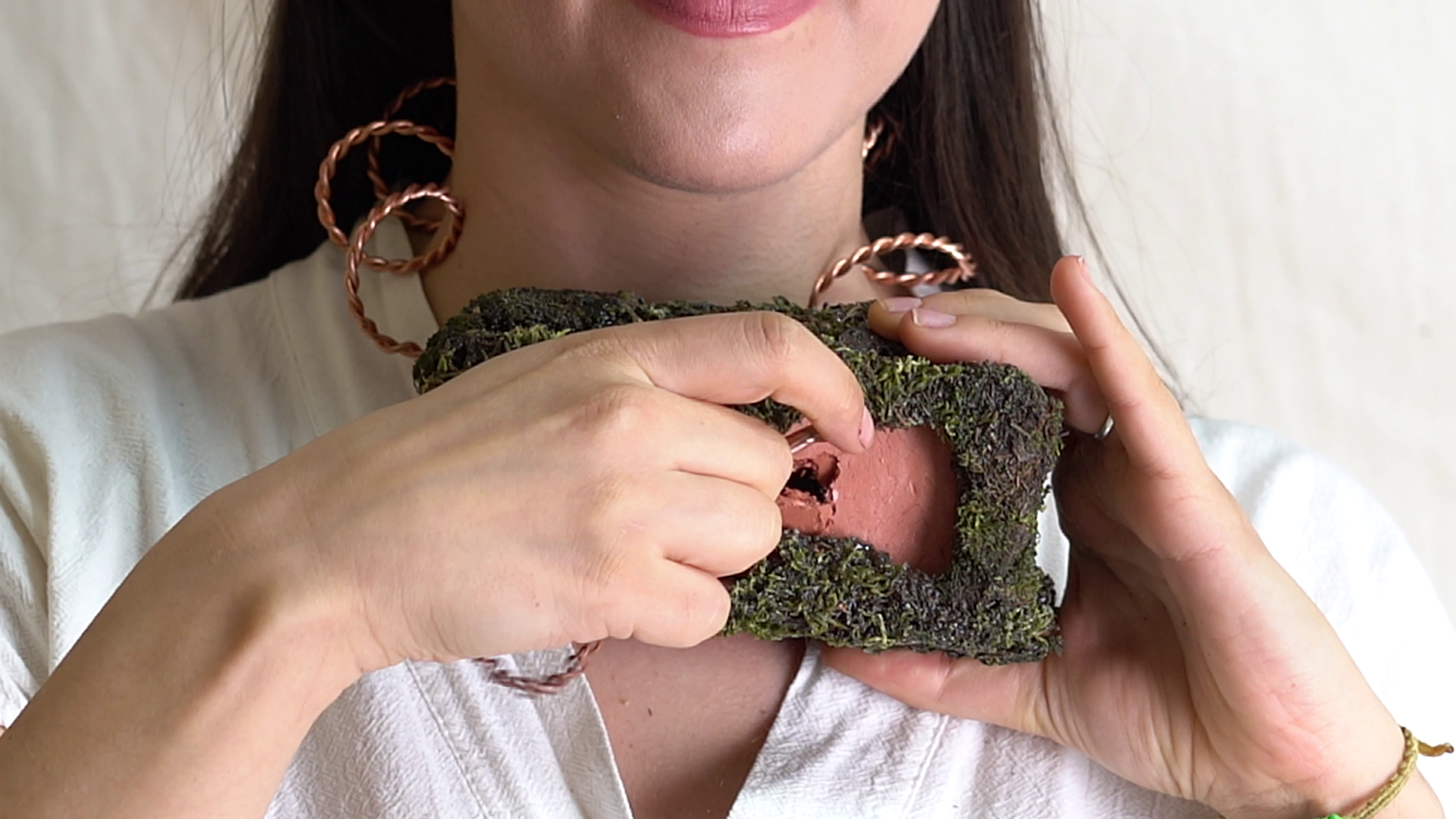
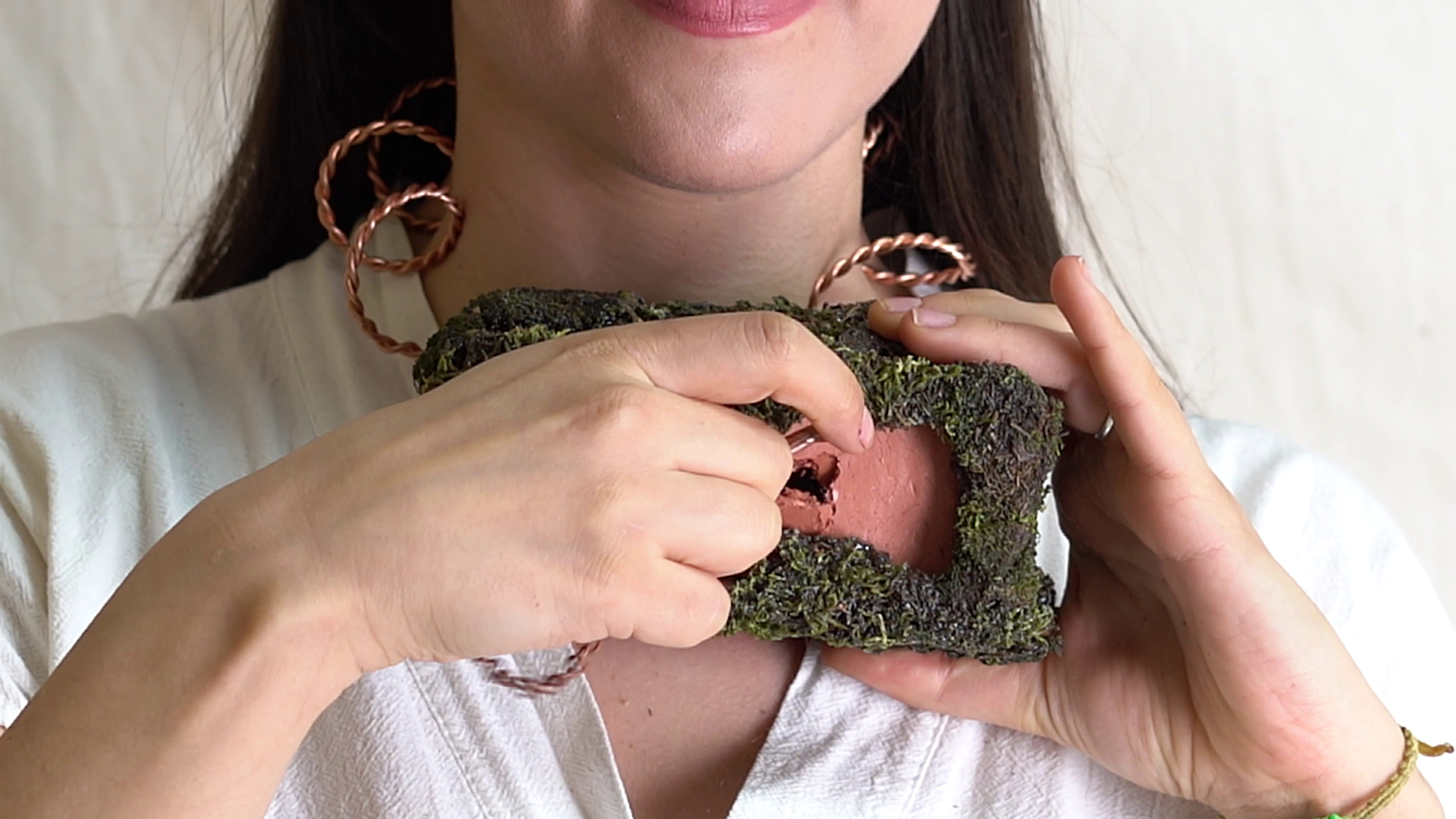
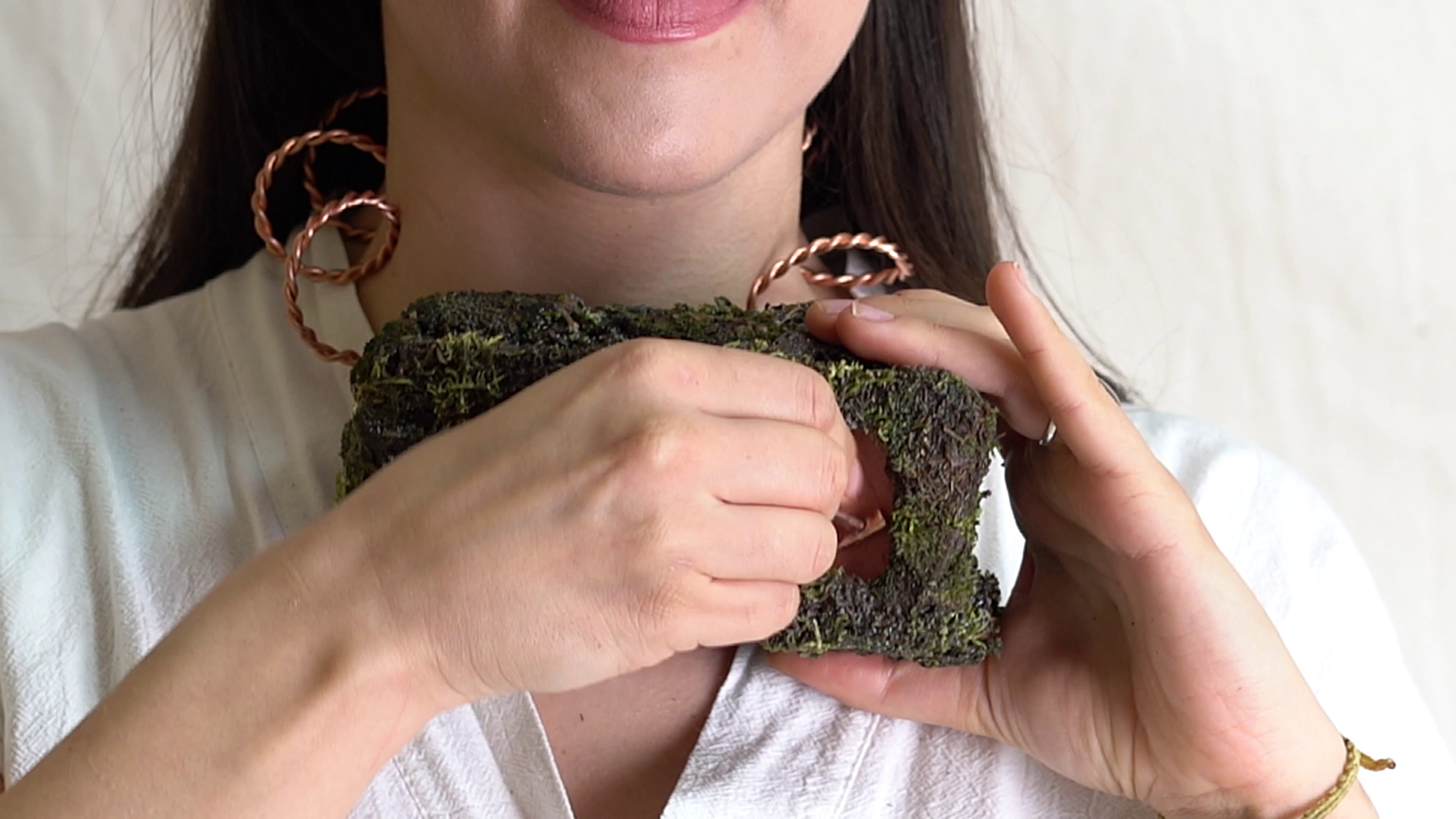
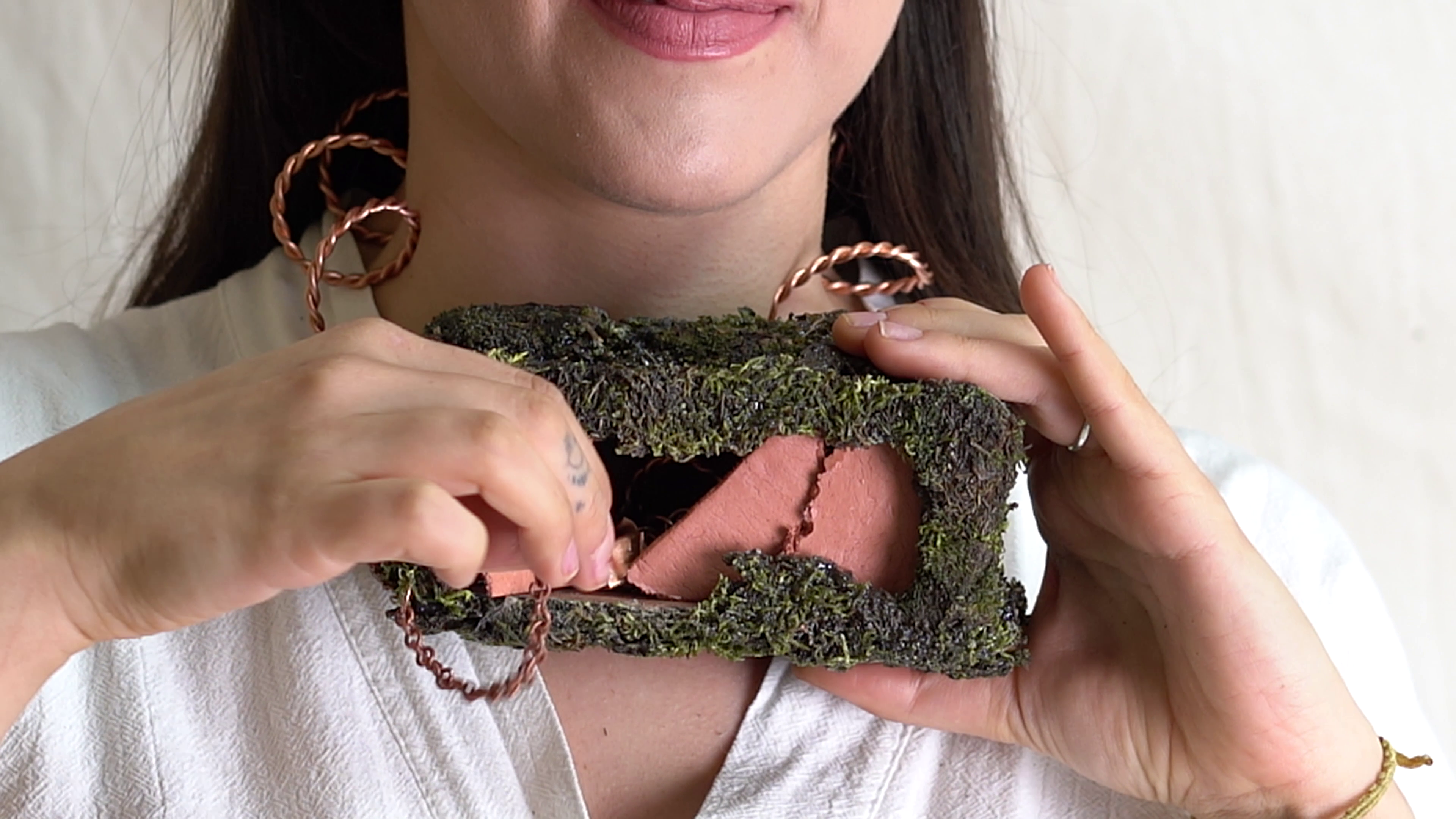
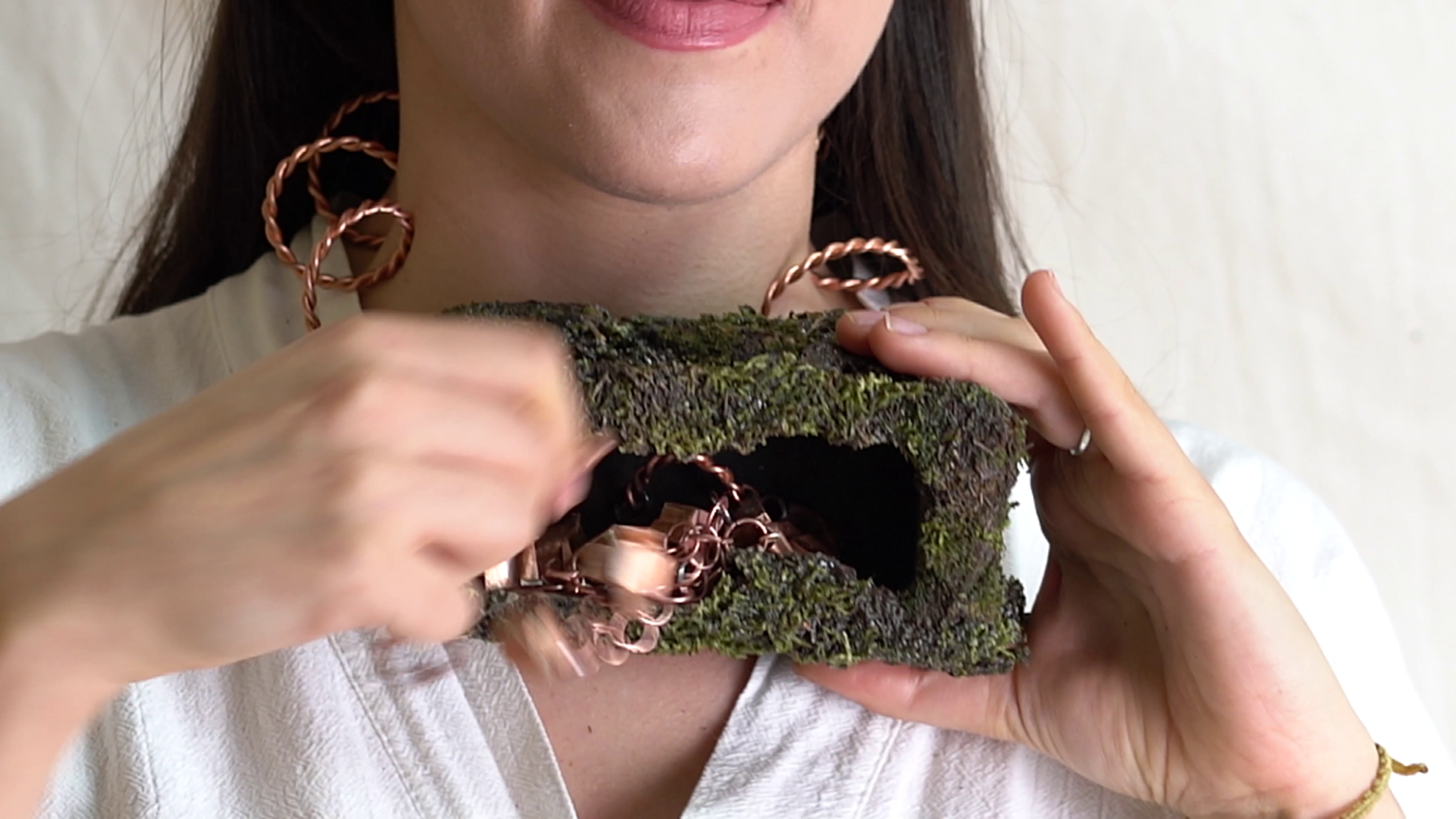
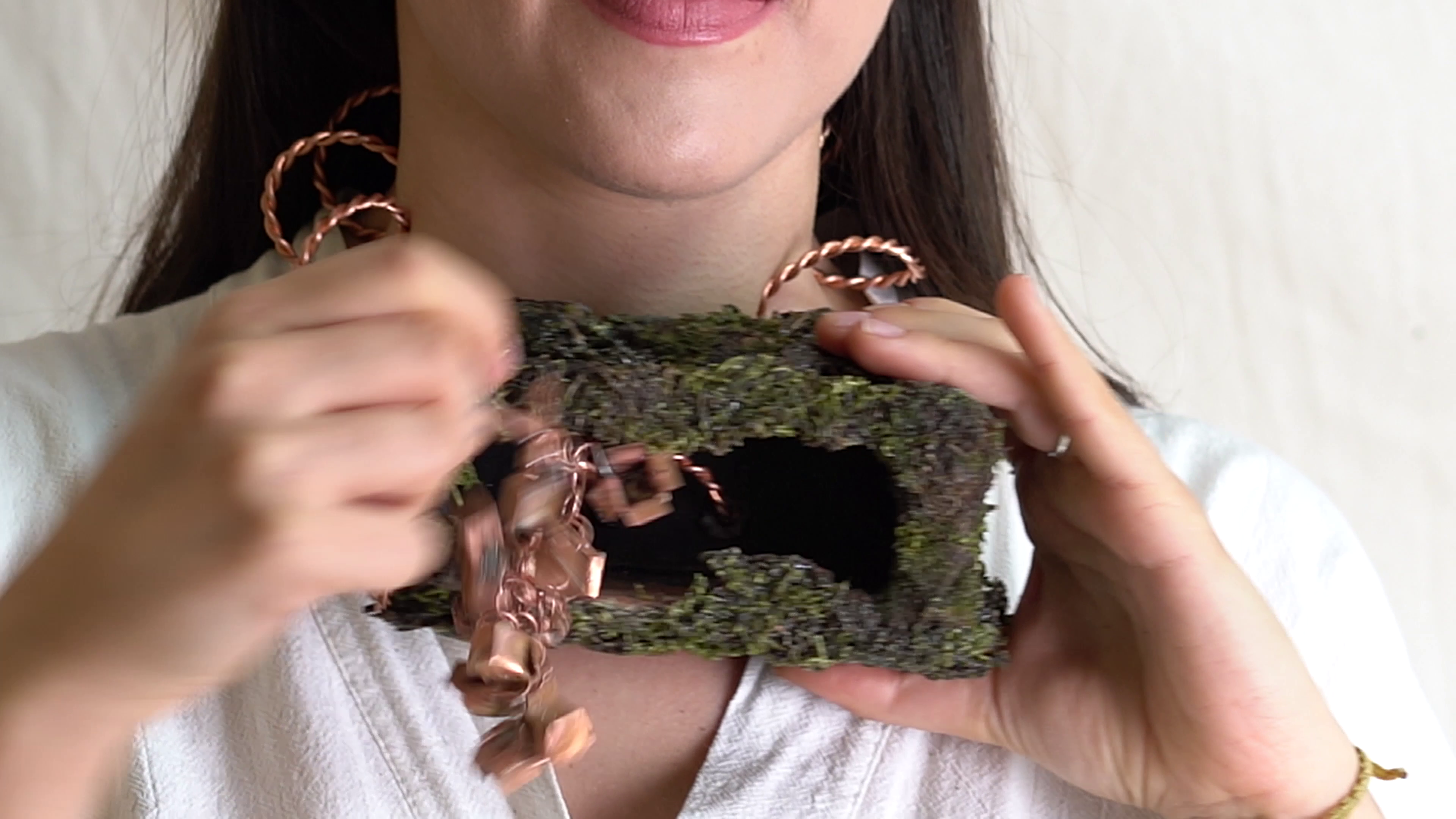
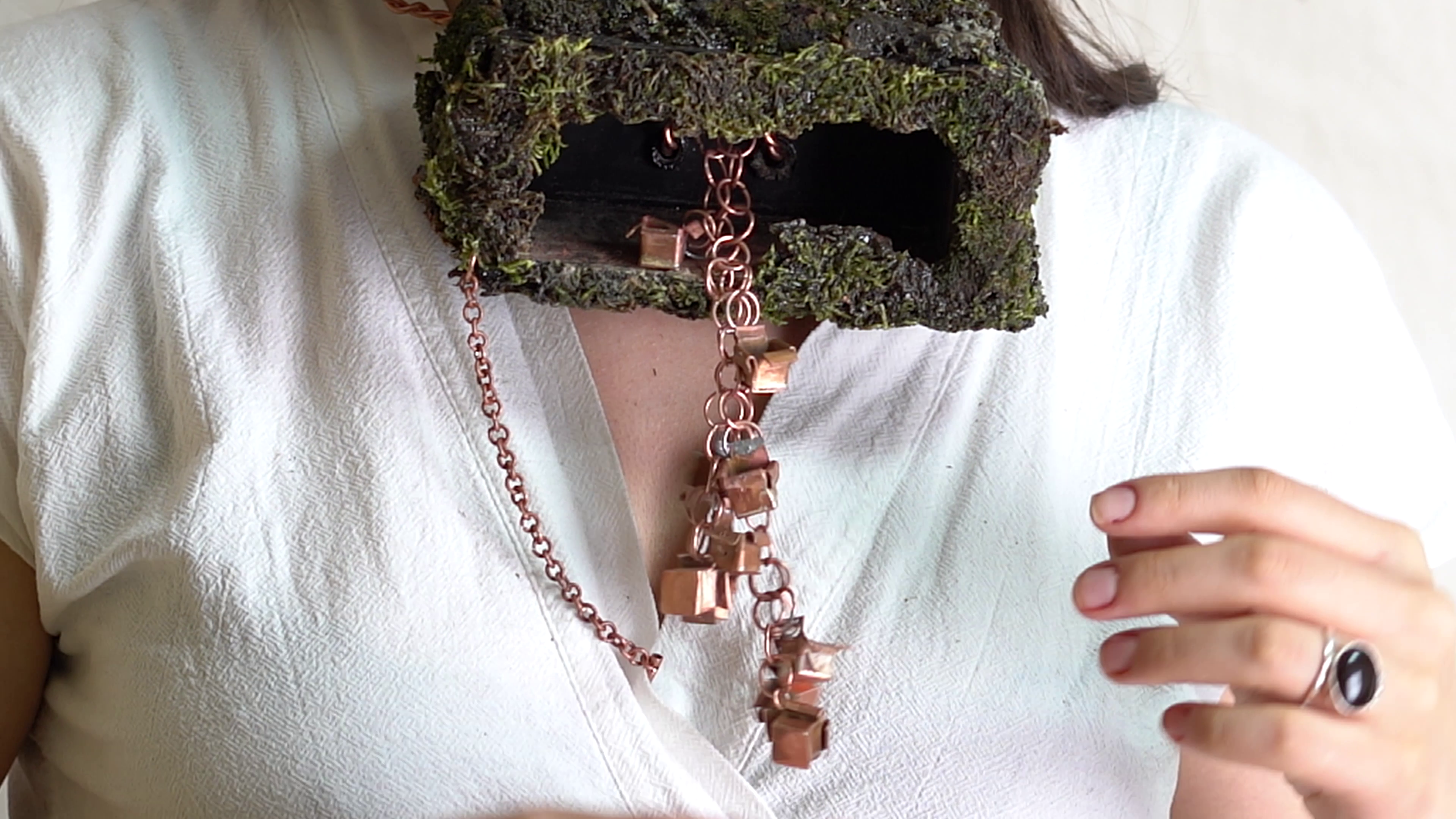
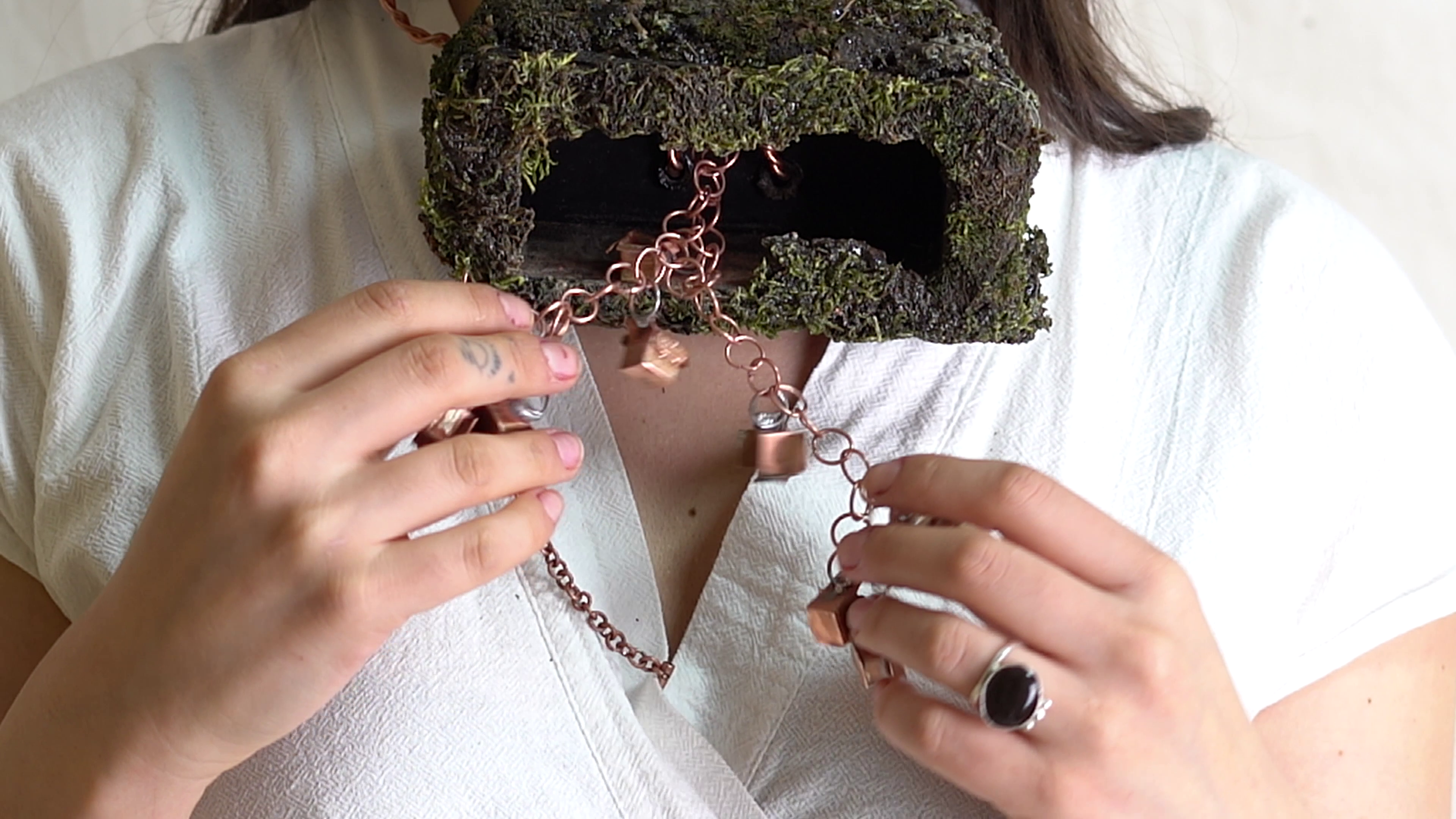
boundaries. The piece begins with a box attached on a copper wire, which is placed on the neck. The main box is made out of copper, coated with foraged botanical matter sealed with resin: becomes preserved geography, a fragment of land that can travel. The box is closed with terra cotta clay referencing Anatolian tradition of terracotta vessels being sealed and broken deliberately, at weddings and rites of passage. The breaking is ceremonial, authorized rupture not to protect,
but to break
(breaking is unharmful). The material enacts
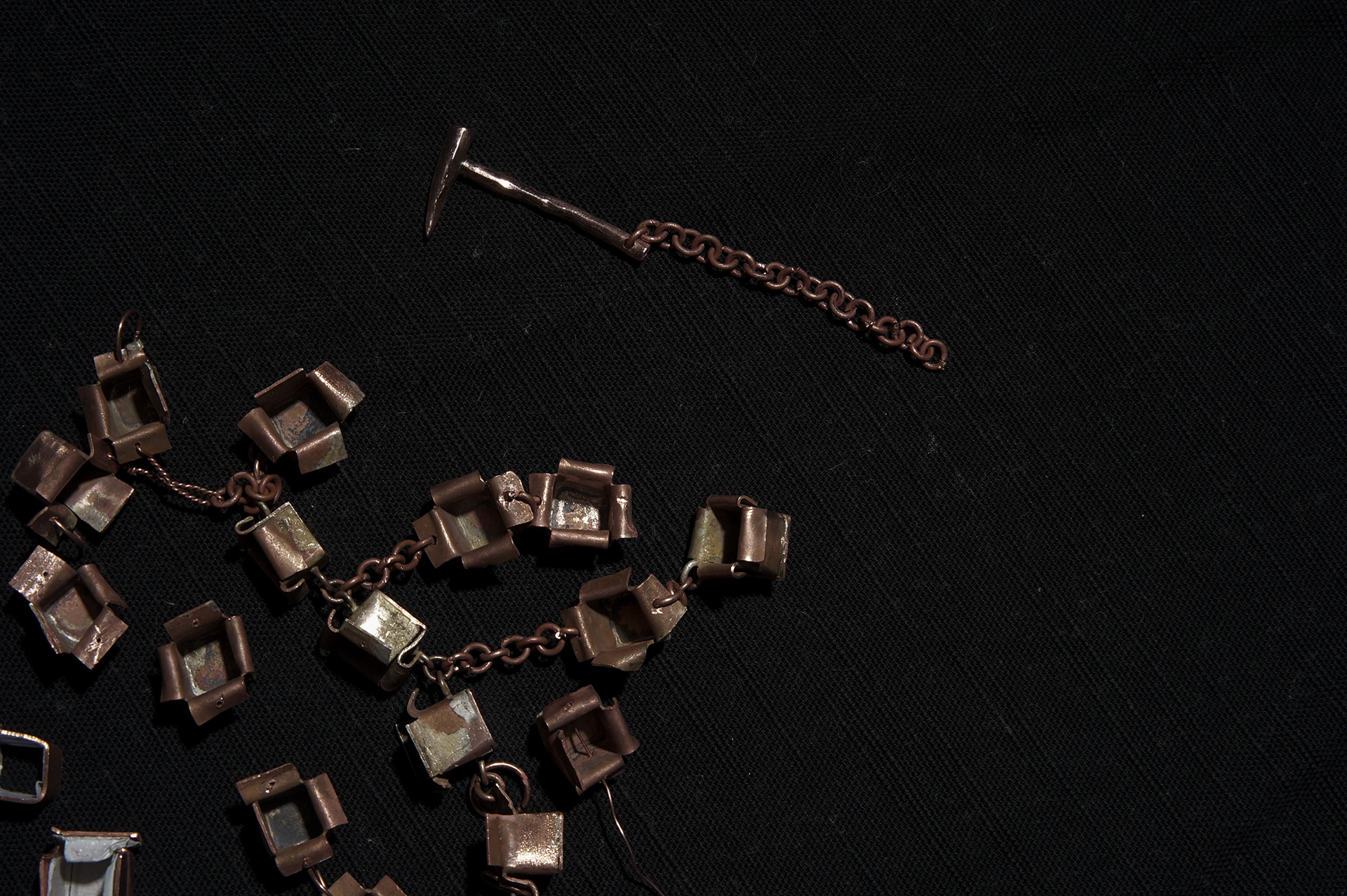
the argument: what stands between you and your own ground looks like a barrier, but it is designed to shatter. The hammer (signifier) is
the knowledge that this particular wall was always breakable.
Some people learn early that places do not stay. That a house is temporary, that a city is a phase, that the ground beneath you is always negotiable. The Western philosophical tradition treated belonging as singular and fixed: one home of origin, one ground, one identity. However, home is not a place you return to: it is a multiplicity you carry and continually redistribute. Belonging is not singular permission from elsewhere, it is the knowledge that your body holds multitudes. The proposal is to remember that the body is the primary territory. It is where all knowing, being, becoming emerges. It is the ground in which everything seeded and blossomed, a ground through which we
experience life. ‘Aidiyetsizlik’ in Turkish means non-belonging, the state of being suspended. It is central to this work’s concept.
The piece asks: if you cannot be held by a nation, a house, a
relationship, a family then can you anchor yourself in the only constant and
consistent site: the body. The body orients you, centers you, roots you,
it is a territory with its own
boundaries. The piece begins with a box attached on a copper wire, which is placed on the neck. The main box is made out of copper, coated with foraged botanical matter sealed with resin: becomes preserved geography, a fragment of land that can travel. The box is closed with terra cotta clay referencing Anatolian tradition of terracotta vessels being sealed and broken deliberately, at weddings and rites of passage. The breaking is ceremonial, authorized rupture not to protect,
but to break
(breaking is unharmful). The material enacts
the argument: what stands between you and your own ground looks like a barrier, but it is designed to shatter. The hammer (signifier) is
the knowledge that this particular wall was always breakable.
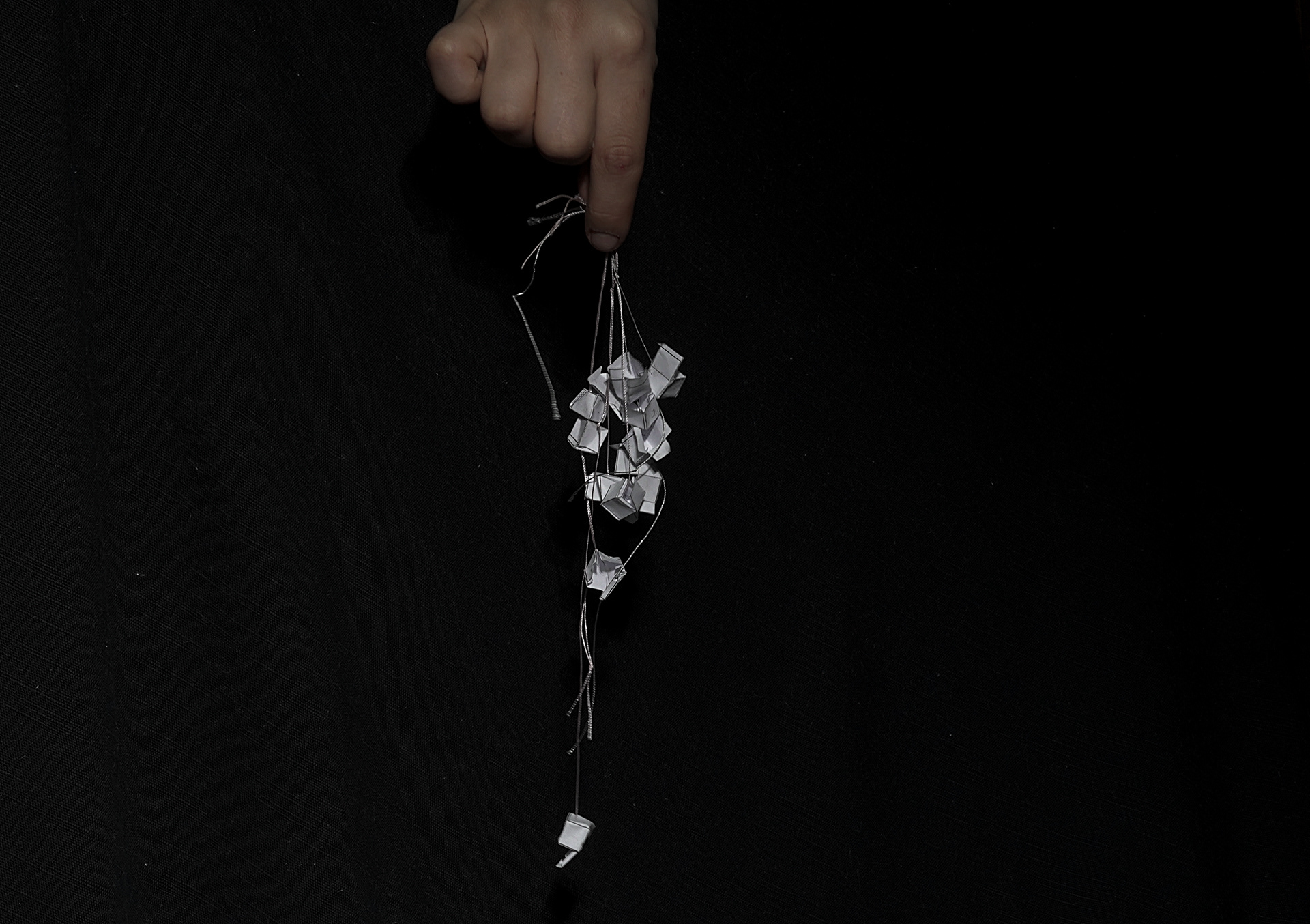
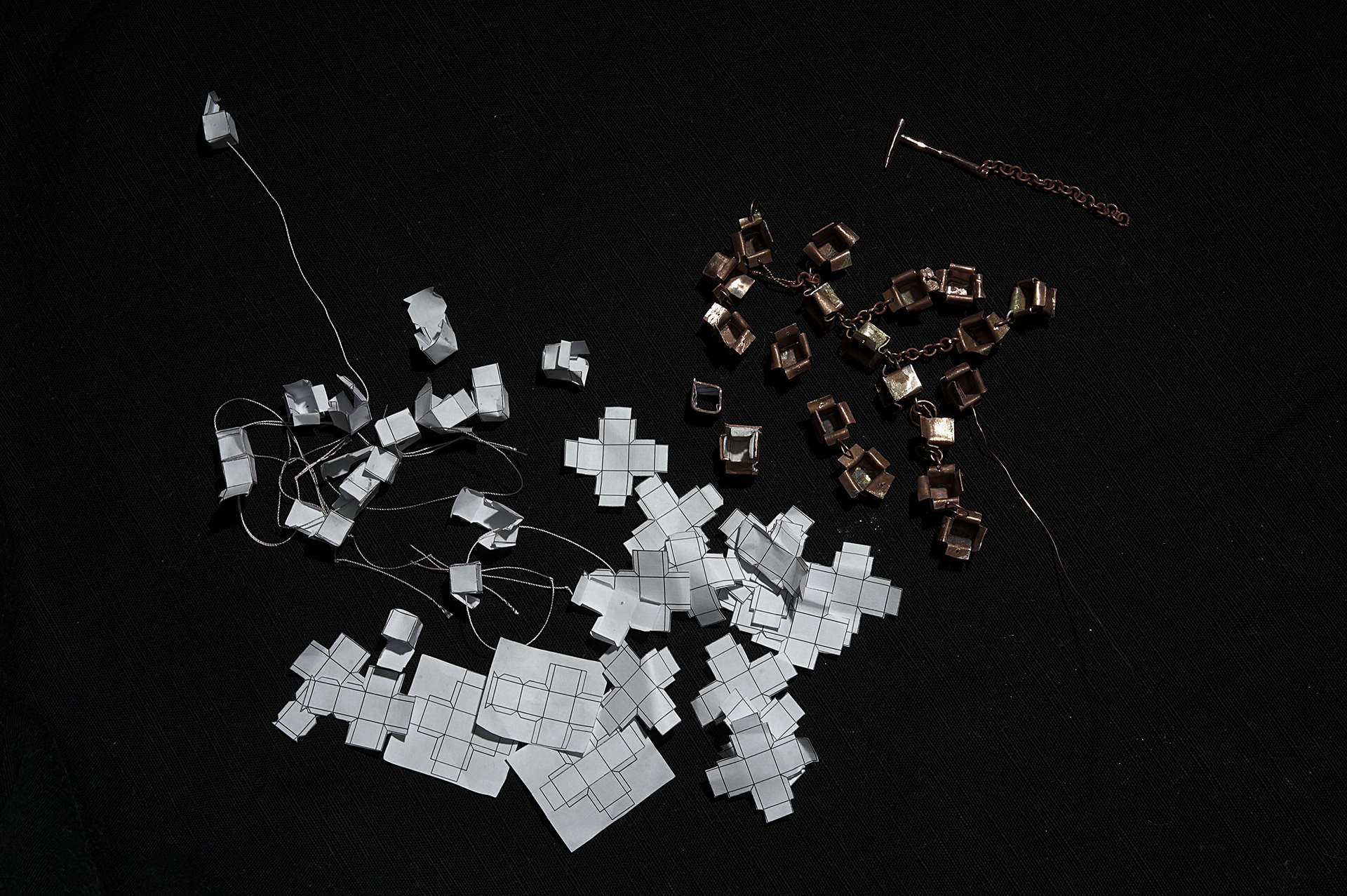
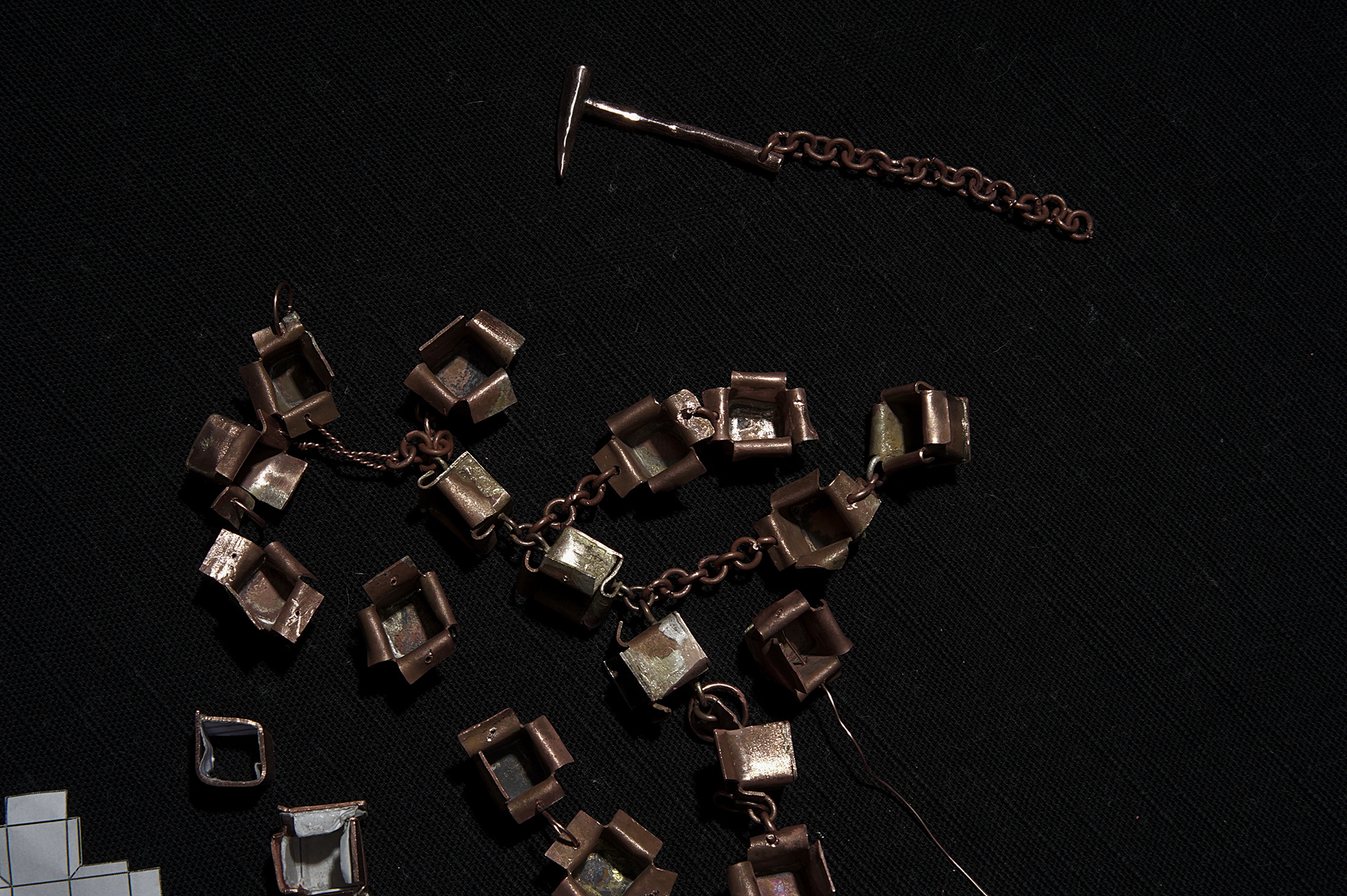
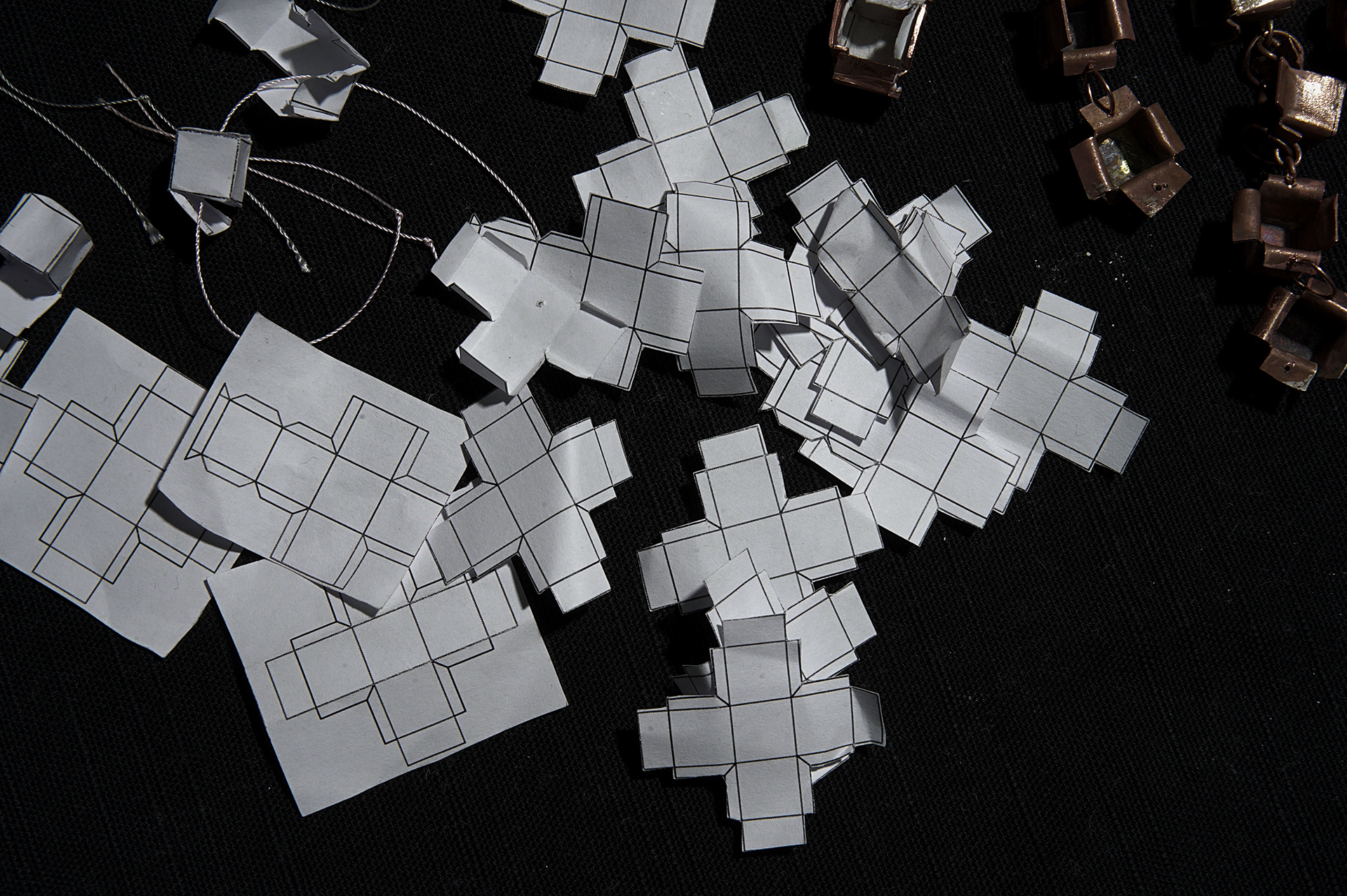
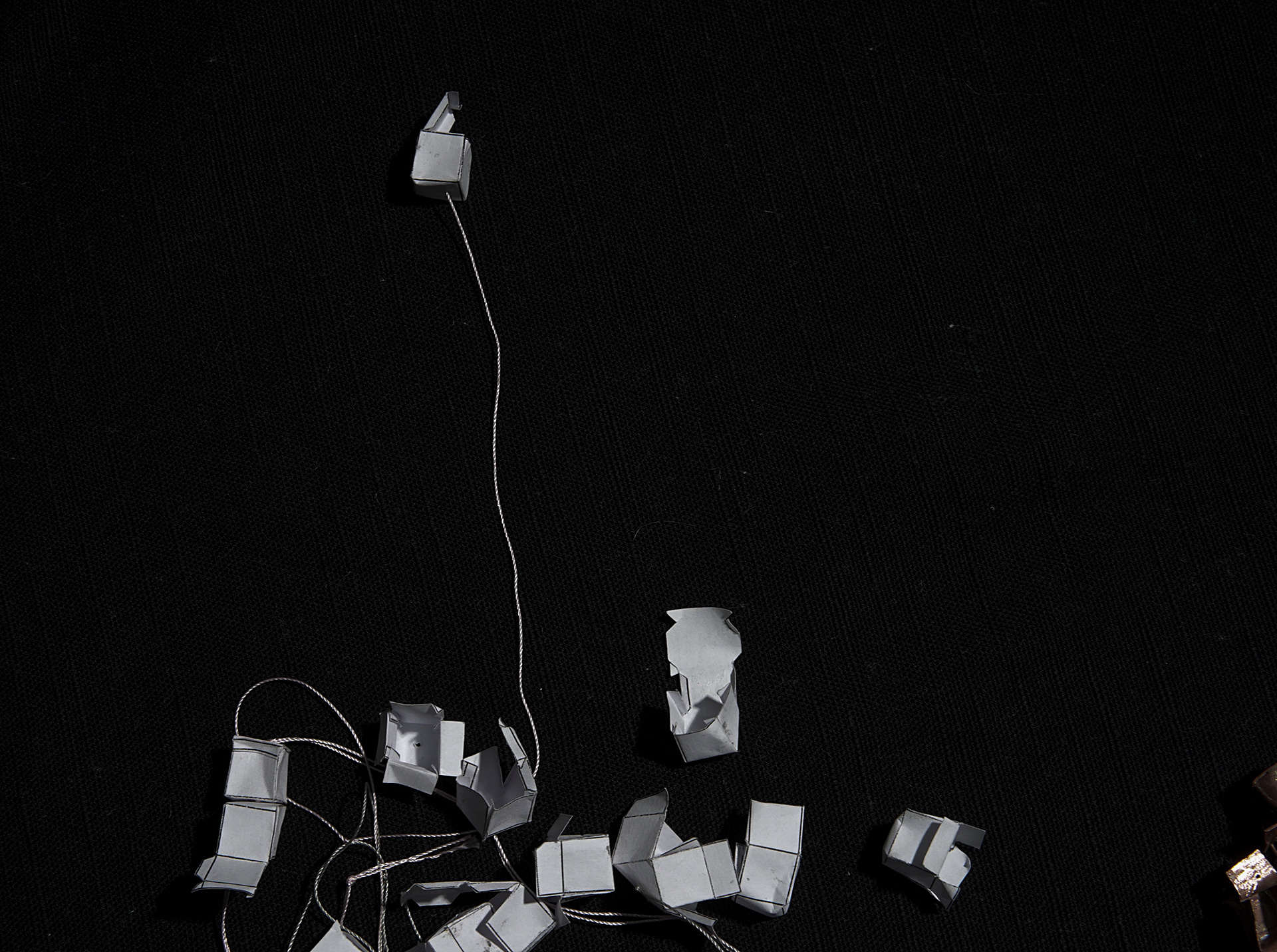
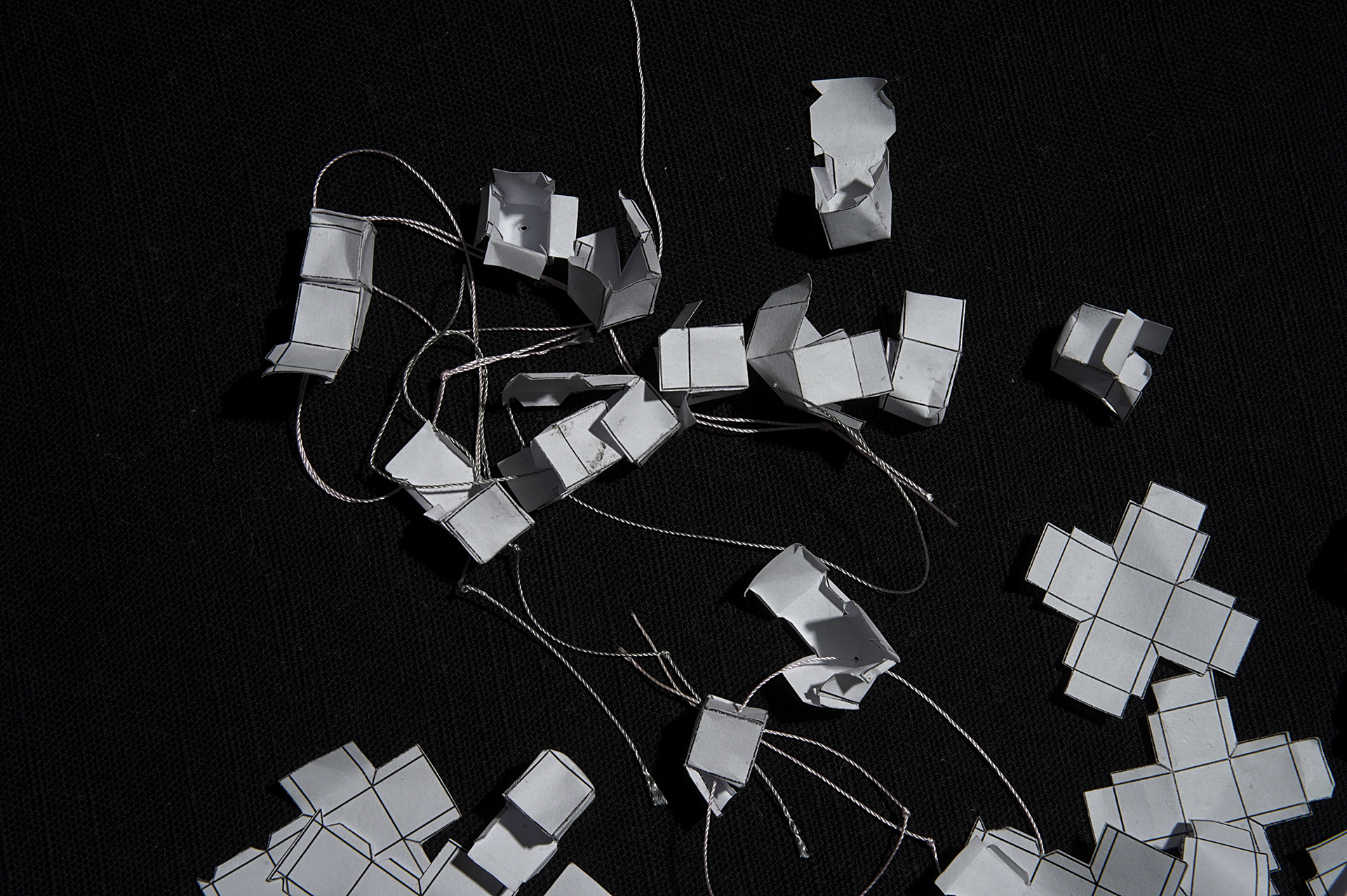
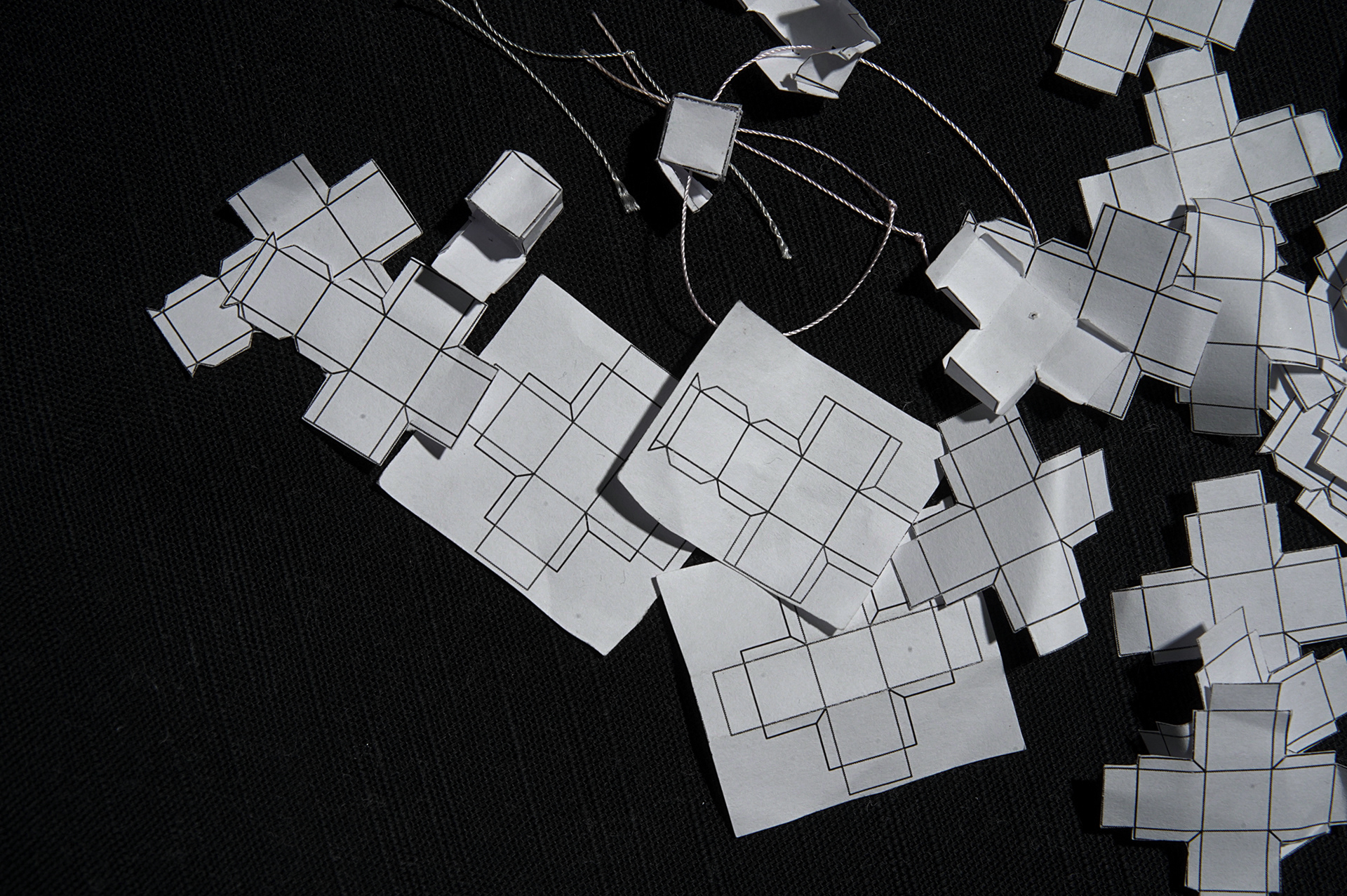
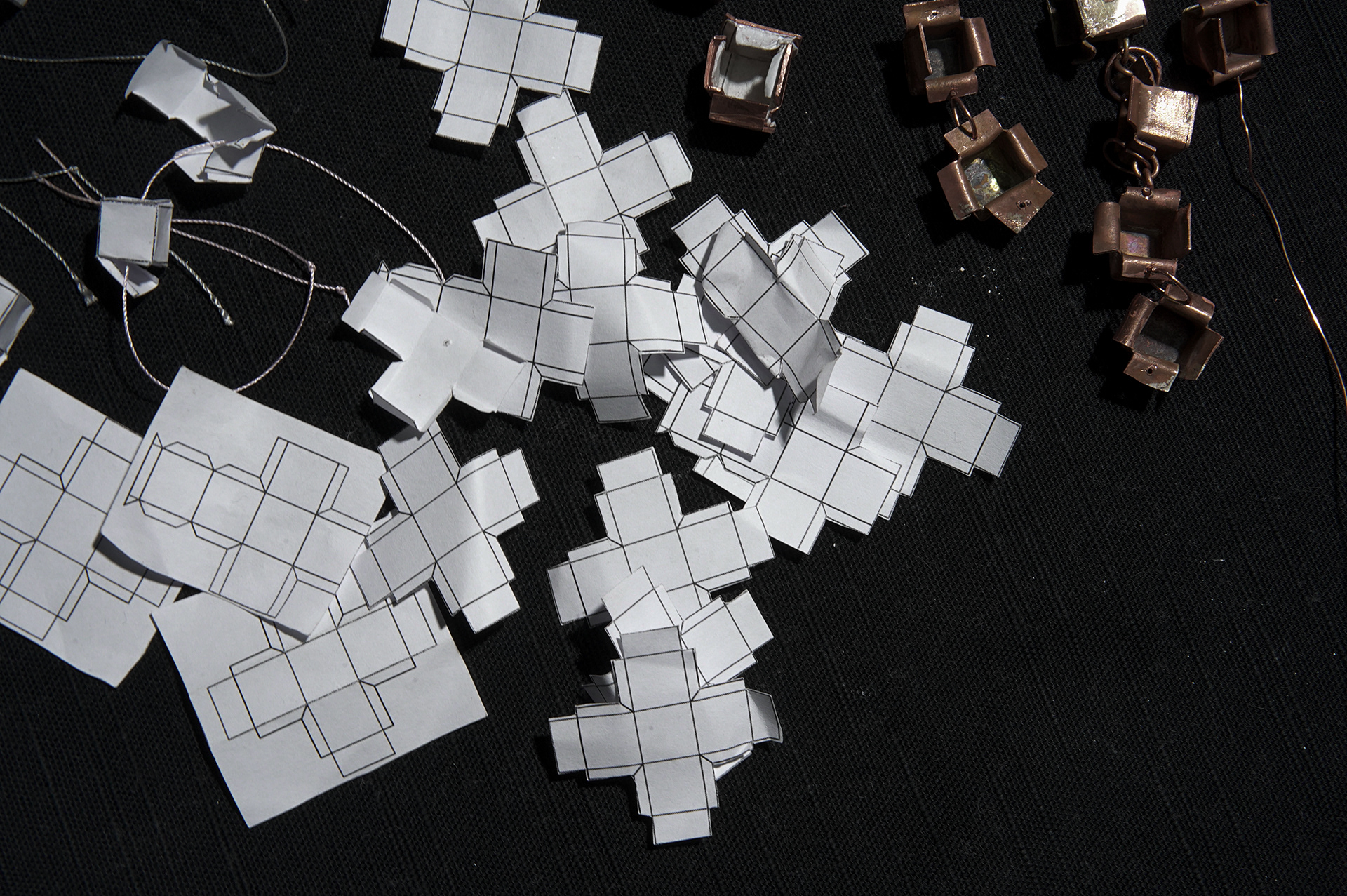
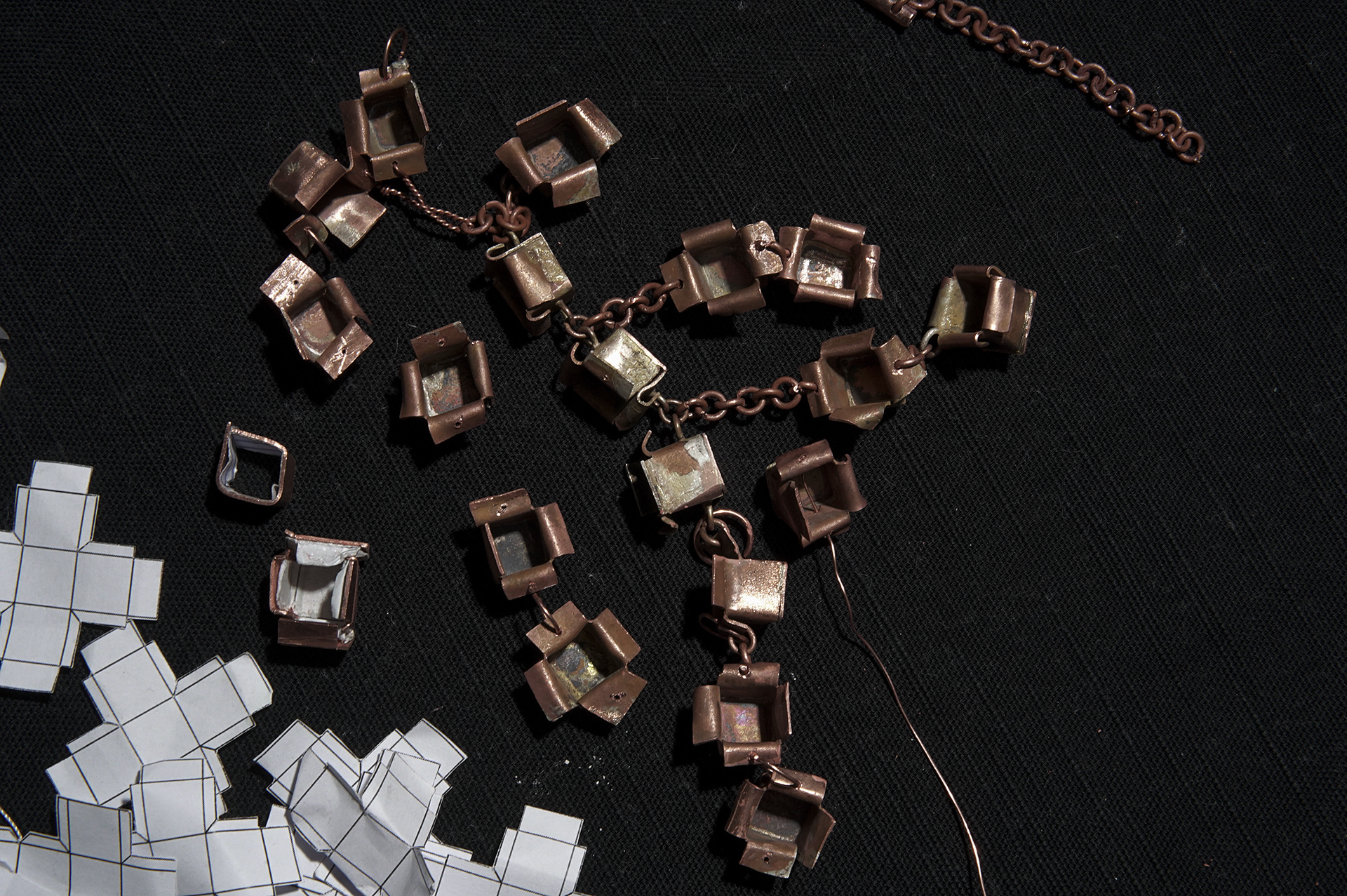
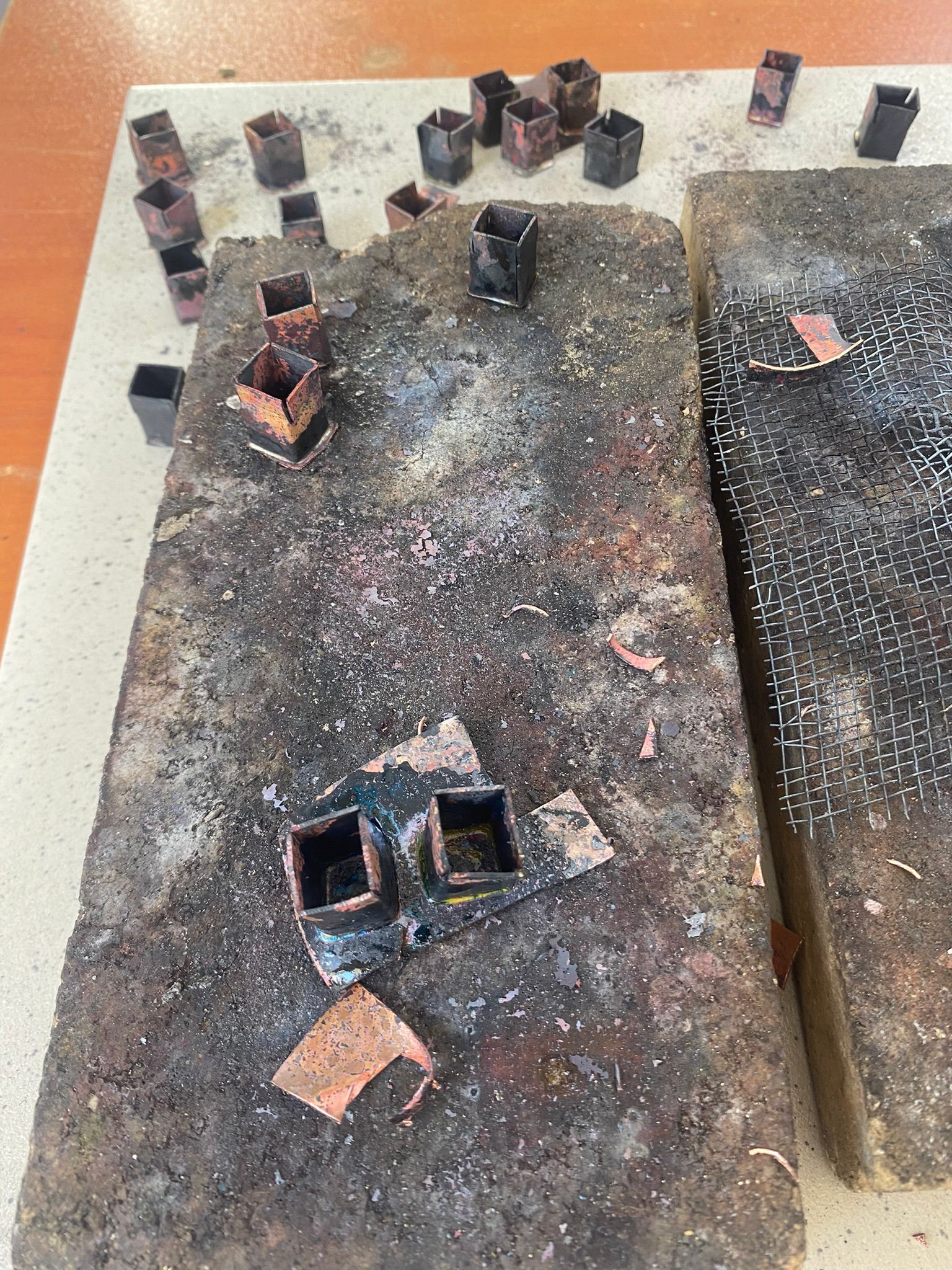
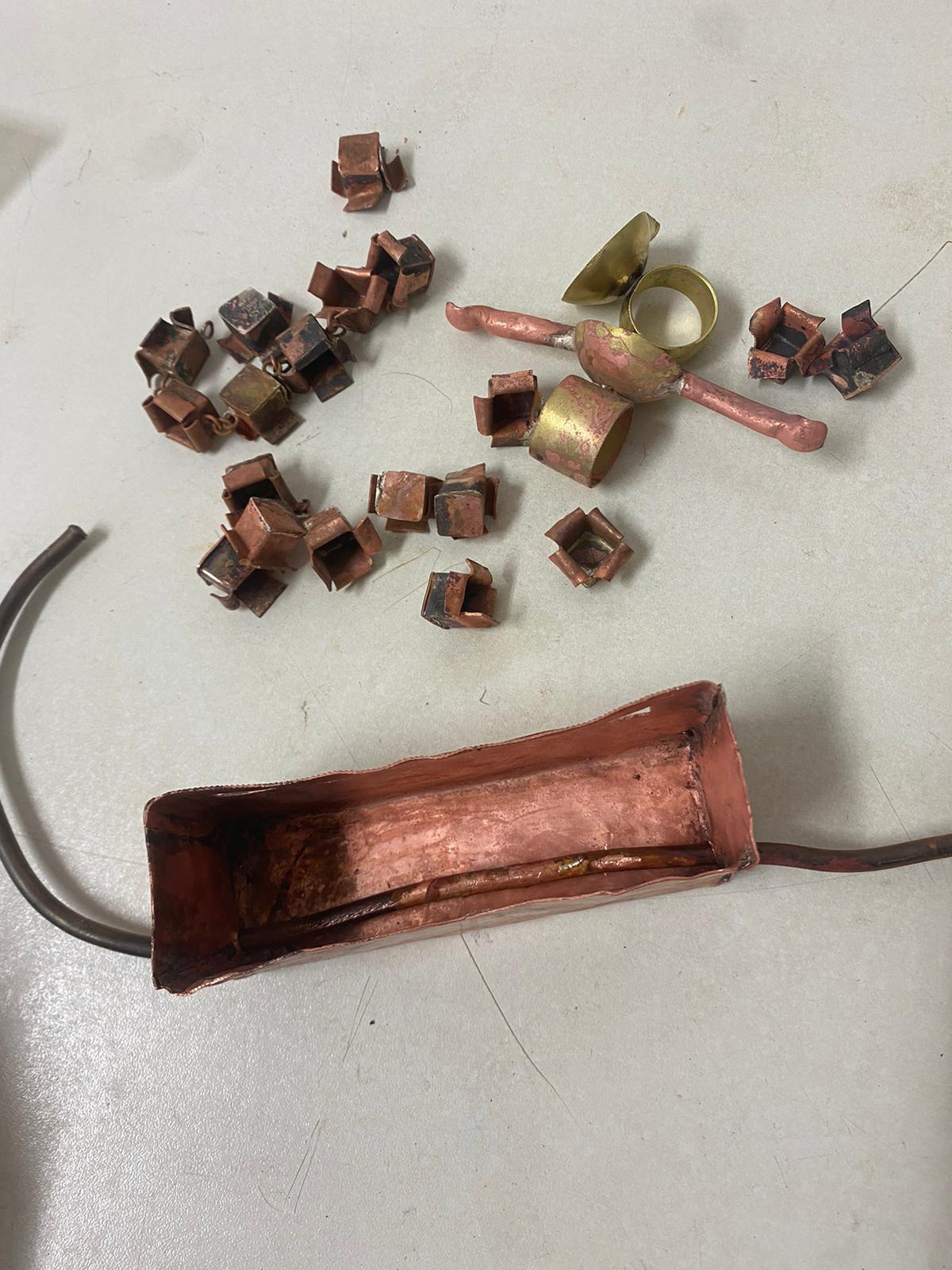
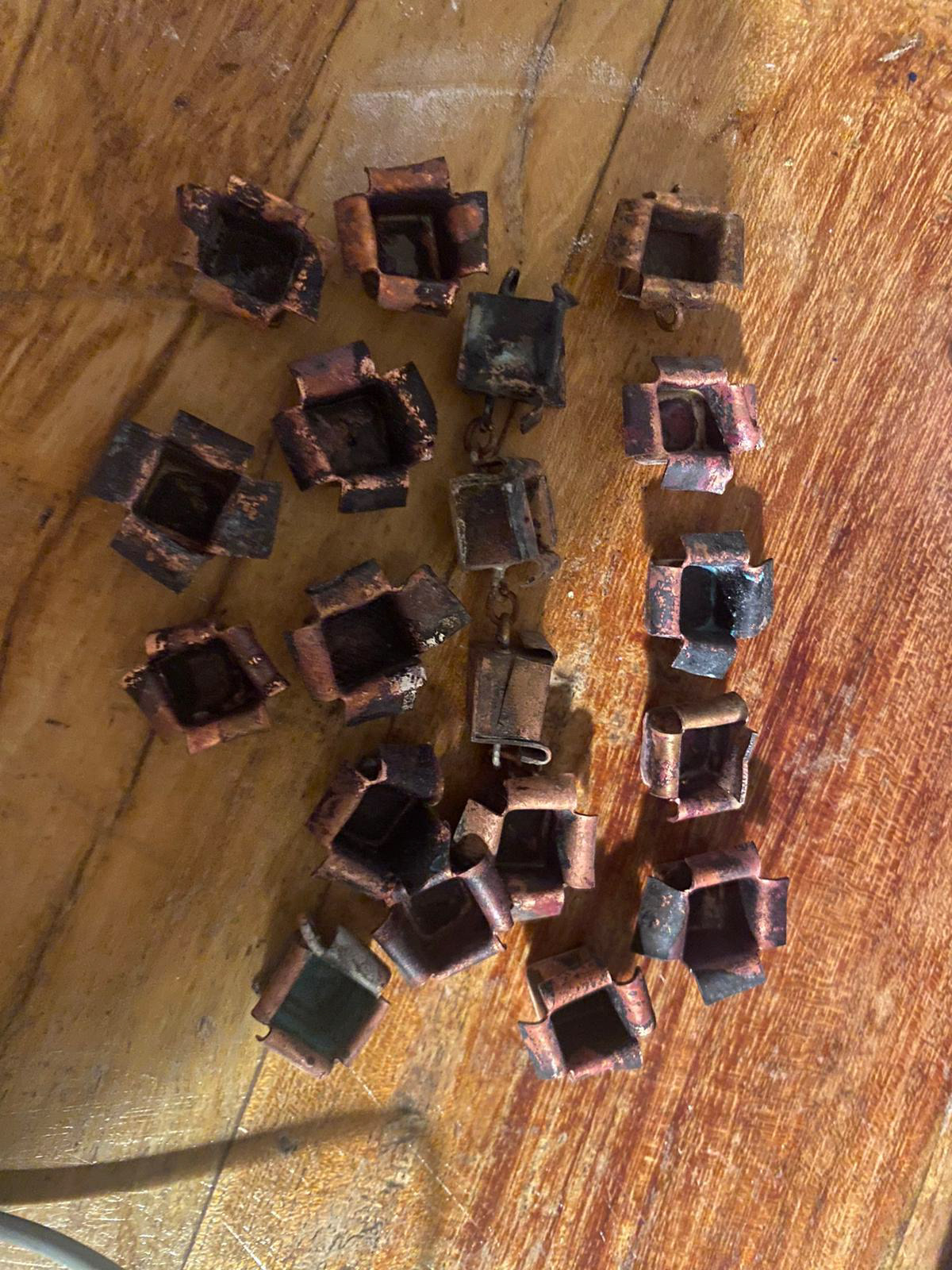
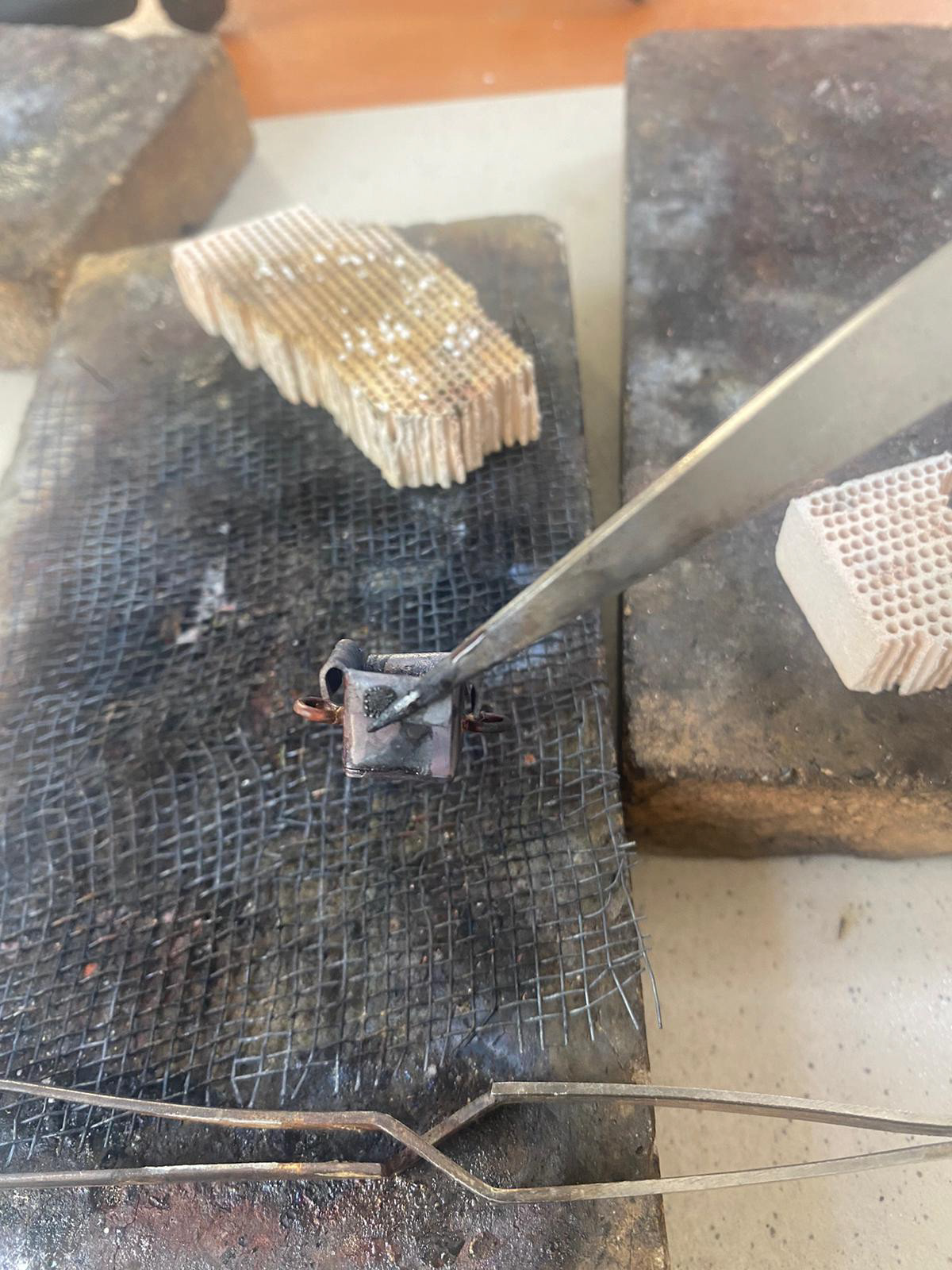
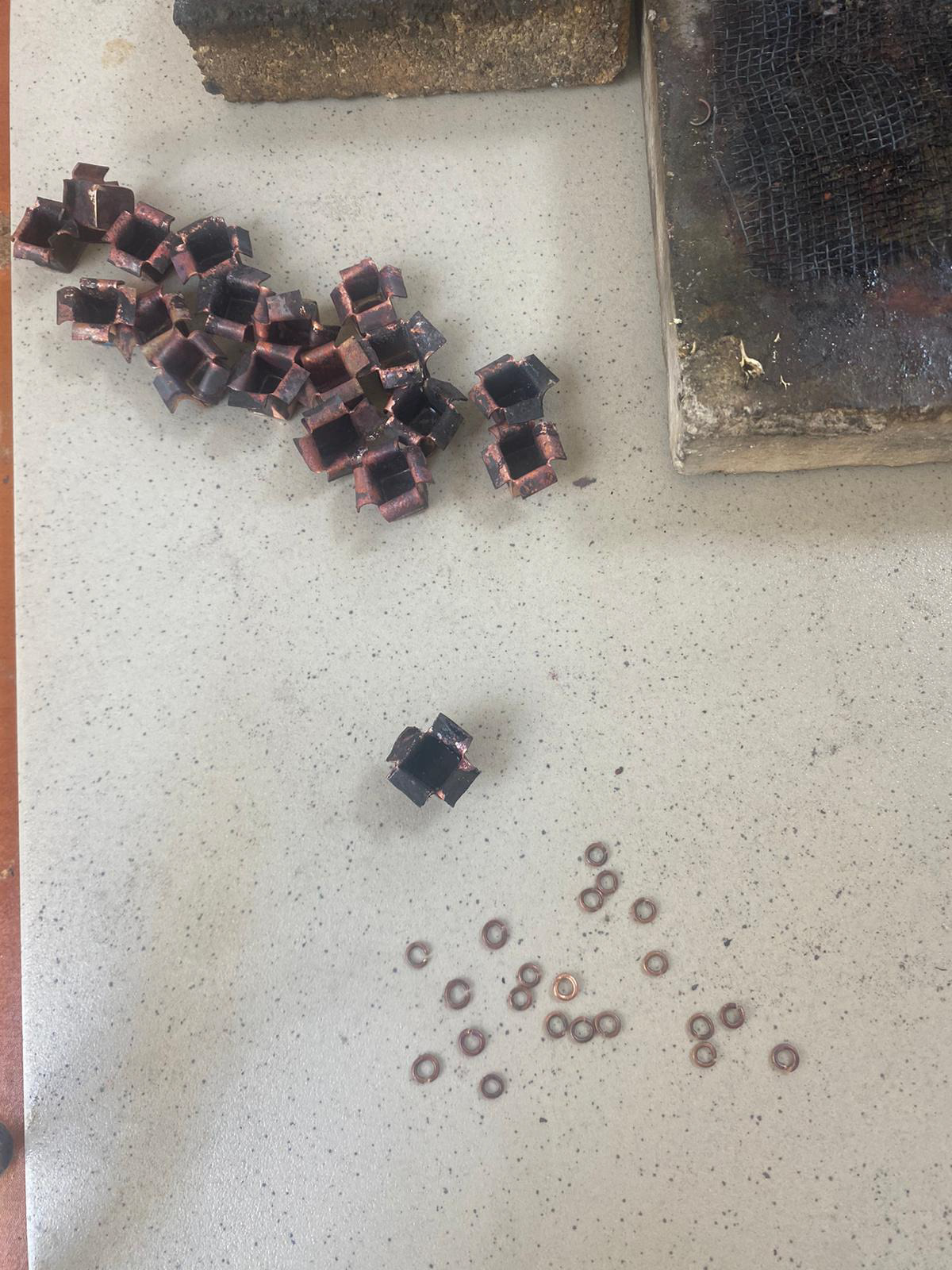
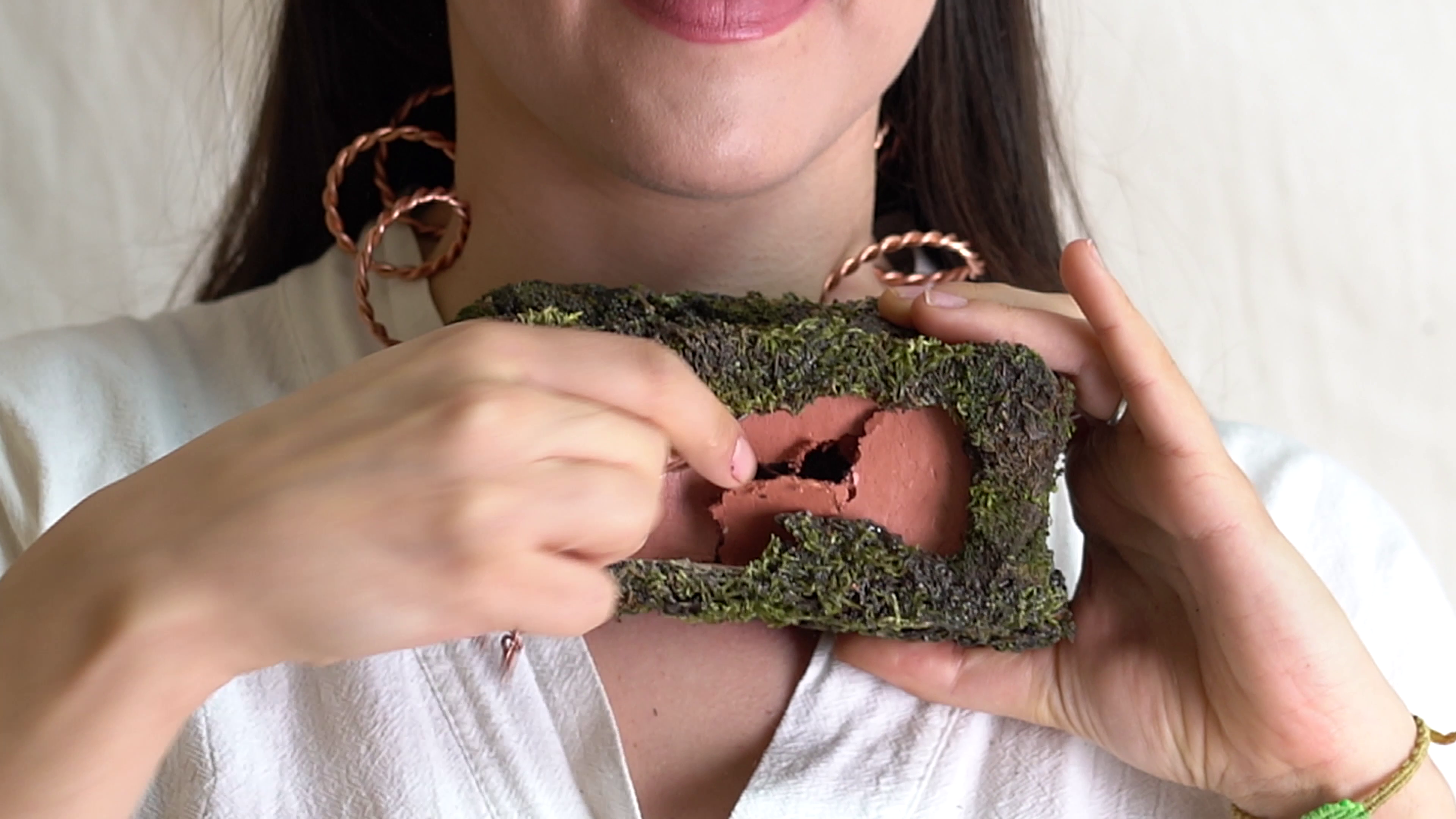
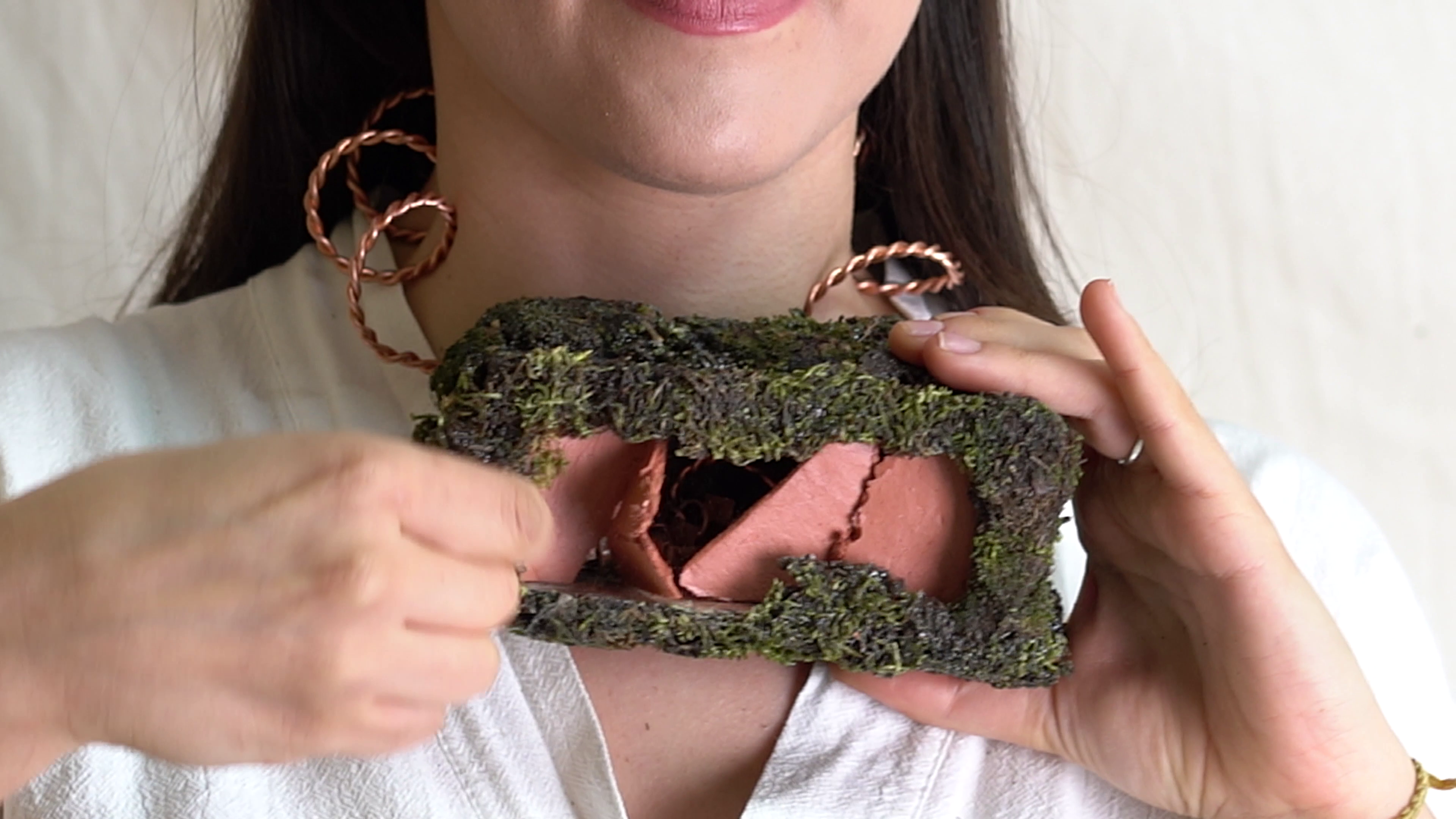
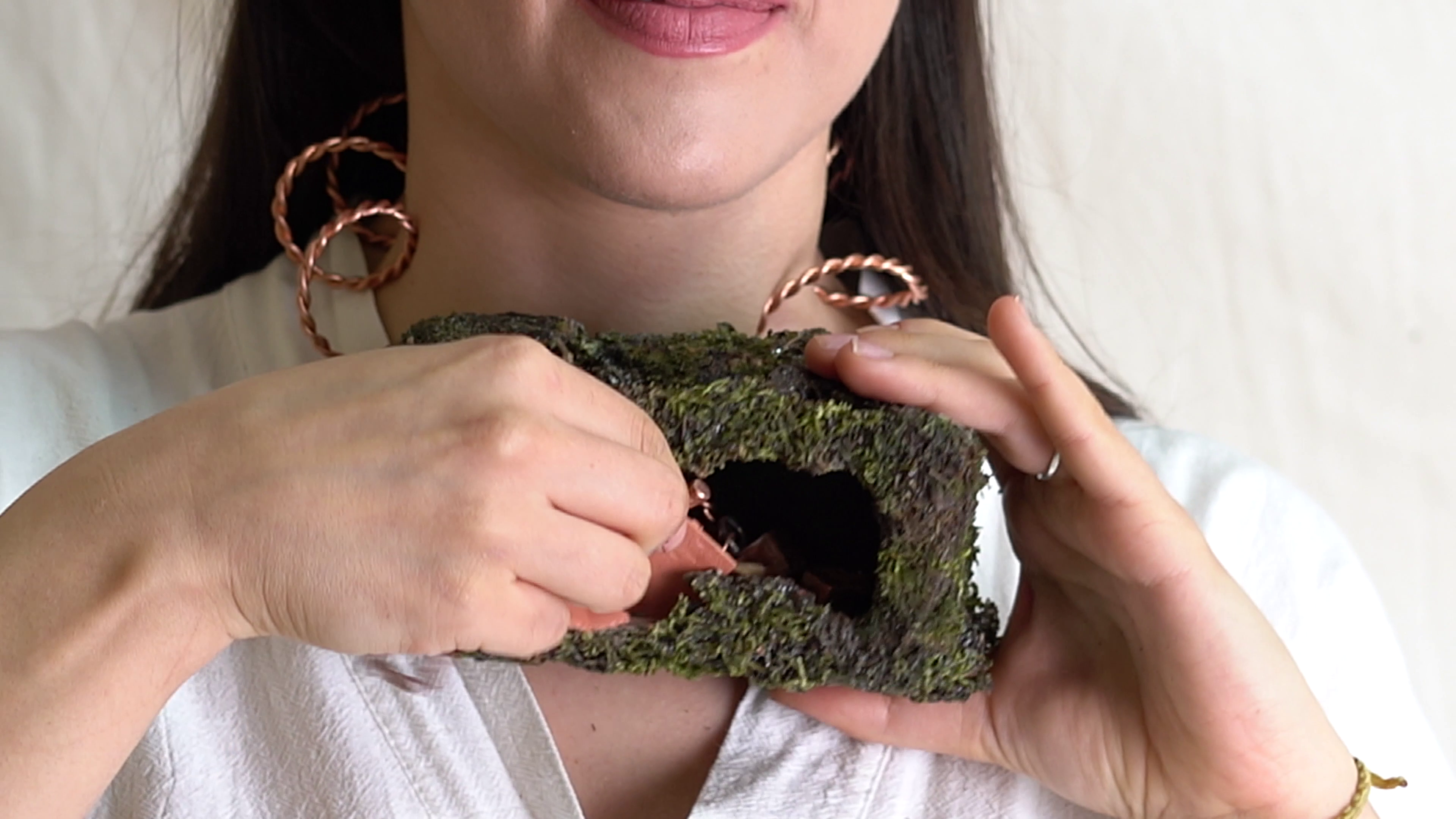
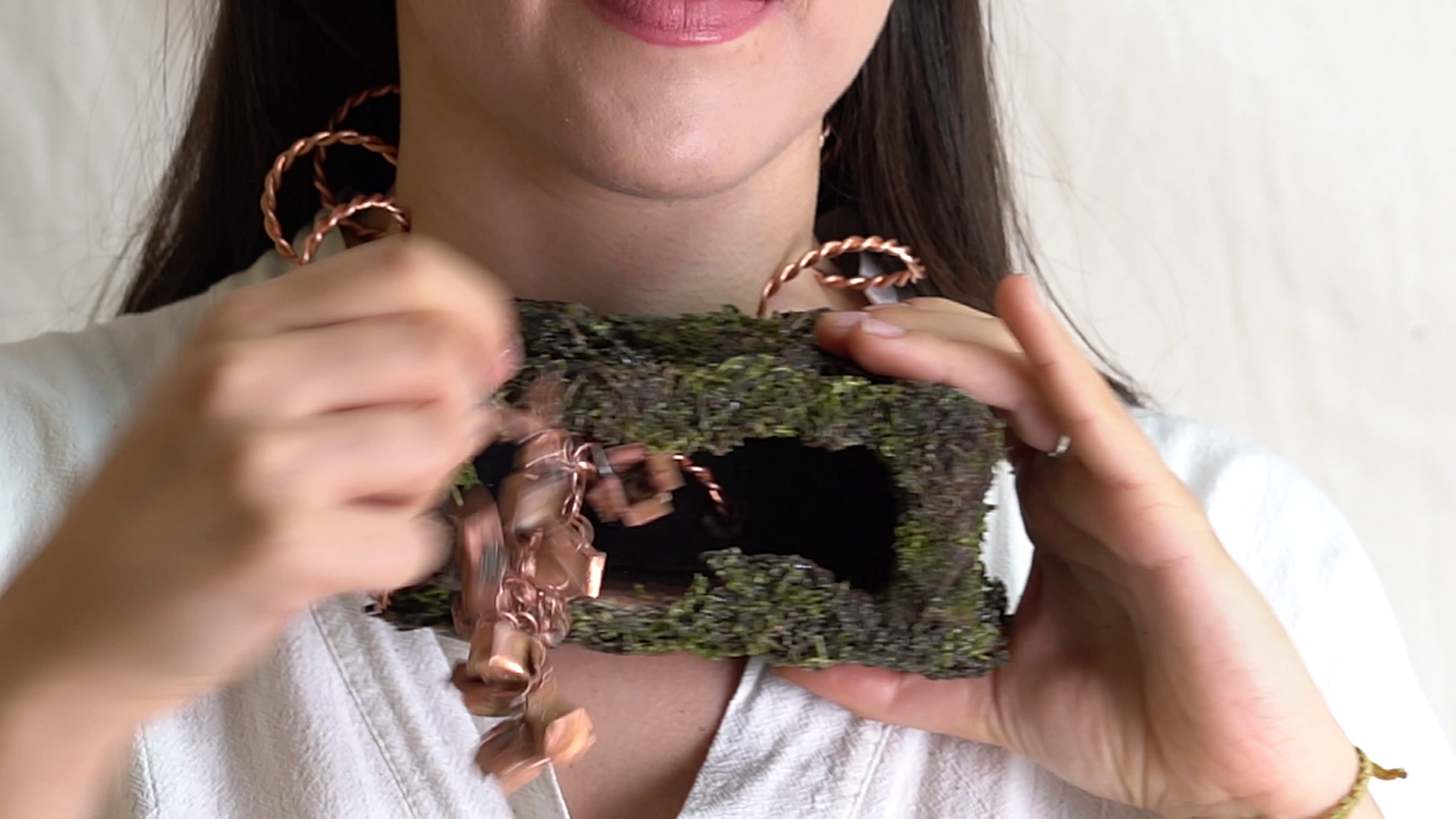
The main box contains the folded cardboard boxes made out of copper as the literal metaphor of packing and moving. The hammer attached to the piece invites you to shatter the vessel,’ ‘break the testi,’ in case of an emergency, in case you forgot where you belong. When you break the clay, it shatters and reveals the boxes dramatically landing on your chest. You are authorized to break the clay. Here the emergency is disorientation, the crisis is forgetting that you are grounded. Breaking the clay is the recalibration to your body, to your breath, to the territories you carry. The Anatolian testi tradition hid gold, food, water inside, survival things, inside the land itself. The boxes inside become what is hidden in the
vessel. The breaking is not destruction but to harvest. The breaking is non-refillable. Once the clay is broken, it cannot be sealed again. This revelation cannot be undone. The body, once acknowledged as ground, cannot be treated as secondary. The piece offers a practice: maybe authorizing your own calibration in this way of
breaking, carrying, packing, and unpacking on the land of your body. Maybe it helps as a practice: you might not belong to the external reality in that moment of your life, but you are never displaced from your body.
You do not need to stop moving.
You need to know what moves with you.
You are the land.
vessel. The breaking is not destruction but to harvest. The breaking is non-refillable. Once the clay is broken, it cannot be sealed again. This revelation cannot be undone. The body, once acknowledged as ground, cannot be treated as secondary. The piece offers a practice: maybe authorizing your own calibration in this way of
breaking, carrying, packing, and unpacking on the land of your body. Maybe it helps as a practice: you might not belong to the external reality in that moment of your life, but you are never displaced from your body.
You do not need to stop moving.
You need to know what moves with you.
You are the land.
PROCESS
FIRST PIECE
FINAL PIECE